
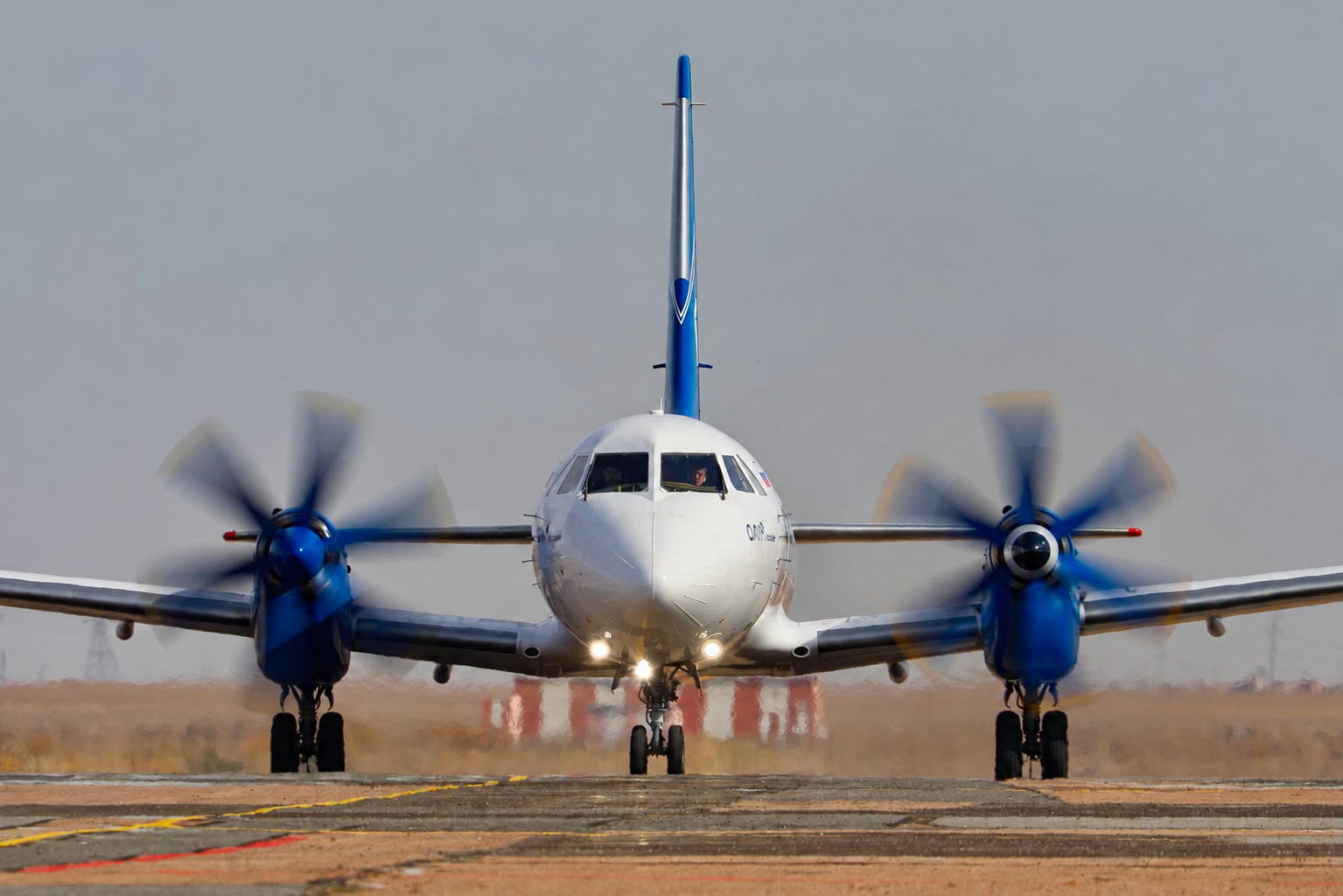
Two Indian aviation companies have signed preliminary agreements for 85 Russian-built Ilyushin Il-114-300 turboprops, giving Russia’s United Aircraft Corporation a potential foothold in India’s regional airline market.
The agreements, announced on September 10, 2026, at the INNOPROM India exhibition in New Delhi, cover 50 aircraft for Pinnacle Air and 35 for Sleek Aviation. They are not firm orders.
Pinnacle signed a letter of intent, while Sleek signed a memorandum of understanding that also includes plans for a training center with a full-flight simulator, according to details of the announcement.
UAC, part of Russia’s state-owned Rostec group, aims to secure firm contracts before the end of 2026. Delivery schedules, maintenance agreements and commitments to manufacture certain components in India remain subject to separate agreements, the companies said.
The 68-seat Il-114-300 targets a similar market to the ATR 72-600, connecting smaller cities on routes that do not require larger jets.
Rostec is pitching the aircraft for India’s UDAN program, which supports expanded regional air service. The manufacturer claims that the turboprop can operate from smaller airports with limited infrastructure and uses Russian-built engines and avionics.
The Il-114-300 revives a Soviet-era design that first flew in 1990, with just 20 aircraft built during the original production run which ended in 2012. The updated version was first flown in December 2020. India’s Flamingo Aerospace signed a preliminary agreement for six Il-114-300s in January 2026, with deliveries expected to begin in 2028.
Neither of the new would-be buyers currently operates an airline. Pinnacle provides helicopter charter and other aviation services, while Sleek is based in Gurugram. It is unclear whether the companies plan to launch regional airlines.
According to UAC Chief Executive Vadim Badekha, discussions about a deal gained momentum after the aircraft’s appearance at the Wings India exhibition in January 2026.
The company is looking to extend cooperation beyond aircraft sales and into maintenance, training and potentially even local production.