

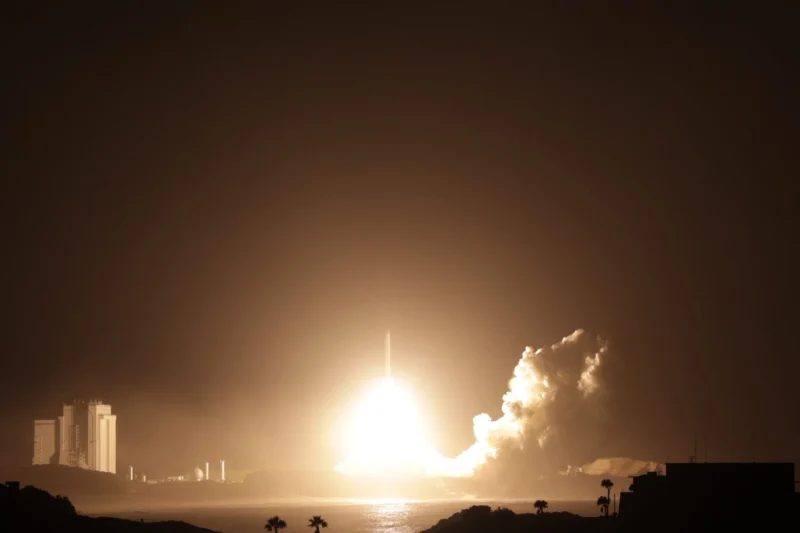
The Japan Aerospace Exploration Agency (JAXA) launched its Martian Moons eXploration (MMX) spacecraft on October 20, 2026, starting a mission that aims to bring back the first samples collected from a moon of Mars.
H3 Launch Vehicle flight No. 10 lifted off from the Tanegashima Space Center at 04:41 local time on October 20, 2026, on its scheduled launch date.
“JAXA’s H3 launcher performed fantastically to send MMX onward to Mars,” Elliot Sefton-Nash, the European Space Agency (ESA) project scientist for MMX, said in a statement issued after the launch.
According to JAXA’s launch result release, the rocket flew as planned, and separation of the MMX spacecraft was confirmed approximately 71 minutes after liftoff, followed by injection into the predetermined orbit.
MMX aims to return samples from Phobos in 2031
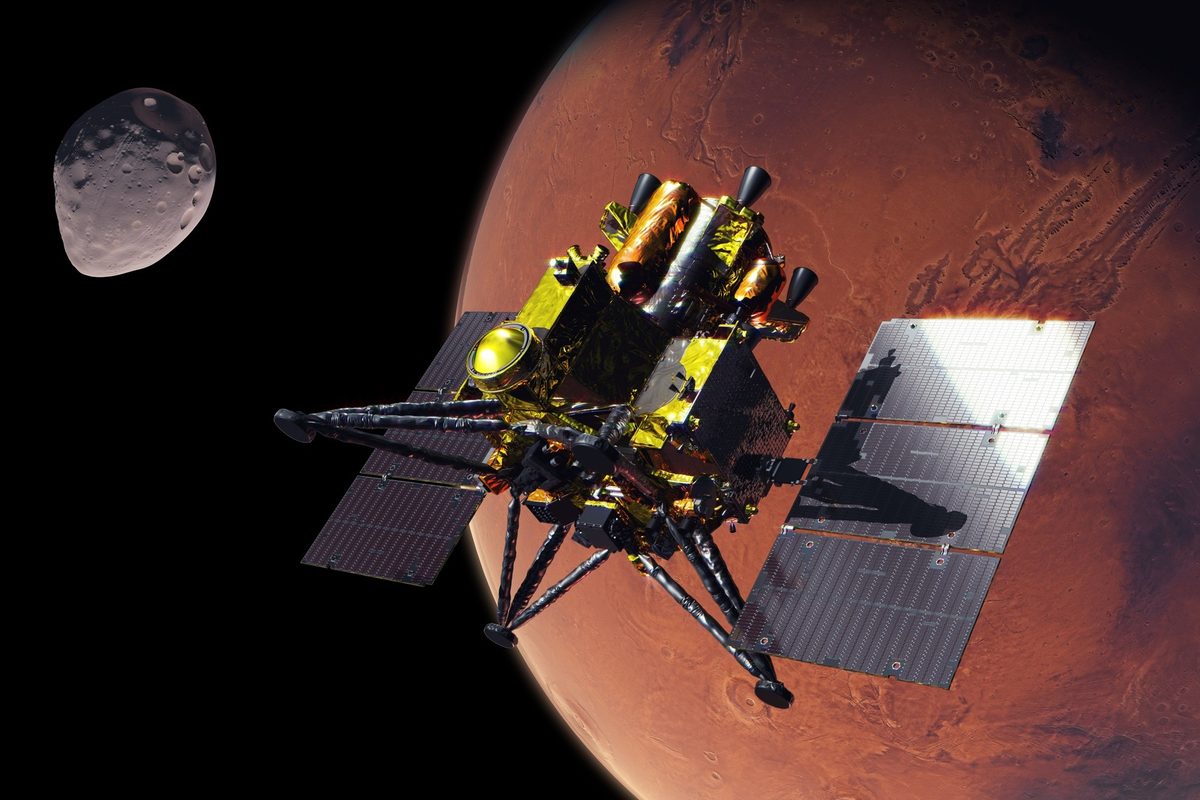
MMX is led by JAXA in collaboration with the National Aeronautics and Space Administration (NASA), France’s space agency, the Centre National d’Études Spatiales (CNES), the German Aerospace Center (DLR) and the European Space Agency (ESA).
The spacecraft is made up of three modules: a propulsion module, an exploration module and a return module.
ESA, which takes part as a Mission of Opportunity under its science program, provided the spacecraft’s deep space communication equipment, including a transponder and power amplifier, according to its MMX factsheet. Its Estrack ground station network will send commands to the spacecraft and receive its data.
MMX is expected to enter orbit around Mars in August 2027 and to begin orbiting Phobos, the larger of the planet’s two moons, from September 2027. After studying Phobos and Deimos from a distance, it is scheduled to release Idefix, a 25-kilogram (55-pound) rover developed by CNES and DLR, in early 2029.
The main spacecraft is then planned to land on Phobos in 2030. JAXA’s mission page sets a goal of returning more than 10 grams of material, collected over two soft landings, with a re-entry capsule to be recovered in Australia in 2031.
ESA notes that Phobos and Deimos may be captured asteroids or the remnants of debris thrown into orbit by a giant impact on Mars, and that samples are needed to establish which.
H3 records third consecutive success after 2025 failure
The launch was the H3’s third consecutive success since flight No. 8 failed on December 22, 2025. On that mission, the second-stage engine’s second ignition did not start normally and shut down prematurely, leaving the Michibiki No. 5 navigation satellite short of its planned orbit, according to JAXA.
The H3 returned to flight on June 12, 2026, with flight No. 6, a test of the booster-free 30 configuration that flew out of numerical sequence. Flight No. 9 followed on August 11, 2026, placing the Michibiki No. 7 satellite in orbit.
As of the MMX launch, the H3, developed jointly by JAXA and Mitsubishi Heavy Industries, has flown ten times, with failures on its March 2023 debut and on flight No. 8. MMX is the first H3 payload sent beyond Earth orbit.