

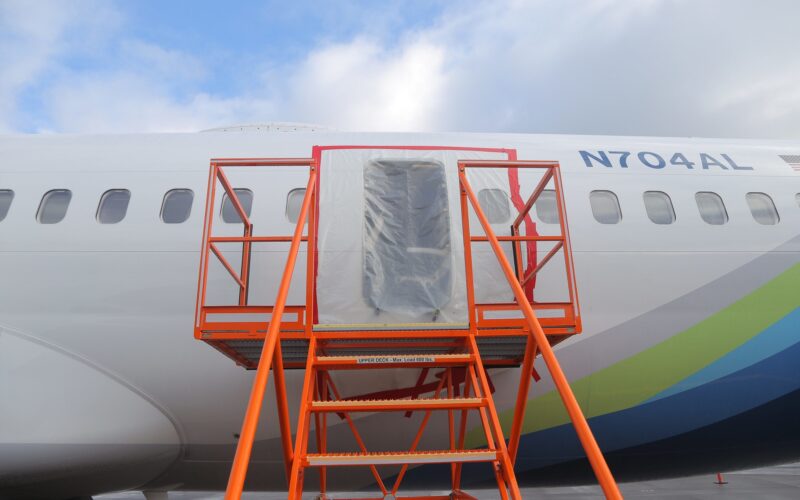
A lawsuit against Boeing has alleged that the US manufacturer “attempted to shift blame” onto an Alaska Airlines captain for mistakes made that contributed to a door plug separating from the aircraft midflight in January 2024.
Captain Brandon Fisher, who safely landed the Alaska Airlines Boeing 737 MAX 9 on January 5, 2024, following the door plug blowout, filed papers in Oregon’s Multnomah County Circuit Court on December 30, 2025, seeking $10 million in damages.
The lawsuit represents the first time that a member of the Alaska Airlines flight crew has launched legal proceedings and follows action already taken by cabin crew members and passengers on the flight.
The lawsuit says that Captain Fisher and First Officer Emily Wiprud “should have been hailed as heroes” but instead Boeing “attempted to shift blame, intentionally and falsely claiming” that the pilots “made mistakes that contributed to the incident”.
“Boeing’s actions have had a dramatic and life-altering impact on Captain Fisher. Captain Fisher brings this suit to hold Boeing and its complicit subcontractor, Spirit AeroSystems accountable for what they have done to him and the danger that their actions posed to the public,” read the lawsuit.
Specifically, the lawsuit highlights Boeing’s “scapegoating” during the post-accident investigation.
The lawsuit described a statement by Boeing in a federal court pleading filed on March 11, 2024, as “reprehensible and inaccurate”.
Captain Fisher’s lawsuit says in Boeing’s response to a lawsuit brought by Elna Berry and other passengers, the company claimed that it “should not be held responsible for injuries because its products were improperly maintained or misused by persons and/or entities other than Boeing”.
“Boeing knew this statement was false at the time it was made but made it anyway as part of its often-used post-accident strategy to blame pilots for incidents caused solely by its own actions,” alleges the lawsuit.
The lawsuit also highlighted website articles in the following days that reported on Boeing’s statement.
“It was clear Boeing’s words were directed at Captain Fisher in attempt to paint him as the scapegoat for Boeing’s numerous failures,” alleges the lawsuit.
Having flown Boeing aircraft during his entire Alaska Airlines career, the lawsuit says that the attempts to blame him felt like a “deep, personal betrayal”.
The lawsuit singles out March 27, 2025, as an important moment after a letter from the FBI said that he “may have been the victim of criminally negligent conduct by Boeing”.
The lawsuit says that since the incident Captain Fisher has “endured profound physical and mental repercussion” and has himself been sued by two passengers.
Among the lawsuit’s complaints are personal injury, negligence, strict products liability, breach of warranty, emotional distress and defamation.
What the NTSB investigation found
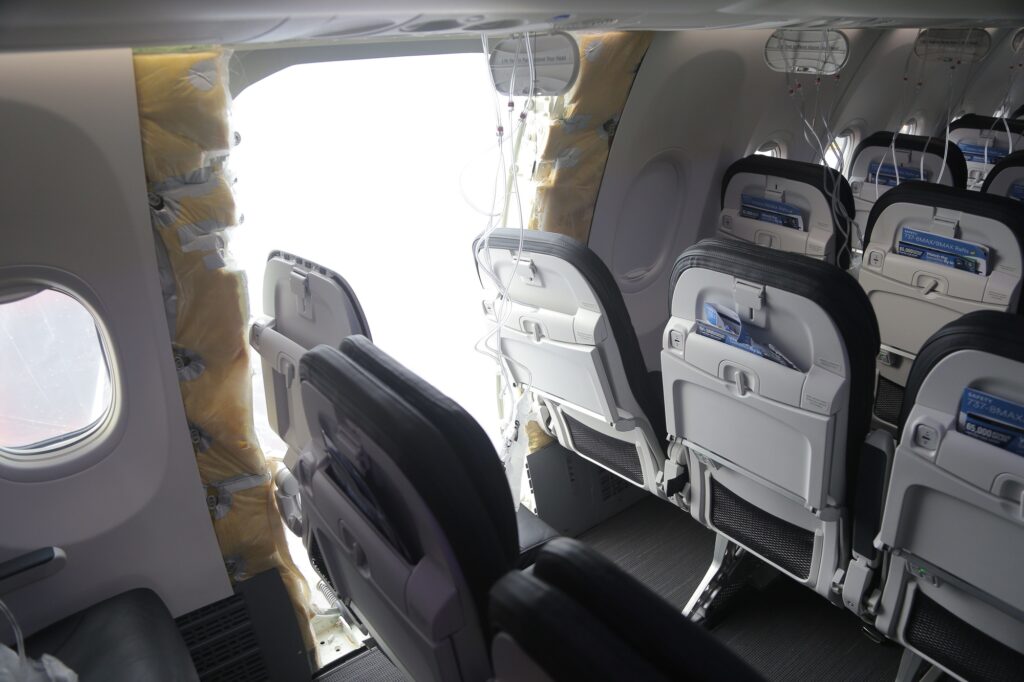
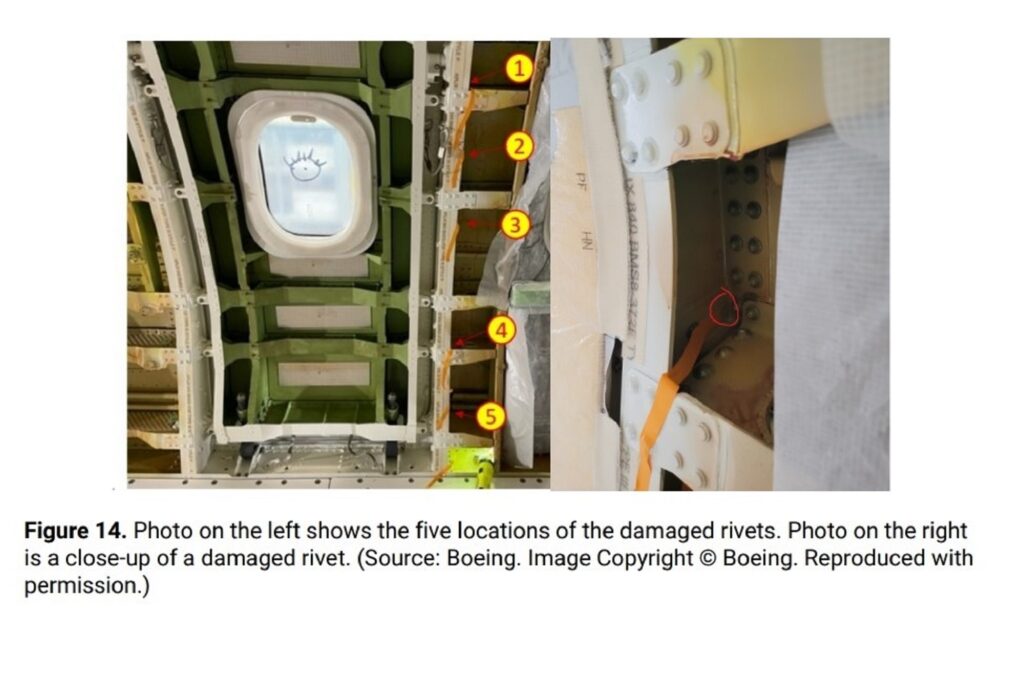
The National Transportation Safety Board (NTSB) found that the door plug separated from the aircraft because four bolts that would secure the panel from moving upward vertically had not been in place.
In June 2025, the NTSB said that the probable cause for the door plug separation was “due to Boeing’s failure to provide adequate training, guidance, and oversight necessary to ensure that manufacturing personnel could consistently and correctly comply with its parts removal process, which was intended to document and ensure that the securing bolts and hardware that were removed to facilitate rework during the manufacturing process were properly reinstalled”.
The agency also said a contributing factor was the “FAA’s ineffective compliance enforcement surveillance and audit planning activities, which failed to adequately identify and ensure that Boeing addressed the repetitive and systemic nonconformance issues associated with its parts removal process”.
AeroTime has contacted Boeing for comment.
To read Captain Fisher’s lawsuit in full visit the court’s website.
6 comments
In its most simplistic terms, how could the pilot and his copilot be responsible for assuring the bolts required to secure the door plug were in place? Seems to me Boeing’s overly creative attorneys need to find other vocations as their story telling doesn’t cut it here. The blame squarely lies with whoever removed the door during the rework process and replaced it. The blame further lies with whoever was responsible for inspecting the completed work. This defense is pure BS and this kind of nonsense should not be allowed in the type of litigation that has occurred here. I also believe those passengers that are suing the pilots should be extremely grateful their sorry asses made it to the ground in one piece. Litigation against the pilots should have never been allowed to proceed.
Well, this doesn’t surprise me coming from Boeing…. A company that has had MORE company built aircraft crashes than any other company, MORE lawsuits than any other company, more blame shifting… Airlines need to just start buying from AirBus Industries and forget about Boeing and their B.S.
I 100% agree with you.
I would like to know just exactly how it was the pilots fault when bolts are left out. Boeing was once a great company but with it’s current management (or lack of) it is just another greedy corps. scumbag.
How on earth would any sane person believe a single word that comes from the pathalogical liars mouths who speak for Boeing.
To actually try and put the blame onto the flight crew, is beyond being a joke.
The Boeing management must take responsibility for the lack of quality control when inspecting the work done.
Or was no inspection done on completion?
I would not be tempted to board any boeing aircraft while the existing management remains.
ROCK ON AIRBUS!
Somewhere, there are four MED bolts that are lacking an airplane and a reason for being there.