

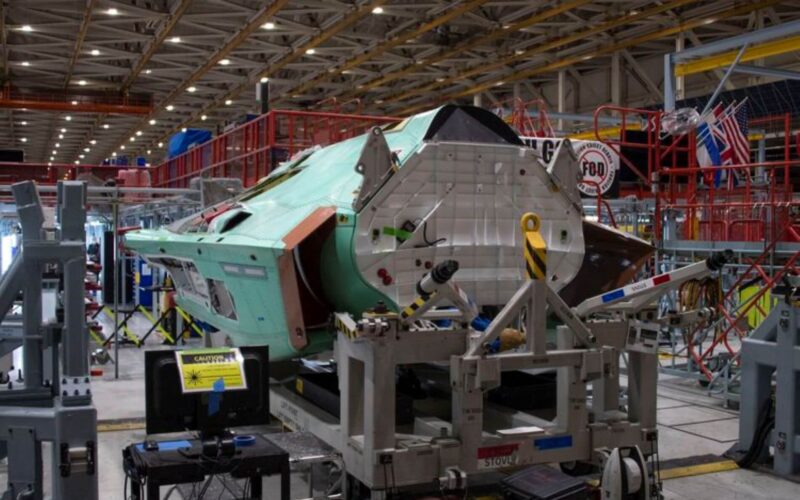
Lockheed Martin has delivered 72 F-35 Lightning II fighter jets to the US government as of May 1, 2025.
This delivery follows several months of delays associated with the implementation of Technology Refresh 3 (TR-3), according to a report by Bloomberg, which cited the Pentagon’s F-35 Joint Program Office (JPO).
The TR-3 upgrade, a critical modernization step for the fifth-generation fighter, introduces a new core processor, enhanced displays, and open-architecture software to support future capabilities, including the forthcoming Block 4 package.
Funding penalties remain
Delivery delays prompted the US Department of Defense to withhold $5 million per aircraft starting in 2024. That figure was reduced by about $1.2 million per jet in January 2025 as Lockheed showed progress on TR-3 integration, according to the report. However, a majority of the withheld funds will remain frozen and will be released incrementally into 2026.
The F-35 program remains vital for Lockheed Martin, accounting for roughly 30% of its annual revenue. However, the contractor faces pressure as the Trump administration’s fiscal year 2026 defense budget proposal, released in late June 2025, reduces F-35 procurement from 68 aircraft to 47, redirecting funds toward drones, hypersonic missiles, and other advanced munitions.
Persistent delays and European concerns
TR-3’s development has faced repeated setbacks due to flight certification issues tied to the integrated core processor produced by L3Harris. These problems, first disclosed in 2023, caused the US Air Force to halt F-35 deliveries temporarily and delay schedules for several international customers, including Belgium and Denmark.
In March 2024, Danish Defense Minister Troels Lund Poulsen warned of uncertainty over Denmark’s next F-35 deliveries, noting Lockheed aimed to have the first TR-3 aircraft ready by July 2024.
Block 4: next step in F-35 modernization
At the Paris Air Show in June 2025, Lockheed executives described TR-3 as “the foundation for the most aggressive upgrade in fighter history,” enabling more processing power, AI enhancements, and interoperability features to keep pace with evolving threats.
Block 4 is not a single package but a series of incremental upgrades that will be introduced throughout the late 2020s and early 2030s.
Planned enhancements include:
- Sensor and radar improvements, such as the integration of the AN/APG‑85 active electronically scanned array (AESA) radar
- Electronic warfare upgrades for better threat detection and survivability
- Expanded weapons options, including long-range precision strike munitions and additional guided weapons
- Interoperability improvements to enhance data-sharing across joint and allied forces
Some advanced features, such as AI-enabled mission systems designed to make the F-35 a central node for future Collaborative Combat Aircraft (CCA) operations, may also be added as the technology matures. These capabilities aim to ensure the F-35 remains effective against evolving threats well into the next decade.
Lockheed has invested more than $350 million in research and development to accelerate Block 4 capabilities.