

Lockheed Martin has signed a non-binding memorandum of understanding with minerals developer NioCorp Developments covering the potential purchase of up to 15 tonnes of scandium oxide a year over the next decade, NioCorp announced on August 4, 2026. The material could be delivered either as oxide or as aluminum-scandium alloy.
Tyler Robinson, vice president for technology roadmaps at Lockheed Martin Skunk Works, said the company appreciated NioCorp’s work on domestic sourcing and alloying and would “continue to evaluate that supply” as part of its wider alloy development effort.
NioCorp chairman and chief executive Mark Smith framed the agreement as evidence that the argument for reducing US dependence on China for scandium had strengthened.
Scandium added to aluminum in fractions of a percent improves strength, corrosion resistance and weldability with little weight penalty, which makes it attractive for airframe structures and additive manufacturing. But it is also one of the smallest commodity markets in existence.
A Pentagon program and an unfinanced mine
The MOU extends a joint development program announced on October 23, 2025, under which NioCorp and Skunk Works are producing prototype aluminum-scandium alloy components for fighter aircraft. That work draws on a $10 million award from the US Department of Defense, announced on August 5, 2025, to NioCorp subsidiary Elk Creek Resources Corp under Title III of the Defense Production Act.
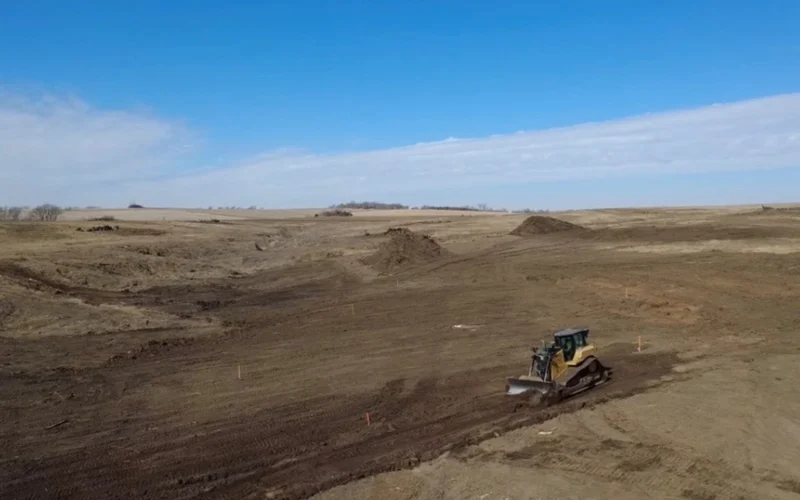
NioCorp began constructing the Elk Creek mine portal in February 2026, but the wider project is not yet fully financed or in production. The company is seeking up to $800 million in debt financing from the US Export-Import Bank. The application, submitted in 2023, remains subject to due diligence and final approval.
NioCorp is not the only developer competing to supply Lockheed Martin. In October 2025, Australia’s Sunrise Energy Metals granted the company an option to purchase up to 15 tonnes of scandium oxide a year from its Syerston project in New South Wales during its first five years of production, equivalent to about 25% of the mine’s planned annual output. That arrangement is also conditional, and Syerston has yet to enter production.
A market measured in tens of tonnes
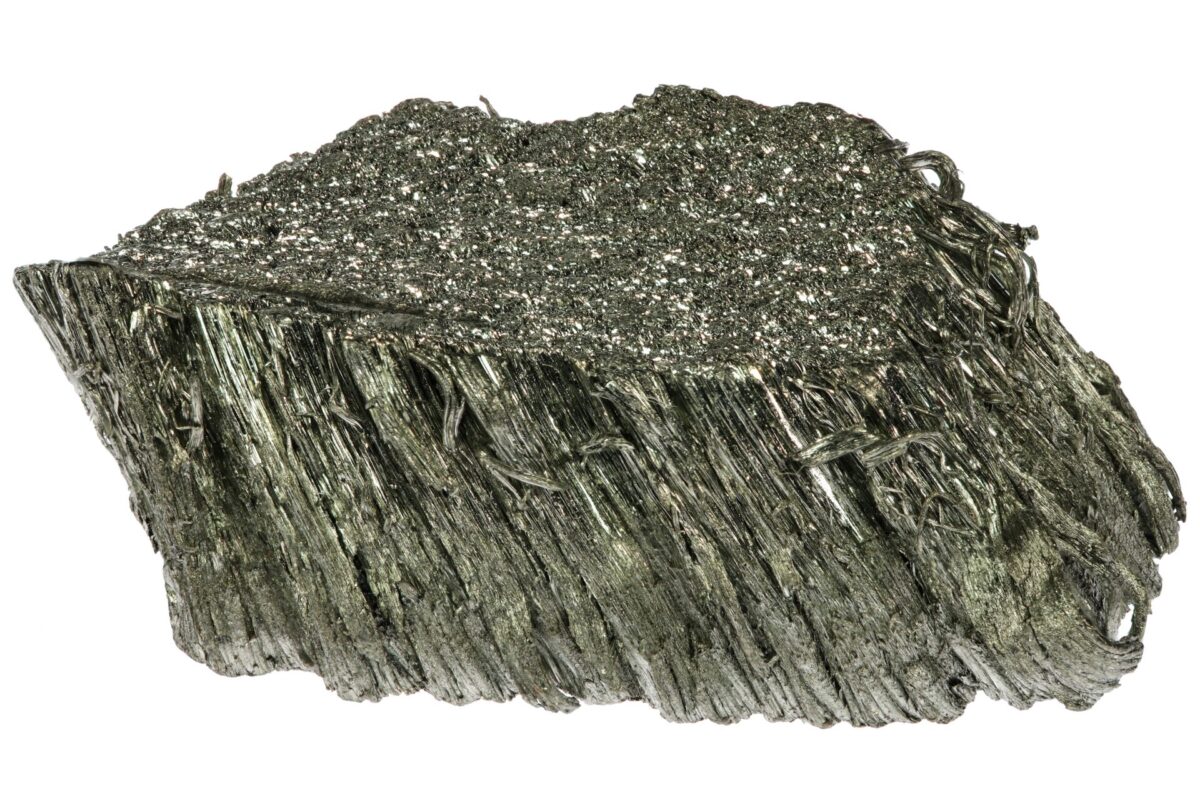
The US Geological Survey put global consumption of scandium oxide at 60 tonnes in 2025, against production of roughly 80 tonnes, with China the leading producer.
Almost all of that supply is incidental. Scandium is recovered as a byproduct, mainly from nickel and titanium process streams and from tailings and residues, so output tracks the economics of other metals rather than scandium demand. Elk Creek would be unusual in targeting it as a primary product.
The 15 tonnes contemplated in the MOU would amount to close to a fifth of last year’s global output, while the roughly 100 tonnes a year NioCorp plans to produce at its Elk Creek project would exceed it outright.
No scandium was commercially mined or recovered in the US in 2025, leaving the country wholly import-dependent. The USGS dated the last domestic production to 1969, from the mineral thortveitite and from byproduct leach solutions at uranium operations. Small-scale refining capacity survives at Ames, Iowa, and Tolleson, Arizona, with further capacity under development at Urbana, Illinois, and at Elk Creek itself.
Imports of scandium oxide, which the survey estimates from shipping records and which exclude material already contained in finished products, came to 4 tonnes in 2025 and have not exceeded 7 tonnes in any of the past five years.
Where US scandium comes from
The dependence is real but not straightforwardly Chinese. USGS records attribute 89% of US scandium oxide imports between 2021 and 2024 to Japan, where the material was refined from Philippine feedstock, against 11% arriving directly from China. Beijing’s leverage runs through its dominance of global production and refining, a pattern familiar from other aerospace metals.
In September 2025, the US Defense Logistics Agency announced plans to buy more than 6,000 kilograms of scandium oxide for the National Defense Stockpile from Rio Tinto’s complex at Sorel-Tracy, Quebec, over five years, at a value of up to $40 million. The Canada Growth Fund committed roughly $18 million the following month to expanding that plant, North America’s only scandium oxide producer, to 9 tonnes a year.
Export controls threaten aerospace supply
China placed scandium metal, alloys, oxides and compounds under export licensing on April 4, 2025, alongside six other medium and heavy rare earth elements, though Beijing had begun issuing general licenses to selected exporters. A broader package announced on October 9, 2025, was suspended until November 10, 2026, under the US-China trade truce.
The US Air Force has publicly flagged the problem of raw materials in its own supply chain. In a request for information published on August 3, 2026, ahead of a possible recompetition of F-15EX and F-16 engine production, the service cited critical obsolescence, meaning suppliers and materials that are no longer available, among the failings of its current propulsion industrial base. It asked bidders to identify where their choke points sit, including specialized titanium and nickel alloys and any component available only from a single or foreign source.