

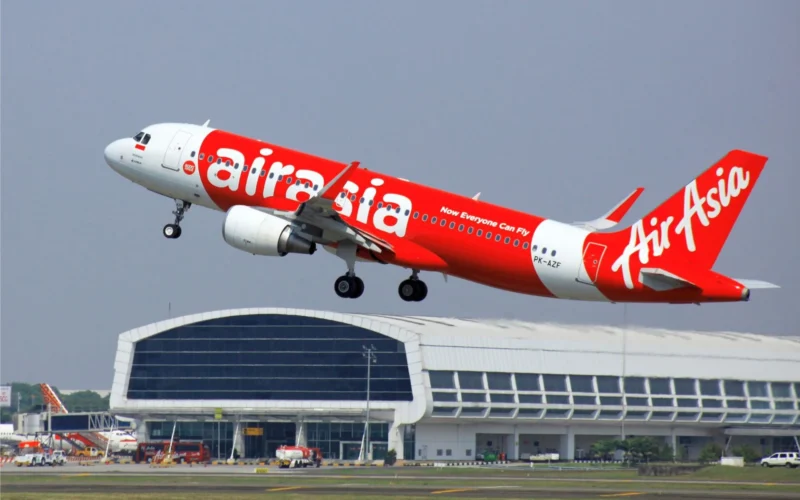
The Malaysian government is reportedly making contingency plans in case AirAsia’s financial situation worsens in the near future.
According to reports that have appeared in Reuters as well as several local media outlets, Malaysian authorities have been in talks with two of AirAsia’s competitors, Malaysia Airlines and Batik Air, to explore the possibility of them taking over some of AirAsia’s Malaysian routes should the airline be forced to wind them down.
This move appears to be related to scenario planning in connection to the worsening financial and macro-economic situation faced by AirAsia, rather than to any specific development affecting the airline.
AirAsia has been heavily impacted by the dramatic increase in jet fuel prices following the military and political instability in the Middle East. The price of jet fuel in Asia has approximately doubled since March 2026, from around US$90 per barrel to over US$180, with some price spikes reaching as high as US$220 and more.
In Q2 2026, AirAsia reverted to negative financial results, showing an 830.5 million Ringgit (US$202 million) net loss, despite posting a positive EBITDA of 442.6 million Ringgit (US$109 million). AirAsia’s results were mostly due to foreign exchange losses, the rise in the price of oil, and losses at its subsidiaries outside Malaysia and Cambodia.
This has happened just as AirAsia was emerging from a protracted period of financial recovery. The airline was also heavily impacted by the COVID-19 pandemic in 2020 and placed under financial supervision by the Malaysian stock market regulator (the so-called PN17 status). The airline’s PN17 status was only lifted in January 2026, just a few weeks before the Straits of Hormuz crisis.
Although AirAsia had recently unveiled plans to return to growth, including the placement of an order for up to 150 new Airbus A220 aircraft and plans to set up a base in Bahrain (the latter project has since been put on hold), concerns remain about its level of indebtedness.
One of the AirAsia’s largest creditors is Malaysia Airports Holdings Berhad (MAHB), the country’s airport operator, which is owed around 500 million ringgits (US$120 million approximately). MAHB is also reported to have been involved in the scenario planning conducted by the government.
On September 2, 2026, AirAsia issued a statement confirming it is seeking to raise US$1 billion in the international debt markets, as well as an additional 700 million Ringgit (US$170 million) domestically in order to refinance part of its existing debt. This follows an earlier $300 million capital raising round which closed in March 2026.
On the same date, Reuters reported that the Malaysian government had hired Alton Aviation Consultancy, a specialized consulting firm based in Singapore, in order to assess the financial situation at AirAsia and its potential future course of action, in view of its systemic importance for Malaysia’s air connectivity.
AirAsia’s share price dropped 21% on September 16, 2026, in the Kuala Lumpur stock exchange following the publication of these reports, while shares in Capital A, the carrier’s former parent company and still one of its major shareholders, dropped 18%.
A spokesperson for AirAsia told AeroTime that the airline will provide additional information during a press conference set to be held on September 18, 2026.