

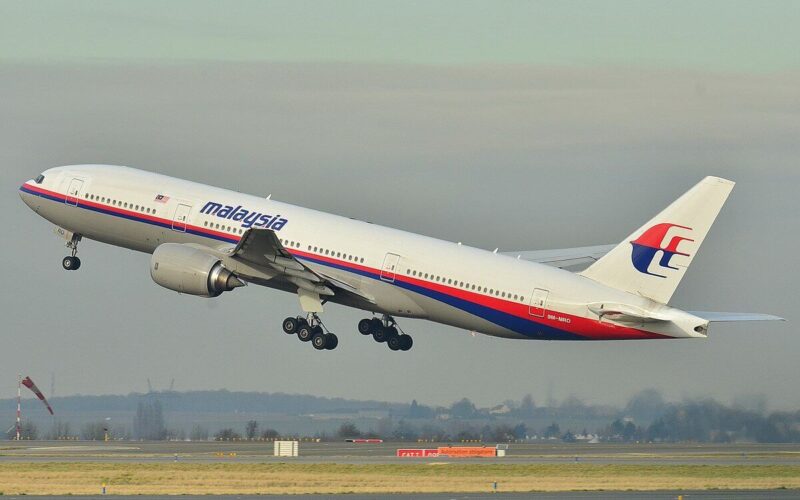
Malaysia has resumed the search for the wreckage of Malaysia Airlines Flight MH370, more than 11 years after the Boeing 777 vanished during a scheduled flight from Kuala Lumpur to Beijing with 239 people on board.
The renewed effort, which began on December 31, 2025, is being carried out by marine robotics company Ocean Infinity under a previously announced 55-day operational agreement. The search is focused on a targeted area of the southern Indian Ocean identified by Malaysian authorities as having a higher probability of locating the aircraft’s wreckage, based on updated satellite data, drift modeling, and analysis of debris recovered in past years.
Malaysia’s Ministry of Transport said the mission builds on new technical assessments that were not available during earlier search phases. Exact coordinates of the search zone have not been publicly released, though officials have said the area covers roughly 5,800 square miles of seabed. Ocean Infinity has not disclosed details about the timing or daily scope of operations.
The company is operating under a “no find, no fee” agreement with the Malaysian government, meaning it will only be compensated if the aircraft is located. Under the terms previously outlined by the transport ministry, the payment would be made only if wreckage is found within the defined search area.
Ocean Infinity has searched for MH370 on multiple occasions. An initial privately funded effort in 2018 covered a large swath of the southern Indian Ocean but failed to locate the wreckage. A more recent attempt began in early 2025 but was suspended in April after unfavorable weather conditions limited operations. The current mission marks the first time the company has returned to the search area since those weather-related delays.
Flight MH370 disappeared on March 8, 2014, less than an hour after departure, after losing contact with air traffic control while cruising over the South China Sea. Military radar data later showed the aircraft deviated sharply from its planned route and continued flying for several hours before its fuel was likely exhausted. Despite one of the largest and most expensive searches in aviation history, the aircraft has never been located.
Over the years, several pieces of debris confirmed to be from the aircraft, including parts from the Boeing 777-200ER, have washed ashore along the coastlines of Africa and islands in the Indian Ocean. However, no debris field or fuselage section has been found, leaving the precise circumstances of the aircraft’s loss unresolved.
Families of the passengers and crew have continued to press for answers, urging authorities not to abandon the search. Speaking to The Guardian, Danica Weeks, whose husband was on board MH370, said she hopes the renewed mission will finally bring “clarity and peace” after more than a decade of uncertainty.
While investigators have explored a range of possible scenarios, no definitive explanation for the aircraft’s disappearance has been established. Malaysian officials have said the latest search reflects a continued commitment to providing answers, even as the mystery surrounding MH370 remains one of aviation’s most enduring and complex cases.