

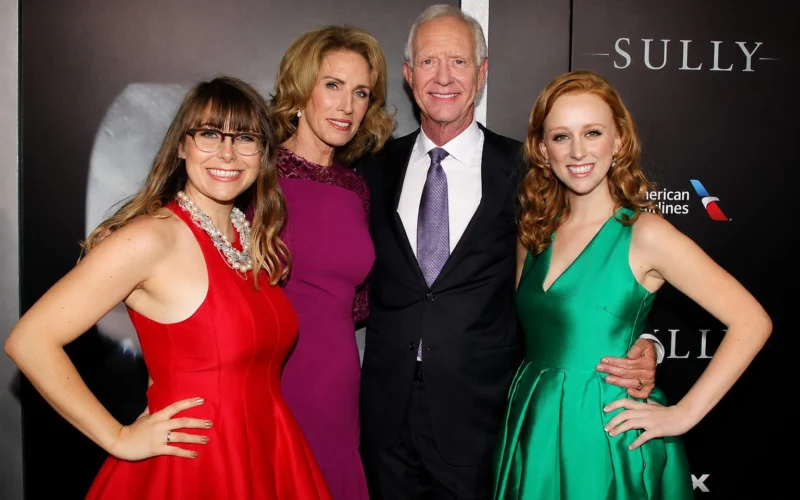
Chesley “Sully” Sullenberger, the retired US Airways captain who safely landed Flight 1549 on the Hudson River in January 2009, has announced that he has early-stage Alzheimer’s disease.
Sullenberger, 75, disclosed the diagnosis in a statement posted to his website. He said he has begun treatment and is experiencing relatively mild symptoms.
“For now, this means a name may not come easily to me, I forget a story I have recently told, or I don’t sleep as well, but I am in the beginning of this long journey,” Sullenberger said.
Sullenberger became one of the world’s best-known pilots on January 15, 2009, after US Airways Flight 1549 struck a flock of birds shortly after departing New York LaGuardia Airport for Charlotte.
The Airbus A320 lost almost all thrust from both engines about two minutes after takeoff. Sullenberger and First Officer Jeff Skiles determined that the aircraft could not safely reach LaGuardia or nearby Teterboro Airport and instead landed it on the icy Hudson River near midtown Manhattan.
All 155 people aboard survived. The flight carried 150 passengers and five crew members. One flight attendant and four passengers suffered injuries, according to the National Transportation Safety Board.
The NTSB later credited the pilots’ decision-making and crew resource management, the cabin crew’s evacuation work and the rapid response of nearby ferry boats and emergency crews with making the accident survivable.
The landing became known as the “Miracle on the Hudson” and was retold in the 2016 film Sully, directed by Clint Eastwood. Tom Hanks played Sullenberger, while Aaron Eckhart portrayed Skiles.
Sullenberger retired from US Airways in 2010 after a 30-year airline career that began with Pacific Southwest Airlines. He had logged more than 20,000 flight hours by the time of Flight 1549.
Before joining the airlines, Sullenberger graduated from the US Air Force Academy and served as an Air Force fighter pilot, flight leader and training officer. He reached the rank of captain and took part in multinational Red Flag exercises as a mission commander.
Sullenberger performed accident-investigation duties for the Air Force, served as an Air Line Pilots Association (ALPA) safety representative and helped develop the crew resource management course used by US Airways.
He later became one of the most prominent public voices on aviation safety. Sullenberger testified before Congress in 2019 that Boeing 737 MAX pilots should receive simulator training before the aircraft returned to service following two fatal crashes. He also opposed efforts to reduce airline-pilot experience requirements.
Sullenberger served in 2022 as US ambassador to the International Civil Aviation Organization, the United Nations agency responsible for setting global civil aviation standards.
In announcing his diagnosis, Sullenberger said speaking publicly was another way for him to continue serving others.
“It is my hope that by sharing this, other families living in the shadows with this disease will feel they too can step forward,” he said. “I am now part of a larger community with many of you, and we will be courageous together.”