

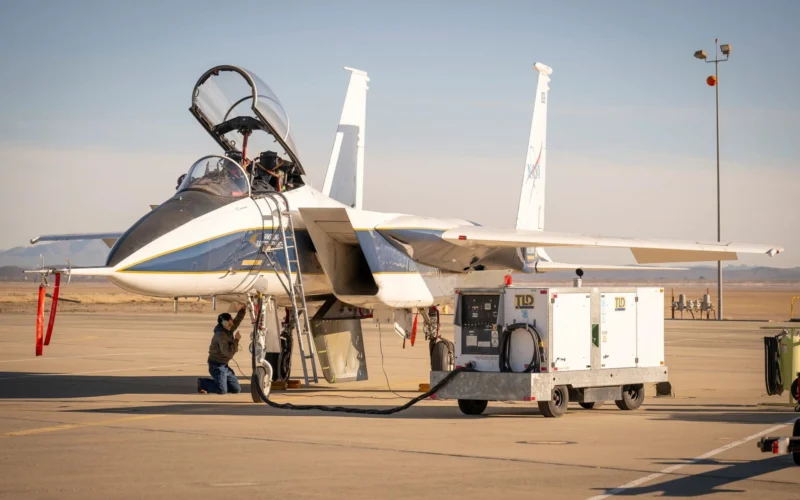
A NASA F-15B research aircraft is helping to gather valuable insights into how commercial jets of the future could save fuel, potentially reducing the price that passengers pay for airline tickets.
On January 12, 2026, a NASA F-15B testbed jet completed a high-speed taxi test fitted with a three-foot-tall scale fin, known as the Crossflow Attenuated Natural Laminar Flow (CATNLF) test article, on the underbelly of the aircraft.
The fin is actually a scale model of a wing, mounted vertically instead of horizontally, with the concept aim being to “increase a phenomenon known as laminar flow” and reduce drag.
A previous computer-based study conducted by NASA estimated that a Boeing 777 fitted with a CATNLF wing would use 10% less fuel each year. Potentially, each aircraft adopting this technology could therefore save millions of dollars per unit annually.
“Even small improvements in efficiency can add up to significant reductions in fuel burn and emissions for commercial airlines,” said Mike Frederick, Principal Investigator for CATNLF at NASA’s Armstrong Flight Research Center in Edwards, California.
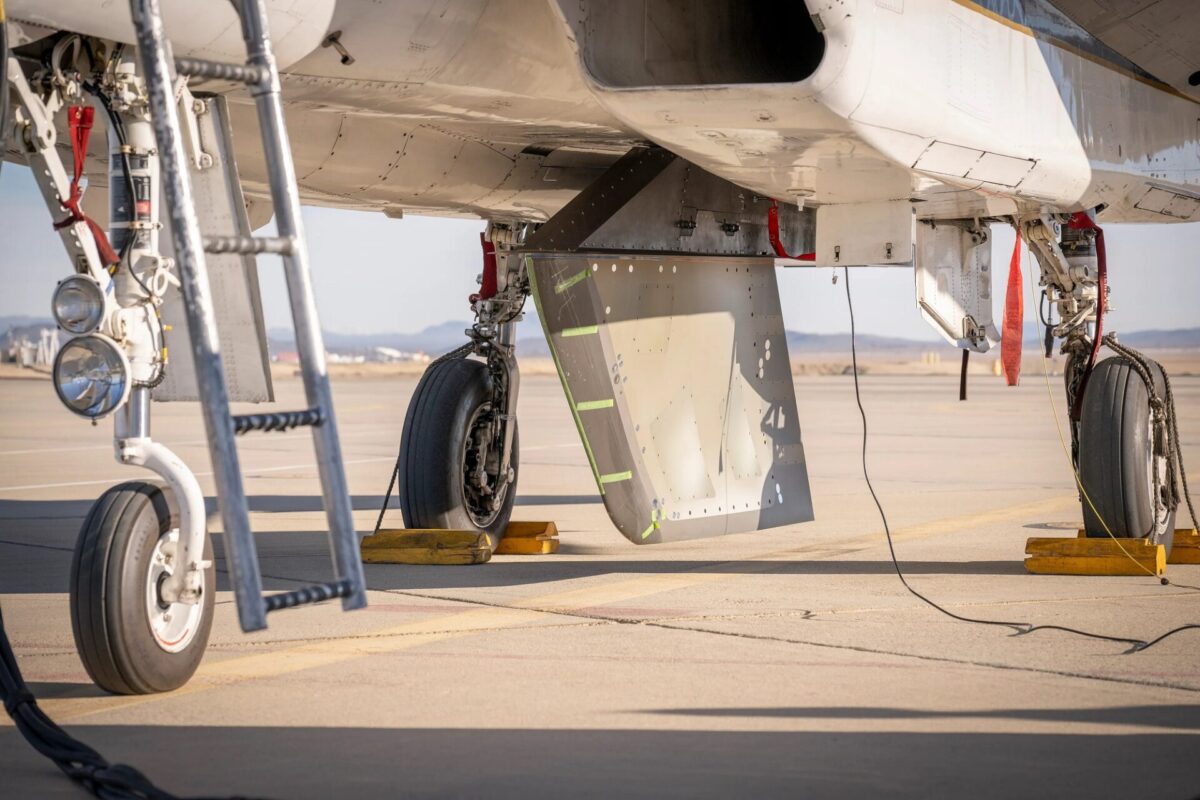
According to NASA, CATNLF increases laminar flow, or the smooth motion of air, resulting in “more efficient aerodynamics, reduced friction, and less fuel burn”.
The CATNLF concept was first developed by NASA’s Advanced Air Transport Technology project. NASA Armstrong went on to devise the initial shape of the fin in 2019, before the design was later refined with further research at Langley.
“Laminar flow technology has been studied and used on airplanes to reduce drag for many decades now, but laminar flow has historically been limited in application,” said Michelle Banchy, Langley Principal Investigator for CATNLF.
The F15 research aircraft also helps to keep costs down, as there is no need to replace a wing with a full-scale CATNLF model. NASA plans to begin test flights in the coming weeks.
“The CATNLF flight test at NASA Armstrong will bring laminar technology one step closer to being implemented on next-generation aircraft,” said Banchy.