

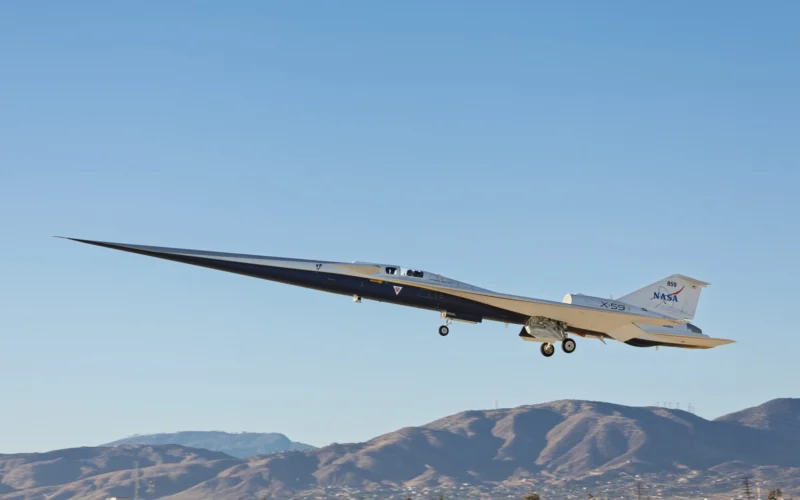
NASA’s X-59 quiet supersonic demonstrator unexpectedly cut short its second test flight on March 20, 2026, after a return-to-base call. The research aircraft and its pilot landed safely at Edwards Air Force Base in California, NASA said.
In a post on X, NASA said the Lockheed Martin X-59 took off at 10:54 local time and “returned prematurely following a return-to-base call,” adding that “the pilot and aircraft landed safely and successfully” and that more information would follow. NASA had said earlier in the week that the second flight would mark the start of envelope expansion testing for the experimental jet.
In a video NASA shared in its post, the X-59’s landing appeared normal.
The flight was expected to be the next step in NASA’s effort to gradually take the X-59 faster and higher while validating safety and performance. In a March 17 update, NASA said test pilot Jim “Clue” Less would be at the controls for the second flight, with NASA test pilot Nils Larson flying nearby in an F/A-18 chase aircraft to observe the X-59.
According to NASA’s preflight description, the plan for second flight was to first take the aircraft to about 230 mph at 12,000 feet and then, if checks were satisfactory, advance to about 260 mph at 20,000 feet. That would have marked the beginning of a gradual flight-test campaign designed to eventually push the aircraft toward a target of about Mach 1.4, or 925 mph, at 55,000 feet.
The X-59 first flew on October 28, 2025, with Larson piloting the aircraft. NASA said that after the first flight, teams from NASA and Lockheed Martin completed an extensive round of post-flight maintenance and inspections.
The work included removing and reinstalling the engine, a section of the tail known as the lower empennage, the seat, and more than 70 panels. NASA also said the team completed an engine run on March 12 as one of the final ground tests before the second flight attempt.
NASA has not yet released details on what triggered the return-to-base call or whether any of the planned test objectives were completed before the flight was cut short. Flight tracking sites showed the X-59 remained aloft for just eight minutes before returning for landing.
The X-59 is the centerpiece of NASA’s Quesst mission, which aims to show that a supersonic aircraft can fly faster than sound while reducing the disruptive sonic boom to a quieter “thump.” NASA plans to use data from the aircraft in future acoustic validation flights and, later, community overflights intended to help regulators evaluate the possibility of allowing quiet commercial supersonic flight over land.