

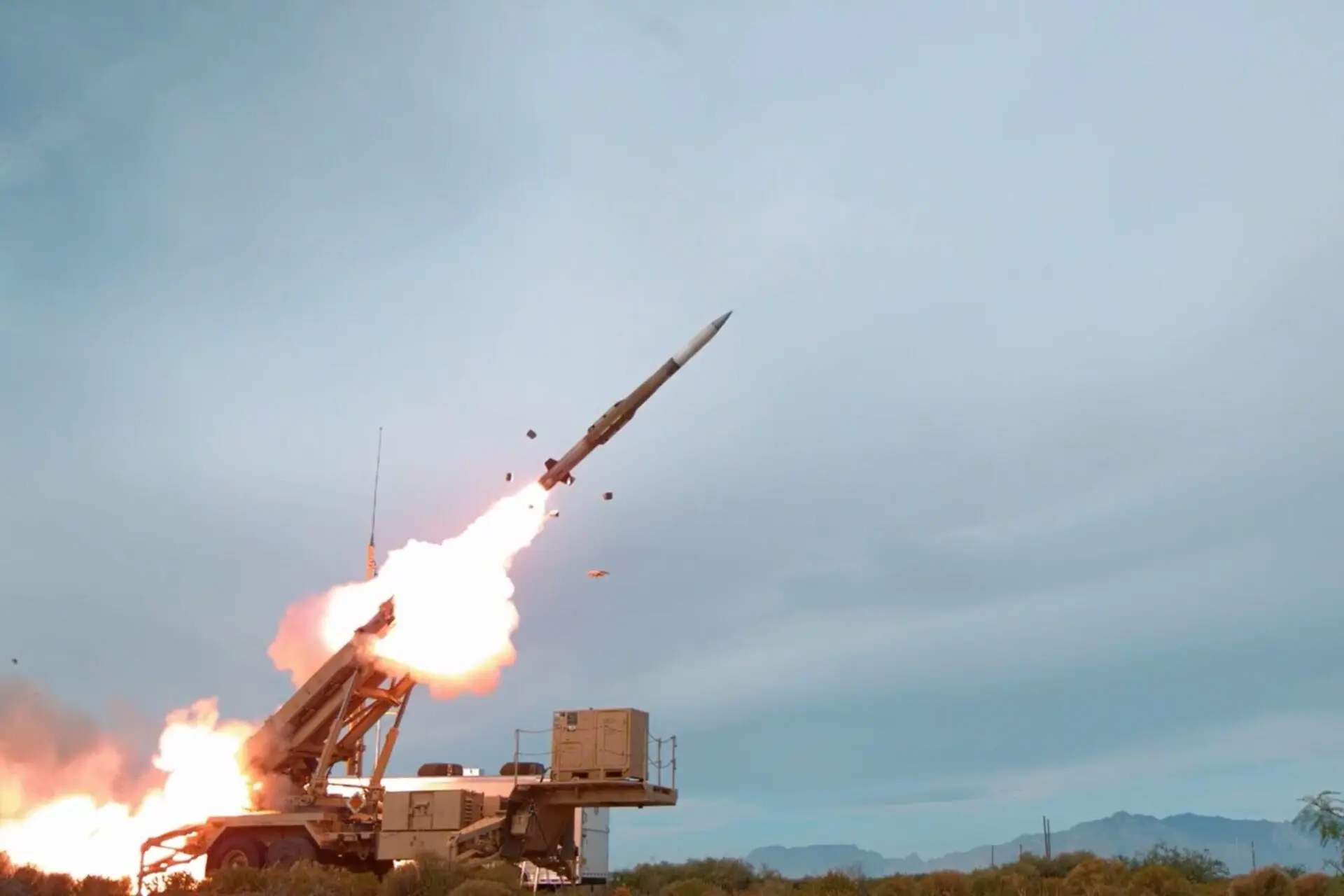
The Pentagon has signed a seven-year framework agreement with Boeing to triple the production of seekers for the Patriot Advanced Capability-3 Missile Segment Enhancement (PAC-3 MSE), in a move the Pentagon says reflects a broader shift in how it intends to manage defense procurement.
Direct supplier engagement

Rather than routing the production commitment through Lockheed Martin, the PAC-3 MSE prime contractor, the Pentagon engaged Boeing directly as a critical sub-tier supplier. alongside a separate, concurrent agreement with Lockheed Martin to more than triple output of the PAC-3 MSE all-up round.
The Pentagon said the parallel approach was a deliberate application of its new Acquisition Transformation Strategy, which prioritizes giving lower-level suppliers the long-term demand signals needed to invest in capacity without waiting for direction from primes.
“To build a true Arsenal of Freedom, we must strengthen every link in the chain,” said Michael Duffey, Under Secretary of War for Acquisition and Sustainment. “We are moving beyond the old model and forging direct partnerships with critical suppliers to ensure the entire defense industrial base is postured to expand production and deliver the decisive capabilities our warfighters need at speed and scale.”
Huntsville expansion and ramp-up timeline

Boeing produces the seeker, the component that provides active guidance data for PAC-3 MSE intercepts, at its facility in Huntsville, Alabama. The company said it had already invested more than $200 million since 2024 to expand that footprint, including a 35,000-square-foot facility extension, and that seeker deliveries grew by more than 30% in 2025. The new framework is intended to enable further investment on a cash-neutral basis.
At the Paris Air Show in June 2025, Lockheed Martin had identified Boeing’s seeker subsystem as the primary bottleneck to reaching a production rate of 650 PAC-3 MSE rounds annually by 2027, and said it was exploring a second seeker supplier. Boeing subsequently announced in October 2025 that its seeker output had exceeded what Lockheed Martin’s two all-up round assembly lines in Camden, Arkansas, and Okinawa, Japan actually consumed in 2025. The new framework is designed to sustain that lead as assembly capacity scales to meet the targets set under the concurrent Lockheed Martin agreement.
Boeing, Lockheed Martin, and the Pentagon are expected to begin an immediate production ramp-up, with a formal multi-year contract award targeted for later in 2026. The Pentagon said securing commitments at both the prime and supplier levels simultaneously was central to its strategy for eliminating production bottlenecks across the full manufacturing chain.
Operation Epic Fury consumption outpacing supply
The urgency behind the deal is visible in the numbers. Lockheed Martin produced roughly 600 PAC-3 MSE rounds in 2025. According to estimates by the Royal United Services Institute, the US and Gulf states fired more than 1,800 Patriot interceptors in the first 16 days of Operation Epic Fury alone, including at least 1,285 PAC-3 rounds by Gulf partners. Reaching an annual production rate of 2,000 interceptors is projected to take seven years even under existing expansion plans.
The Pentagon has been weighing the diversion of Ukraine-bound PAC-3 interceptors to the Middle East to plug the gap, a decision with significant implications for allied customers in the queue. Poland, which reached full operational readiness with two Patriot batteries in late 2025, ruled out a reported US request to redeploy one battery and transfer interceptors to the Middle East.