

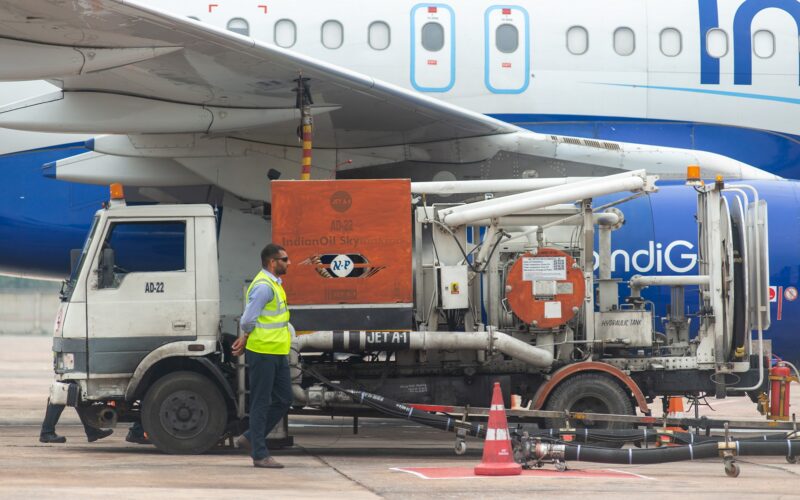
Airlines could see meaningful fuel-cost relief in 2027 if a projected rebound in global oil supply turns this year’s energy shock into a surplus next year.
The International Energy Agency (IEA) said in its June 17, 2026, oil market report that global oil supply could outpace demand by a wide margin in 2027 as Middle East production and exports recover following the disruption caused by the Iran war and the closure of the Strait of Hormuz.
The IEA expects oil supply to rise by 8 million barrels per day in 2027, while demand grows by 2 million barrels per day. That would leave the market with an implied surplus of more than 5 million barrels per day, providing welcome price relief to world airlines.
Jet fuel is one of the largest expenses for carriers. The International Air Transport Association (IATA) says fuel accounts for about 30% of airline operating expenses, making swings in crude oil and refined fuel prices difficult for many carriers to absorb.
IATA recently cut its 2026 global airline profit forecast to $23 billion, down from a previous forecast of about $41 billion, and from $45 billion in 2025, citing higher fuel costs and disruption to air corridors caused by the Middle East conflict.
“There are two major factors: one is the significant increase in jet fuel prices, which has gone way higher than I think anybody would have expected, and then the disruption to the airlines in the Gulf region,” IATA Director General Willie Walsh told Reuters earlier this month.
A 2027 oil surplus would not remove every pressure facing airlines. Aircraft delivery delays, labor costs, maintenance constraints and airspace restrictions continue to affect capacity and profitability across the industry.
But lower crude and jet fuel prices would give carriers more room to absorb those pressures. It could also help airlines prop up less profitable routes, limit fare increases and rebuild margins after a year in which fuel costs and disrupted long-haul routings hurt earnings.
The IEA said the jet fuel market has already started to rebalance. Higher refinery production and increased exports have eased earlier concerns over a significant jet fuel shortfall ahead of the summer.
“Concerns over jet fuel supply shortfalls ahead of the peak summer travel season have significantly eased in recent weeks,” the IEA said, according to Reuters.
The IEA said oil inventories could fall further before the market shifts into surplus, and the recovery depends on Middle East flows continuing to normalize.
The US Energy Information Administration has also warned that global oil inventories remain under heavy pressure, with inventories forecast to fall to their lowest level since 2003 under current trends.
Oil prices have fallen since the US and Iran agreed to an end to hostilities, and opening of the strait and a 60-day negotiating period. Flows through the Strait of Hormuz are gradually expected to resume as production ramps up in the coming months.