

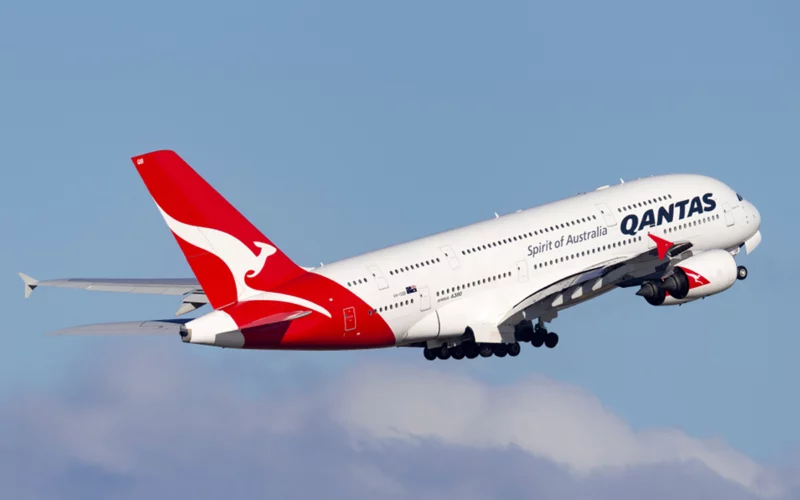
Qantas will retire its Airbus A380 fleet earlier than originally planned, the airline confirmed on August 26, 2026.
While they were expected to serve at least until the fiscal year 2032, retirement of the A380s will now be brought forward to 2028.
The announcement was made during the presentation of the airline’s FY26 results at an event held at its Sydney headquarters.

Strong travel demand has not been enough to compensate for the impact of jet fuel price spikes which followed the outbreak of war in the Middle East earlier in 2026. The impact of higher fuel prices is especially acute when it comes to operating relatively old four-engined aircraft like the A380. Qantas estimated that the overall impact of the fuel crisis could have been as high as U$610 million (US$438 million), although claims to have managed to reduce this figure to AU$420 million (US$301 million) thanks to mitigation measures.
The reactivation of Qantas’ A380 fleet, which was grounded during the COVID-19 pandemic, will have proved to be short-lived. The last aircraft only rejoined the fleet in December 2025, although at least one A380 has since been grounded to undergo maintenance.
During this long operational hiatus, Qantas refurbished the cabin of its double-deck aircraft, refreshing the first class cabins and upper deck lounge and adding more premium seats.
Qantas said that it will enter negotiations with Airbus and Boeing to convert some of its outstanding purchase options into firm orders but did not specify an exact figure.
The carrier currently has 12 ultra-long-range (ULR) A350-1000s on order, which are allocated to “Project Sunrise”, linking the east coast of Australia to London and New York from late 2027. Additionally, Qantas has another 12 regular A350-1000s, plus eight Boeing 787-10 and four B787-9 aircraft on order, as part of so-called “Project Fysh”, which will replace Qantas’ aging A330-300 and –200 fleets, respectively
The additional A350-1000s being sought would be of the regular type, not the ultra-long-range (“ULR”) version allocated to Project Sunrise.
These aircraft, however, are not expected to become available until 2030 or later. This capacity gap may be compounded by the drop in the number of seats per aircraft. Qantas A380s are configured to carry up to 438 passengers, while their replacements, whether A350-1000s or B787s, will carry about half as many people.
Qantas’ current B787-9 configuration has a total of 236 seats, and the A350ULRs will carry up to 238 people. Even if the additional non-ULR A350s are fitted with a denser cabin, the drop in capacity is likely to be significant. In this regard, Qantas aims to make up for this through increased operational flexibility and by increasing the number of premium seats onboard each aircraft.