

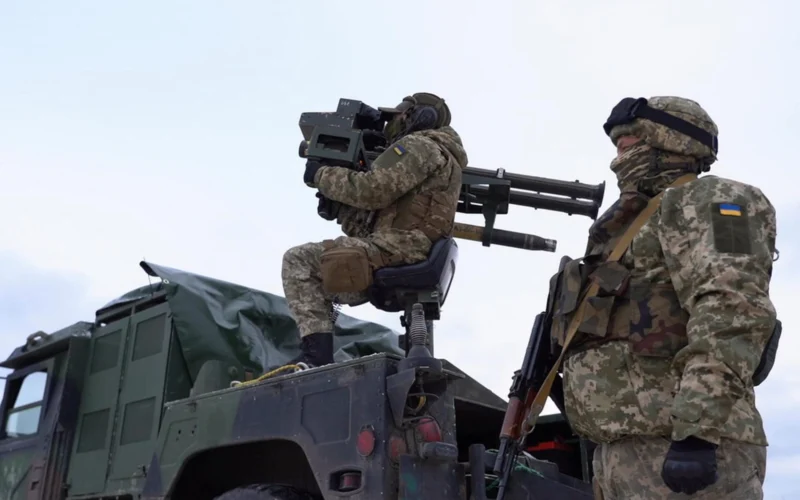
Raytheon, an RTX business, announced on July 7, 2026, that it is working with European companies, including Germany’s Diehl Defence, to double production of the Stinger short-range air defense missile in response to growing global demand.
Under the arrangement, Diehl Defence will produce the guidance section of the missile and source related subcomponents from across Europe.
Raytheon is also working with Dutch suppliers to produce additional major assemblies, with the final missile to be assembled, tested and completed in the Netherlands.
“We are laser-focused on doubling our Stinger missile production capacity,” Tom Laliberty, president of Land & Air Defense Systems at Raytheon, said. “Expanding Stinger production in Europe strengthens our industrial base and broadens our global network, ensuring our allies have reliable access to this critical air defense capability.”
According to RTX, the expanded European capacity will support future work with the NATO Support and Procurement Agency (NSPA) to meet European demand. The Stinger is currently fielded by 24 countries, including 10 NATO members.
The partnership also revives an older industrial relationship. Diehl Defence produced Stinger components under license during the Cold War, and CEO Helmut Rauch said the new agreement marks another chapter of cooperation between the two companies.
A production line resurrected by the war in Ukraine
The announcement caps a remarkable turnaround for a missile that was, until recently, out of production. Raytheon built its last new Stinger for the US Army in 2002 and by 2022, the Pentagon had not ordered the missile in about two decades, with only a limited line kept running for an international customer.
That changed with Russia’s full-scale invasion of Ukraine in February 2022. Washington rushed some 1,400 Stingers to Kyiv in the first two months of the war alone, and has since transferred more than 3,000, as the shoulder-fired missile proved highly effective against Russian helicopters and low-flying aircraft. On May 27, 2022, the US Army awarded Raytheon a $624 million contract for 1,300 replacement missiles, funded through the Ukraine Supplemental, its first Stinger order since the early 2000s.
Restarting the line proved arduous. Some of the missile’s 1970s-era electronics were no longer commercially available, forcing Raytheon to redesign circuit cards and seeker components. The company brought back retired employees, some in their 70s, to train a new workforce, and pulled decades-old test equipment out of storage. When the 2022 order was placed, the Pentagon did not expect deliveries before 2026.
The production surge comes even as the Stinger’s successor takes shape. Raytheon and Lockheed Martin are competing for the US Army’s Next-Generation Short-Range Interceptor (NGSRI) program, with Lockheed Martin conducting the first flight test of its candidate on January 13, 2026.