
Russia has imported around 70,000 tons of Jet A-1 aviation fuel from South Korea and Egypt, with Ukraine’s Defense Intelligence (DIU) saying the move follows a decline in domestic jet-fuel production after repeated attacks on Russian oil refineries.
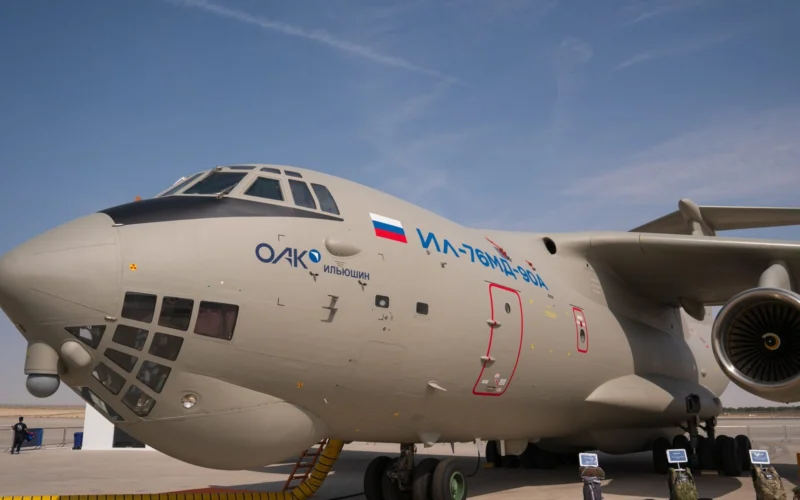
The Ukrainian intelligence service said on August 29 that the imported fuel has already been documented aboard Russian Il-76MD-90A military transport aircraft operated by the Ministry of Defense.
According to DIU, the aircraft, powered by PS-90A-76 engines, have been using Jet A-1 instead of TS-1, the aviation kerosene specified for the aircraft. DIU said Jet A-1 can also be used by several Russian military aircraft, including the MiG-29, Su-30SM, Su-34, Su-35S, Su-57, Su-24M and Tu-95MS/MSM.
The intelligence service also identified the Geran-4 and Geran-5 jet-powered UAVs as potential users of the fuel.
According to Ukrainian intelligence, three tankers delivered the fuel to Russian ports in August.
The tanker Astoria reportedly transported almost 11,000 tons from Ulsan, South Korea, to Vladivostok in early August. Two other vessels, Hanna and Capibara, reportedly delivered a combined 59,000 tones from Egypt’s El Dekheila port to St. Petersburg.
DIU identified the three vessels as part of Russia’s so-called ‘shadow fleet’ and said the shipments involved companies in Russia, the UAE, South Korea and Egypt.
The agency also linked part of the supply chain to Russian companies that provide fuel to the country’s Ministry of Defense under government contracts.
The imports come as Ukraine continues to target Russia’s oil-refining infrastructure.
Reuters reported on August 28 that repeated drone attacks had disrupted operations at several major Russian refineries, pushing domestic gasoline production to around 70% of estimated demand by late August. Russia has responded by increasing imports and maintaining restrictions on fuel exports.
Russia has also extended restrictions on diesel and other fuel exports, while its ban on jet-fuel exports remains in place through the end of November 2026.
The aviation-fuel imports therefore represent a notable shift in Russia’s fuel logistics. A country with a large domestic refining industry is sourcing finished aviation turbine fuel from overseas while simultaneously restricting exports to protect domestic supplies.
The reported shipments do not indicate that Russia is facing an immediate inability to operate its military aircraft. However, the use of imported Jet A-1 shows that disruptions to the refining network are reaching the aviation-fuel supply chain. Military transport aircraft such as the Il-76MD-90A are particularly important to Russia’s logistics system, moving personnel, weapons, and military equipment.
Jet A-1 and Russian TS-1 are different fuel specifications, and their use is subject to the applicable aircraft and engine requirements. DIU nevertheless says the imported fuel is already being used by Russian military transport aircraft.
The development also comes as Russia has to balance military aviation requirements with the fuel needs of its civilian airline sector.
It remains unclear how long Russia will need to rely on imported aviation fuel or whether additional shipments will follow. The reported 70,000 tones suggest that foreign aviation fuel is now entering Russia amid disruptions to domestic refining.