

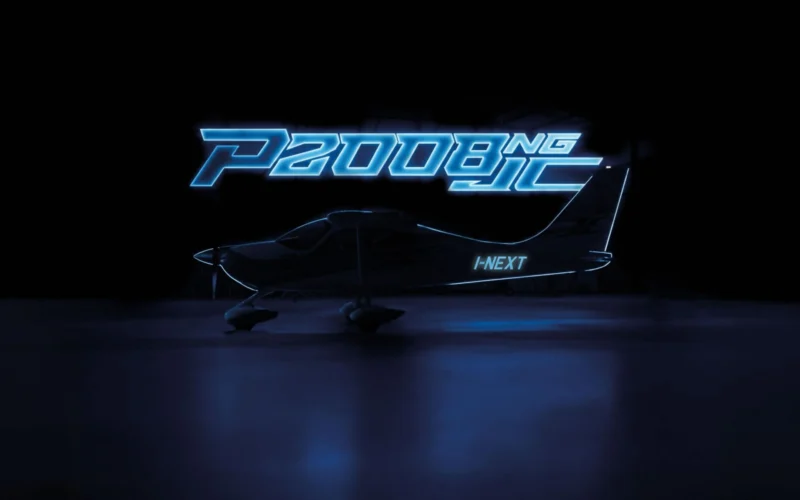
Tecnam has unveiled the P2008JC NG, a ‘next generation’ version of its high-wing training aircraft certified under EASA CS-23 airworthiness standards, marking a significant update aimed at flight schools seeking modern, fuel-efficient trainers.
Announced on December 16, 2025, the P2008JC NG introduces the Rotax 912 iSc fuel-injected engine to the type and incorporates design updates intended to improve safety, operating economics and fleet commonality for flight schools. According to Tecnam, the aircraft is available for order immediately.
Certification under EASA CS-23 places the P2008JC NG in the same regulatory category as larger and more complex general aviation aircraft, with enhanced requirements for structural integrity, systems reliability and low-speed handling, the Italian manufacturer noted. It claims that the updated certification standard improves safety characteristics during takeoff, landing and training maneuvers typical of ab-initio flight instruction.
The aircraft retains Tecnam’s hybrid construction approach, pairing a carbon-fiber fuselage with metal wings and a metal stabilator. According to Tecnam, the configuration aims to balance aerodynamic efficiency and cabin comfort with durability and repairability in high-utilization training environments. In particular, metal wings allow for quicker and lower-cost repairs compared with full-composite structures, Tecnam said.
The switch to the Rotax 912 iSc fuel-injected engine represents one of the most notable changes from earlier P2008 variants. Tecnam claims that the engine burns less then four gallons of fuel per hour and can operate on multiple fuel types, reducing reliance on avgas and lowering direct operating costs. The company also positions the aircraft as a lower-emissions option compared with legacy trainers powered by larger piston engines.
Avionics are centered on the Garmin G3X Touch glass cockpit, bringing digital flight displays and integrated systems management into the ab-initio training environment. Optional equipment includes an autopilot, which Tecnam says allows flight schools to introduce instrument-style procedures while operating within a VFR training platform.
The P2008JC NG is certified under EASA regulations and accepted across EASA-recognized states.
Tecnam also highlighted fleet standardization as a potential benefit for training organizations already operating other injected Tecnam aircraft, including the P-Mentor and P2006T NG twin. A common engine architecture and similar avionics across multiple aircraft types is intended to simplify maintenance, training, and spare-parts management for flight schools.
“The P2008JC NG represents a significant leap in training safety,” said Tecnam Managing Director Giovanni Pascale Langer, citing certification to the latest CS-23 amendment and improvements in low-speed handling characteristics.
Tecnam is based in Capua, near Naples, Italy. The company was founded in 1986 by brothers Luigi Pascale and Giovanni Pascale, both former engineers at Partenavia, and has grown into a well-established manufacturer of light aircraft for flight training, special mission, and regional transport roles.
Tecnam designs and builds a broad portfolio of piston-engine and turbodiesel aircraft, including the P2008, P2010, P-Mentor, P2006T twin, and the P2012 Traveller, a 9- to 11-seat commuter aircraft used by regional operators worldwide. The company has delivered thousands of aircraft to customers in more than 65 countries and is a regular supplier to professional flight schools, airline ab-initio training programs, and government operators.