


The UK’s Defence Investment Plan, published on June 30, 2026, confirms funding for 12 Lockheed Martin F-35A fighters and the country’s entry into NATO’s nuclear mission, restating a commitment first made a year earlier rather than setting out a new one.
Unveiled by Prime Minister Keir Starmer during a speech at Malloy Aeronautics, the plan commits £298 billion ($393 billion) to defense over the next four years, including £15 billion ($20 billion) on top of the 2025 Spending Review.
It raises annual defense spending from £54 billion ($71 billion) to almost £80 billion ($105 billion) by 2029, equivalent to 2.7% of GDP.
“This record investment puts the security of the British public first, transforming our Armed Forces and giving them the funding and equipment they need to fight and defend our nation,” Prime Minister Keir Starmer said.
Under its nuclear deterrent heading, the government lists more than £63 billion ($83 billion) over four years for the Dreadnought and SSN-AUKUS submarine programs, a replacement warhead, and other nuclear work, then adds that it will “also purchase 12 F35As and join NATO’s nuclear mission.” No separate cost for the 12 aircraft was published.
Reviving the British airborne nuclear deterrent
The F-35A purchase and the decision to join NATO’s dual-capable aircraft mission were first announced on June 24, 2025, ahead of the NATO summit in The Hague, as a follow-through on the 2025 Strategic Defence Review. The aircraft are due to be based at RAF Marham in Norfolk and assigned to 207 Squadron, the Operational Conversion Unit.
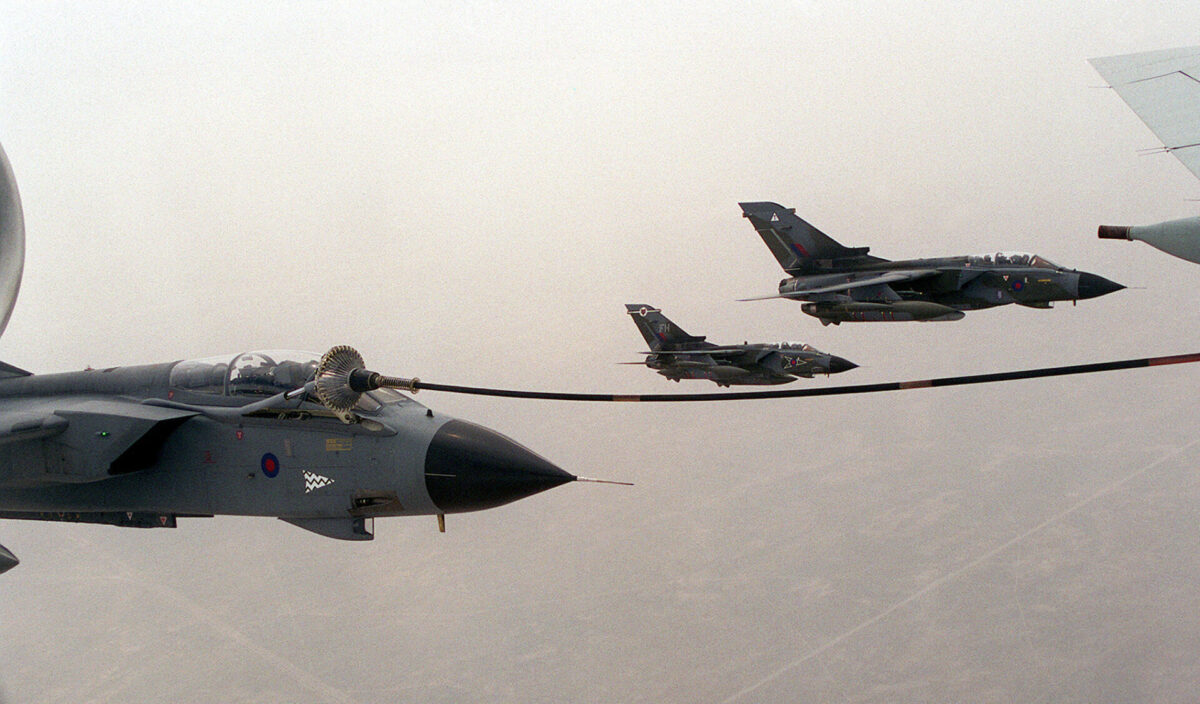
The move reintroduces an air-delivered nuclear role for the RAF for the first time since the WE.177 gravity bomb was retired in 1998, complementing the submarine-based Trident deterrent carried by the Vanguard class and its Dreadnought successors.
The F-35A is the only variant certified to carry the US B61-12 nuclear gravity bomb, the weapon at the core of NATO’s nuclear-sharing arrangements. The UK is not currently part of that mission: its nuclear deterrent is carried exclusively by the Royal Navy’s ballistic missile submarines, while its F-35B fleet, operated by the RAF and Royal Navy, does not have the nuclear-delivery capability required for NATO’s dual-capable aircraft role.
The UK completed delivery of its initial 48 F-35Bs at the end of April 2026, with the 12 F-35As forming the next procurement package toward a planned fleet of 138 aircraft.
The government has presented the choice of the F-35A over a further batch of F-35Bs as a saving of up to 25% per aircraft.
The buy remains capped at 12 aircraft, and the B61-12 bombs they would carry are US property held under arrangements that leave final release authority with Washington, a point critics have raised in asking how much sovereign capability the purchase adds.
The plan comes as NATO weighs expanding its nuclear-sharing arrangements and France promotes a parallel European deterrence framework centered on its own Rafale fleet.
Wider air and defense commitments
Beyond the nuclear line, the plan sets aside more than £8 billion ($11 billion) over four years for the Global Combat Air Programme, the sixth-generation fighter the UK is developing with Italy and Japan. It commits over £5 billion ($6.6 billion) to a “drone transformation”, including £650 million ($860 million) for expendable autonomous systems for the Army, Commando Force and Special Forces.
A further £790 million ($1.04 billion) goes to protecting the UK homeland and overseas bases from air, drone and missile threats, covering new radars and sensors, Directed Energy Weapons, an upgrade to the Sea Viper air defense system on the Royal Navy’s Type 45 destroyers, and expanded counter-drone systems.
The plan allocates £11 billion ($14.5 billion) to munitions and weapons, including long-range strike weapons, low-cost cruise missiles and one-way effectors. The government also announced a £50 billion ($66 billion) defense export facility through UK Export Finance to help British defense firms win overseas contracts.