

Speaking British broadcasters on March 6, 2026, UK Foreign Secretary David Lammy suggested that British aircraft could lawfully strike Iranian missile sites in self-defense, if needed to prevent attacks on British personnel or interests in the Middle East. Lammy’s statement signals how far London’s defensive posture has expanded as the conflict spills across the wider region.
Lammy said that the UK would support defensive action and indicated that hitting Iranian launch sites or other military targets used to prepare attacks could be considered legal under that framework. His remarks build on the British government’s published position that British involvement is tied to collective self-defense, and to necessary, proportionate action against ongoing attacks.
Prime Minister Keir Starmer had already outlined the same logic earlier in the week, noting that it is not possible to intercept every Iranian missile or drone once launched. He added that the United States had requested permission to use British bases for a limited defensive purpose, targeting missiles at storage sites or launchers before they were fired.
UK posture shifts from base defense to regional shield
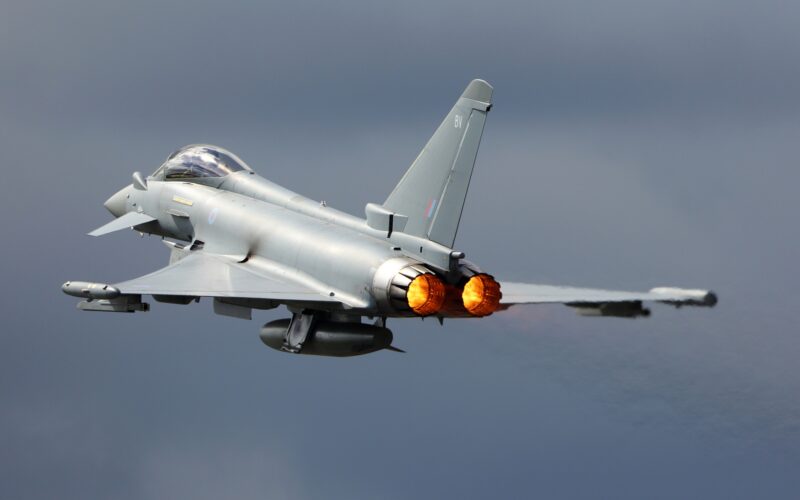
The UK government announced that four additional RAF Typhoon fighters would be sent to Qatar, alongside Wildcat helicopters with counter-drone capability, while HMS Dragon was ordered to the Eastern Mediterranean to help defend British interests and support allied collective self-defense.
According to the British Ministry of Defence, RAF F-35Bs have shot down drones over Jordan, the first operational air-to-air kill for the type in British service, while a Typhoon operating with the joint UK-Qatar 12 Squadron destroyed an Iranian one-way attack drone aimed at Qatar.
Cyprus pressure sharpened the message
That shift comes after the drone threat moved closer to British and allied installations in the Eastern Mediterranean. In Cyprus, two unmanned aircraft heading toward the UK’s sovereign base areas were intercepted on March 2, 2026.
The incident triggered a wider European response, with France, the UK and Greece all moving additional defensive assets toward Cyprus. Paris has also redeployed the nuclear-powered aircraft carrier Charles de Gaulle from the Baltic Sea toward the eastern Mediterranean, as part of a broader effort to reinforce regional force protection.