


A missed warning about US arms export restrictions allowed components from an Australian F-35 stealth fighter to pass through Hong Kong and end up in Chinese hands, raising fresh questions about oversight of the aircraft’s international supply chain.
The incident involved a cockpit canopy and a weapons-bay door, both coated with radar-absorbing material, that were being returned to the United States for possible repair or disposal in late May 2026.
According to a Bloomberg investigation published on October 7, 2026, a UPS employee failed to act on an email from freight forwarder DSV warning that the shipment was subject to US International Traffic in Arms Regulations (ITAR). The message may have reached a different IT system from the one used by the employee responsible for the consignment.
The components were supposed to travel from Australia to San Francisco through South Korea and Taiwan. When the shipment fell behind schedule, UPS changed the route to include Hong Kong, where Chinese authorities subsequently took possession of the parts.
Pentagon investigates F-35 shipping failure
The diversion, first made public by Politico in September 2026, has prompted investigations by the Pentagon and US State Department, as well as calls from lawmakers to examine the global logistics network supporting US military equipment.
Pentagon officials briefed staff of the House Foreign Affairs and Armed Services committees on September 29, 2026, according to Bloomberg.
The Pentagon has characterized the components as unserviceable, while the F-35 Joint Program Office said it was working with US authorities and industry partners to recover them and prevent a recurrence.
Lockheed Martin, the aircraft’s manufacturer and the principal contractor responsible for its global spare parts network, said it was cooperating with logistics partners to improve oversight.
“While we cannot discuss the details of which logistics partner was involved, we are working closely with them to help develop and implement preventive measures to strengthen our collective oversight and prevent recurrence,” the company said.
After Bloomberg presented its findings about the missed email, Lockheed said it had “nothing to add or correct regarding the series of events you mentioned.”
US auditors had already flagged supply-chain oversight gaps
The shipping failure comes against a background of longstanding concerns over accountability for spare parts within the F-35 program.
In a June 2026 report, the GAO found that the US Department of Defense still could not fully account for components moving through the fighter’s supply chain.
The watchdog reported gaps in inventory records, including incomplete information about the number and location of spare parts. It also cited findings that contractor procedures allowed government-owned property to be distributed before authorization, and sometimes without it.
The problems predate the Hong Kong incident. In May 2023, the GAO found that one F-35 prime contractor had recorded losses involving more than one million spare parts, valued at over $85 million, since May 2018. The F-35 Joint Program Office had reviewed fewer than 2% of those losses.
The same investigation found more than 19,000 spare parts awaiting disposal instructions, some for as long as five years. The GAO recommended stronger procedures for tracking losses and handling components classified as excess, obsolete or unserviceable.
As of September 2026, the recommendations remained open, with the Pentagon still working to address the identified deficiencies.
Australia maintains diverted F-35 parts were not sensitive
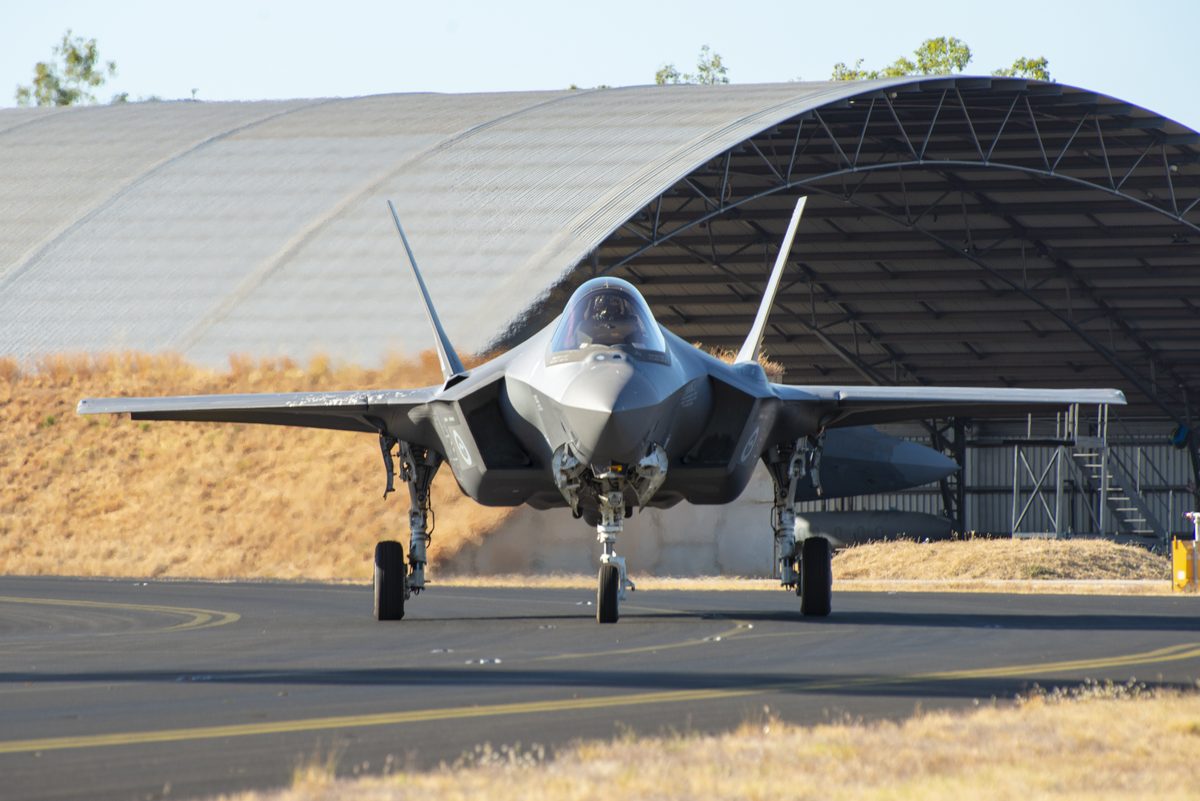
The incident has also raised concerns about possible exposure of the F-35’s low-observable technology. Although the components were no longer serviceable, their radar-absorbing coatings could potentially provide information about the aircraft’s stealth characteristics.
Australia, which operates 72 F-35A fighters, has been assisting US authorities with the investigation since the diversion became public.
Speaking at RAAF Base Edinburgh on September 22, 2026, Australian Defence Minister Richard Marles said Canberra was examining its handling of the shipment but emphasized that responsibility for the wider investigation rested with the United States and Lockheed Martin.
Marles said there was “a sense of comfort” because “we’re not talking about sensitive equipment here, or sensitive parts.”
He reiterated that assessment when questioned further, although he deferred to the United States and Lockheed Martin for a definitive characterization of the components.
A day later, Australian Minister for Defence Industry Pat Conroy was asked whether espionage could have played a role in the diversion.
“I’m not going to comment on the specifics of this as there are ongoing investigations through the F-35 supply chain, principally through America,” Conroy said.