

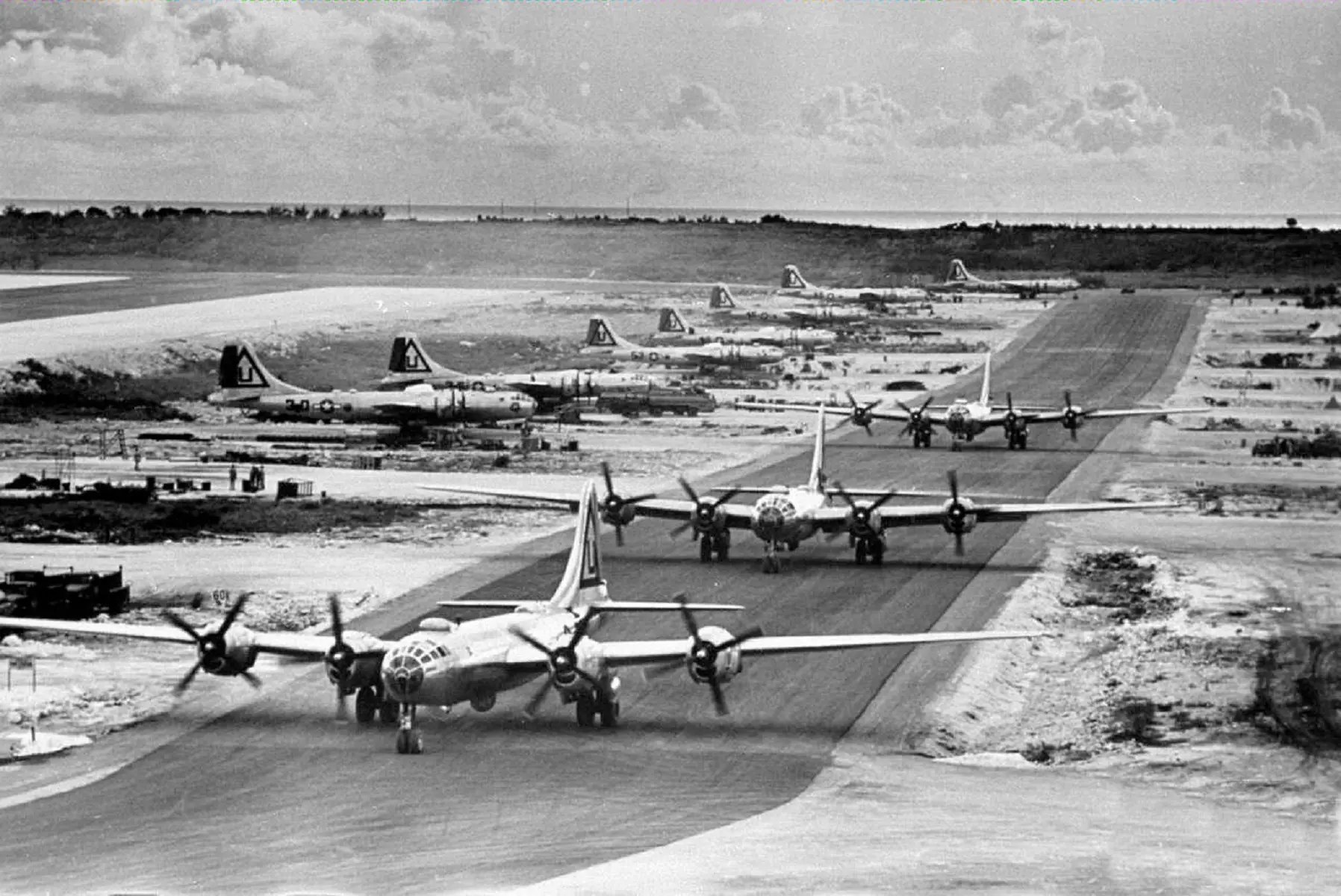
Across the Pacific, the US military is quietly reviving airfields first carved out of jungle and coral during World War 2. The work, say military planners, is practical, urgent, and rooted in a hard truth: fixed air bases are increasingly vulnerable in a war defined by long-range precision weapons.
The effort is driven by the US Air Force’s Agile Combat Employment doctrine, or ACE, a concept that assumes US aircraft will need to operate from many different airfields and move frequently, rather than flying from a few large, permanent bases. Instead of relying on big, established hubs such as Guam, Okinawa, or Hawaii, US airpower would operate from dozens of smaller, far-flung locations. Fighters, tankers, and support aircraft would move frequently, complicating enemy targeting and maintaining the potency of air operations even after enemy missile strikes.
World War 2 left behind the infrastructure to make that possible. Many of the airfields now being restored once supported island-hopping campaigns across the Pacific. Today, they offer something just as valuable: existing runways, taxiways, and hardstands that can be repaired faster and at far lower cost than building entirely new bases. In a conflict with China, speed and survivability matter more than permanence, US war planners say.
Return to Tinian
Nowhere is that clearer than Tinian Island in the Northern Mariana Islands. During World War 2, North Field was the largest airfield in the world, home to hundreds of B-29 bombers. Engineers are working around the clock to restore the airfield to operational status, clearing vegetation, repairing runways, and modernizing surfaces to support everything from cargo aircraft to fifth-generation fighters. When complete, North Field will complement existing US bases on Guam while sitting far enough away to complicate Chinese targeting plans.
On Guam itself, Northwest Field has been rebuilt with long runways, parking areas, and hardened infrastructure to support Marine and Air Force aircraft. Nearby Tinian International Airport is also being expanded to function as a diversionary and refueling airfield if larger bases take damage. Elsewhere, upgrades are underway or planned at airfields in Micronesia, Palau, the Philippines, and other parts of the second island chain.
The goal is not to create new permanent bases. US officials consistently describe these sites as contingency locations, designed for rotational and expeditionary use. Aircraft would flow through them during crises or conflict, operating for short periods before moving again.
Strategy shaped by threats
The logic is straightforward. China has spent years building a missile force intended to hit US air bases early in a conflict. Large, centralized bases simplify targeting of runways, fuel farms, aircraft shelters, and command sites. Spreading aircraft across many locations reduces that vulnerability.
By basing aircraft across many airfields, the US raises the complexity of any opening strike. Even if some bases are hit, others remain usable. Engineering units can repair damaged runways while aircraft shift elsewhere. The result is resilience, not invulnerability, but resilience may be enough to maintain air operations when they matter most.
The strategy extends beyond the central Pacific. In Alaska, several former World War 2 and Cold War-era airfields are being prepared as part of a northern air corridor. Bases there can support fighters and transport aircraft moving toward Japan and the western Pacific, providing depth and alternate routing if southern bases come under pressure. Farther south, Australia plays a critical role as a rear-area hub, offering space, infrastructure, and political reliability.
Taken together, the effort reflects a broader shift in how the US thinks about airpower in a peer conflict. The emphasis is no longer on pristine bases and uninterrupted operations. It is on flexibility, repairability, and the ability to keep flying and fighting even under attack.
China has criticized the airfield restorations as provocative and rooted in Cold War thinking. US officials frame them differently. From their perspective, preparing airfields before a crisis reduces the chance that a conflict ever begins. Effective deterrence, the US argues, depends on whether capabilities are visible and credible.
1 comment
Personally, we should not be telling any potential enemies what we are planning as that gives them an advantage. Let them figure it out themselves.