

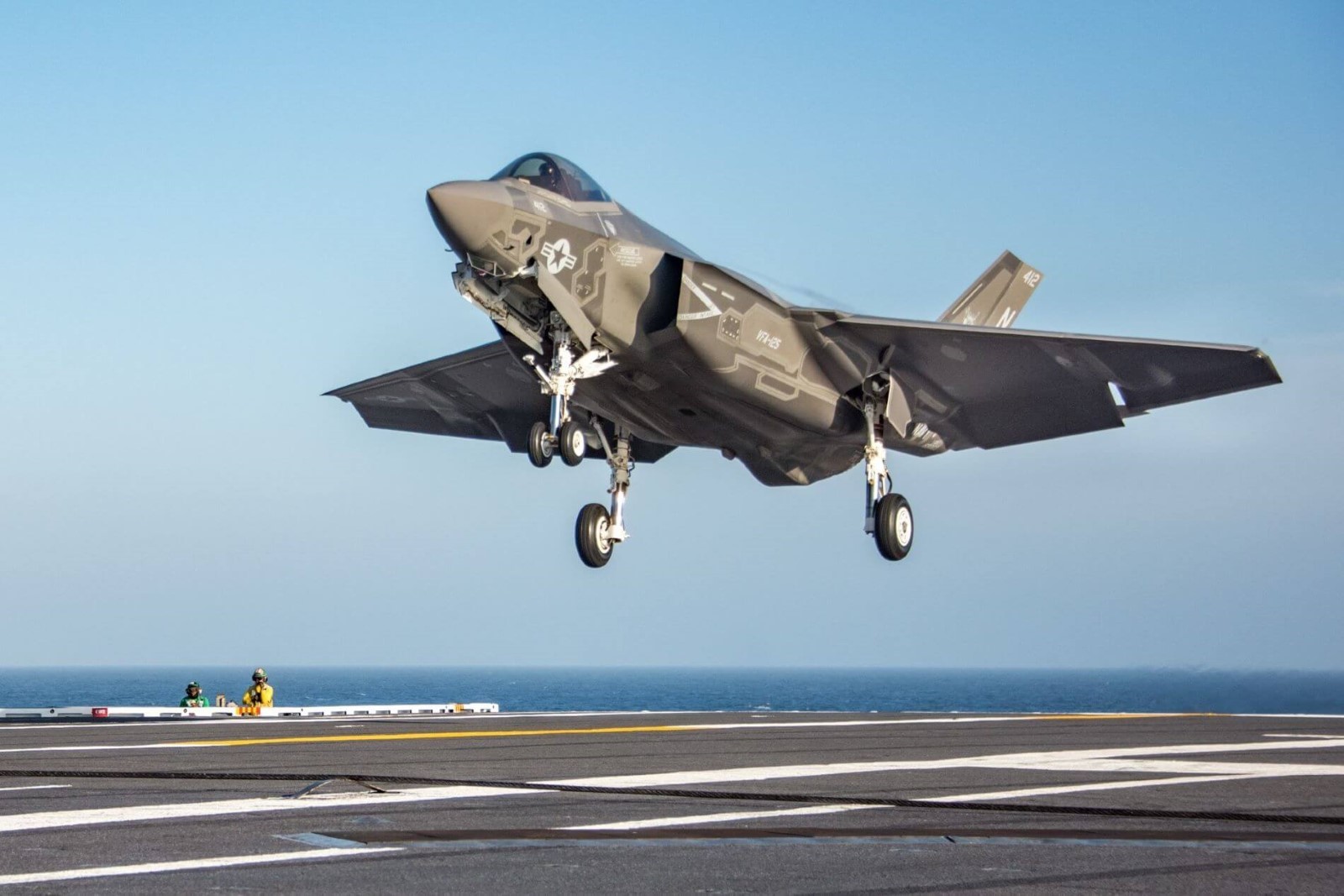
The United States continues to shift hundreds of combat aircraft and support assets into the Middle East as tensions with Iran increase and nuclear talks hang in the balance.
According to information gleaned from flight tracking sites, European plane-spotter reports, and defense coverage, fighter squadrons have been transiting en masse from US and European bases toward the US Central Command’s area of responsibility in the Middle East.
The deployments include F-35 and F-16 fighters, along with a contingent of F-22s that have operated in and out of the region in recent years. Some aircraft were already in the region while others began moving in recent days.
The fighters represent the visible edge of a buildup that gives US President Donald Trump a wide array of options if negotiations stall or if regional hostilities flare.
At least two E-3 Sentry airborne warning and control aircraft departed RAF Mildenhall in the United Kingdom. A U-2 reconnaissance aircraft flew out of RAF Fairford. The U-2’s high-altitude sensors provide broad surveillance coverage, and the aircraft can also serve as a communications bridge in complex operations involving stealth fighters.
Signals intelligence aircraft have also departed for the Middle East. RC-135 Rivet Joint aircraft, which collect electronic emissions and communications data, have appeared in transatlantic movements tied to the region. Maritime patrol aircraft, including P-8 Poseidons, are operating in and around the eastern Mediterranean and Gulf areas, where sea lanes and naval movements remain critical.
Tankers form the backbone of any such surge. Dozens of KC-135 and KC-46 aircraft have crossed the Atlantic in recent days. Without them, the fighters would have limited reach. With them, US aircraft can stage through Europe and operate at extended distances once in theater.
Heavy airlift aircraft have followed. C-17 and C-5 transports carry personnel, maintenance teams, and spare parts that keep squadrons flying.
Naval forces are also in motion. One aircraft carrier is in the region and another is headed there, adding their air wings to the mix. Carrier-based fighters and electronic attack aircraft expand the range of options available to Trump.
Whether the buildup will flare up into a foll-blown conflict is yet to be seen. US officials have not described the movement as a prelude to a specific strike plan. The Pentagon has framed similar deployments in the past as deterrence and force protection measures. Still, the size and composition of the current surge stand out. Stealth fighters, surveillance aircraft, tankers, and command-and-control platforms together form a self-contained air campaign architecture.
Both Washington and Tehran have signaled incremental progress in talks this week, but Iranians also say they are prepared for war. But the military posture leaves little doubt that the United States intends to back diplomacy with credible force, but what that might mean is anyone’s guess.