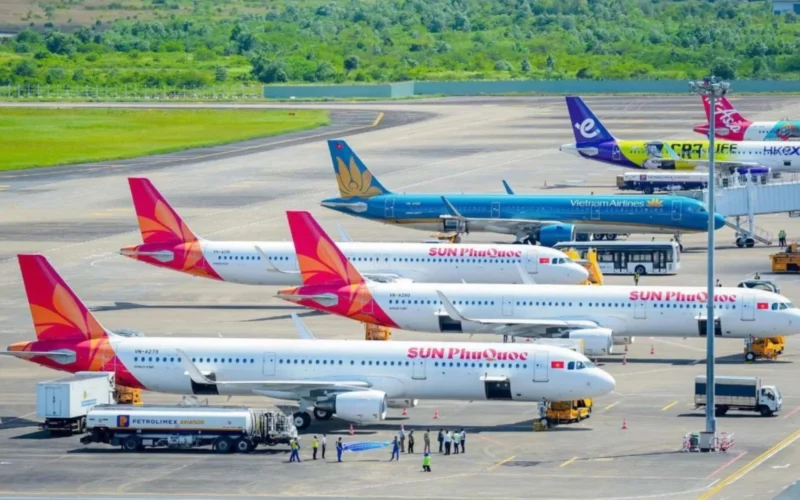
Rising tensions in the Middle East have disrupted international flight routes and sent aviation fuel prices soaring. This has raised concerns over potential Jet A-1 fuel shortages for Vietnam’s aviation sector from April 2026, according to a report reported by Vietnamnet Global.
The Civil Aviation Authority of Vietnam (CAAV) has warned that the military tensions in the Middle East have effectively shut down the Strait of Hormuz, a key maritime route transporting more than 20%of global oil supply. As a result, Brent crude prices have surged, with Jet A-1 aviation fuel prices in the Singapore market jumping from around US$83-89 per barrel in January and February 2026 to US$231.42 per barrel in early March 2026.
Vietnam currently imports about 70% of its aviation fuel demand, with more than 60% sourced from Thailand and China. However, fuel suppliers such as Skypec and Petrolimex Aviation have indicated that current supply is only sufficient to meet airline demand until the end of March 2026 under existing contracts.
Based on the report, Partners in Singapore, Thailand, and China are delaying deliveries and may even invoke force majeure clauses to terminate contracts, making the risk of aviation fuel shortages from early April increasingly real.
The sharp increase in fuel prices is expected to significantly impact airline operating costs, with fuel currently accounting for about 35-40% of total expenses. Vietnam Airlines, VietJet Air, and other carriers have reported that if Jet A-1 prices remain between US$200 and US$230 per barrel, their operating costs could increase by 30-60% each month. As a result, airlines are reviewing flight schedules and may adjust route structures or frequencies starting in April 2026 to reduce fuel consumption.
In response to the situation, the CAAV has proposed several urgent support measures for the aviation sector, including waiving the environmental protection tax on aviation fuel, reducing value-added tax, and allowing airlines to apply flexible fuel surcharges on domestic air tickets.
The authority has also suggested establishing high-level discussions with countries that are currently restricting fuel exports to facilitate Vietnamese companies in fulfilling existing Jet A-1 fuel contracts and securing new supply sources.