

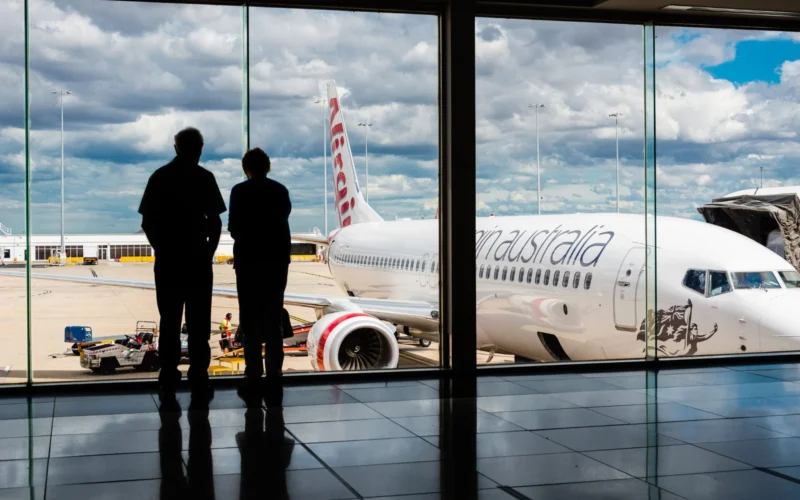
Melbourne Airport (MEL) announced that Virgin Australia resumed its Qatar Airways-operated long-haul services on June 15, 2026, restoring double-daily flights to Doha.
The route is being resumed as seat capacity between Melbourne and the Middle East gradually comes back online.
Services return across the region
The daily VA7 and VA8 services between Melbourne and Doha had been suspended in February 2026 following the outbreak of war. The disruption extended across the region, also grounding Qatar Airways’ own schedule, Emirates flights to Dubai, and Etihad services to Abu Dhabi.
With safe air corridors now re-established across the region, airlines are steadily bringing their services back into the major global hubs, easing pressure ahead of the European summer travel peak.
Virgin Australia’s returning code-share service will supplement Qatar Airways’ daily Doha flights. Emirates, meanwhile, plans to step up its schedule between Melbourne and Dubai from twice daily to three times daily starting in August 2026.
A dip in May travel
The effects of the conflict were visible in May 2026’s traveler numbers, as capacity cuts, airline fuel price surcharges, and tighter household budgets all weighed on demand.
Over the month, around 2.75 million people passed through Melbourne Airport, a 3% drop compared with the same period a year earlier, with 726 fewer passenger flights operated than in May 2025. International traffic saw the steepest decline at 5%, while domestic numbers eased by 2%.
The fuller financial year picture remains positive, however. From the start of the financial year through May, more than 34 million travelers moved through the airport, up 2.6% on the previous year. Both international and domestic travel contributed to that growth, rising 3% and 2.4% respectively.
Welcome news for travelers and exporters
Melbourne Airport CEO Lorie Argus said the return of stable schedules and aircraft capacity to the Middle Eastern hubs was welcome news for both travelers and Victorian exporters.
“Doha, Dubai and Abu Dhabi are some of the most important aviation hubs in the world, so we’ve been working closely with the airlines to bring capacity back online as soon as possible,” she said.
“Victoria relies on these services to connect our people and products with markets in Europe, Africa and the Middle East, so it’s encouraging to see more aircraft returning to these routes.”
Argus noted that domestic carriers have also scaled back their schedules in response to higher fuel prices.
“We look forward to working with them to restore capacity into Melbourne as soon as possible,” she said.
Looking further ahead, she pointed to the airport’s long-term investment plans.
“While the ongoing global uncertainty is having a short-term impact on traveler volumes, we know we need to invest in the future and build for the long term.
“The first phase of our international terminal expansion project will open later this year with a state-of-the-art new baggage system and new pick-up and drop-off locations for Terminals 1, 2 and 3, which will allow us to start pushing the terminal footprint out into the current forecourt and across the existing departures ramp.”