

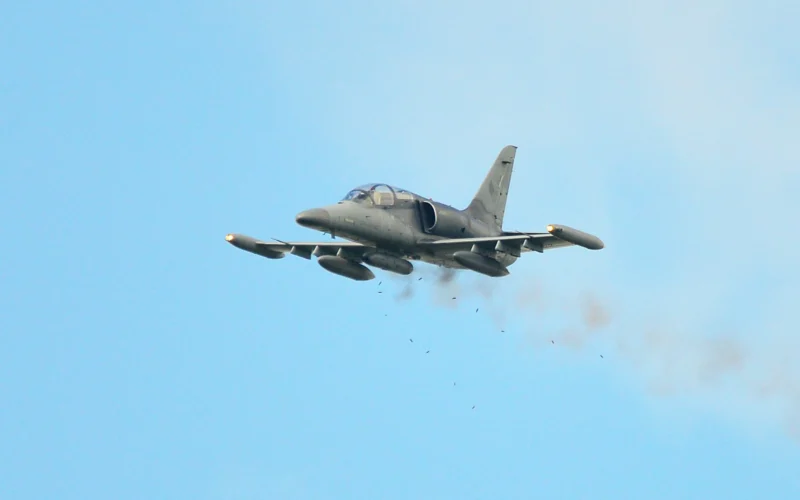
The Czech Republic will not sell or donate light combat aircraft to Ukraine, Prime Minister Andrej Babis said, rejecting a transfer scenario outlined days earlier by President Petr Pavel during a visit to Kyiv.
Speaking after a cabinet meeting in Prague on January 19, 2026, Babis said the Czech armed forces required their current fleet.
“The aircraft are not available, and we do not have any other ones,” the prime minister told reporters. He did not specify the aircraft type, but his comments followed Pavel’s suggestion that Ukraine could acquire Czech-made L-159 subsonic combat jets capable of engaging drones.
L-159 fleet and drone-defense potential
On January 16, 2026, in Kyiv, Pavel said Prague could provide “several medium combat planes” effective against drones in a “relatively short time” to Ukraine. Pavel has been a vocal supporter of military aid to Kyiv during Russia’s war in Ukraine.
Pavel’s comments suggested Ukraine was exploring fixed-wing, manned kinetic options against slow-flying targets, a profile largely absent from NATO inventories and typically covered by attack helicopters or converted turboprop trainers.
The Czech military operates 24 L-159s, including eight two-seat trainers, alongside 14 Saab JAS 39 Gripens flown under lease and 24 F-35s on order for post-2030 delivery. The L-159 is armed with short-range infrared air-to-air missiles such as the AIM-9 and can employ gun pods, giving it both missile and cannon options against slow, low-flying drones.
But the potential aircraft transfer had drawn criticism from Babis’s coalition partners in the far-right, pro-Russian SPD, and Babis said Prague’s position was unchanged from the previous government, which also declined to send L-159s to Kyiv. Since his appointment in early December 2025, Babis has pledged not to provide arms and opted out of the financial component of an EU loan to Ukraine.