

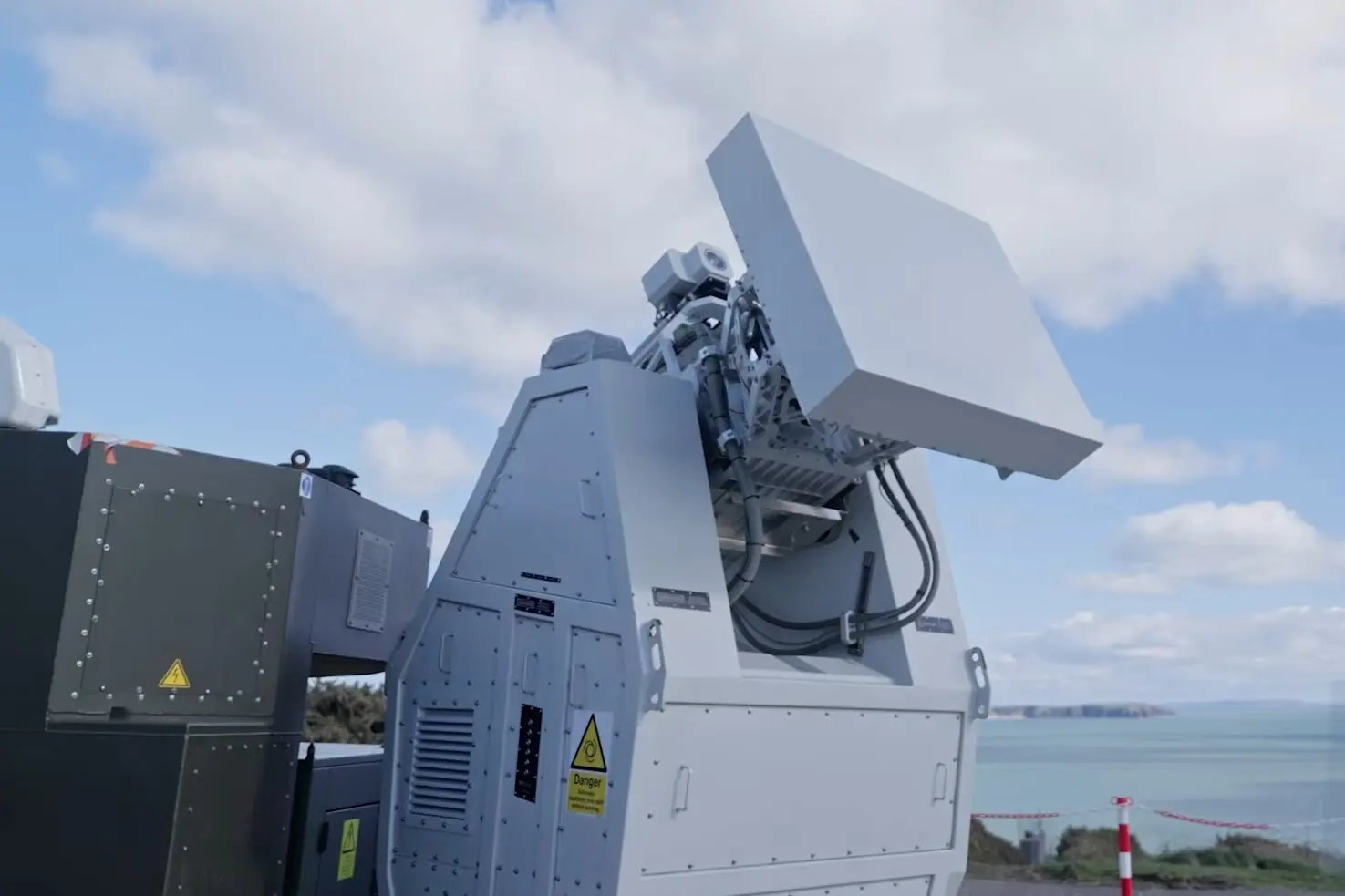
Thales UK has carried out a new round of trials of RapidDestroyer, a radio frequency directed energy weapon designed to defeat drone swarms, with the system neutralizing 80 drones in individual engagement scenarios.
The trials took place in April 2026 at Pershore, Gloucestershire, in partnership with Teledyne e2v. They focused on an upgraded four-panel effector intended to increase the amount of energy delivered to a target and extend the range at which drones can be engaged.
According to Thales, the volume of testing allowed engineers to conduct forensic analysis of each engagement. The company said the trials showed consistent, near-immediate defeats, preventing the drones from re-engaging after being targeted.
How RapidDestroyer works
RapidDestroyer is a hard-kill counter-drone system that uses high-intensity radio frequency waves to disrupt or damage electronic components inside a drone. Unlike conventional jamming, which seeks to interfere with the drone control or navigation links, the system is designed to affect the drone’s onboard electronics directly.
The weapon is integrated with Thales’ command and control and weapon control software. The company said artificial intelligence supports threat response and autonomous operation, while keeping the operator in the loop.
A UK-led demonstrator program
RapidDestroyer was developed by a Thales UK-led consortium that includes QinetiQ, Teledyne e2v and Horiba Mira. The work is backed by the UK Ministry of Defence under the Team Hersa demonstrator program.
The British Armed Forces are expected to field the capability within the next few years, providing a counter-drone option at brigade level.
The April 2026 trials follow earlier testing carried out in April 2025 at the Manorbier range in West Wales. During that event, the demonstrator defeated two simultaneous drone swarms in what the UK Ministry of Defence described at the time as the largest counter-drone swarm exercise conducted by the British Army to date.
Earlier live-fire activity at the site saw the system used against more than 100 drones.
A low-cost answer to mass drone attacks
Cost remains one of the system’s central selling points. Thales estimates the energy cost of each engagement at less than 10 pence, or about $0.13 per shot.
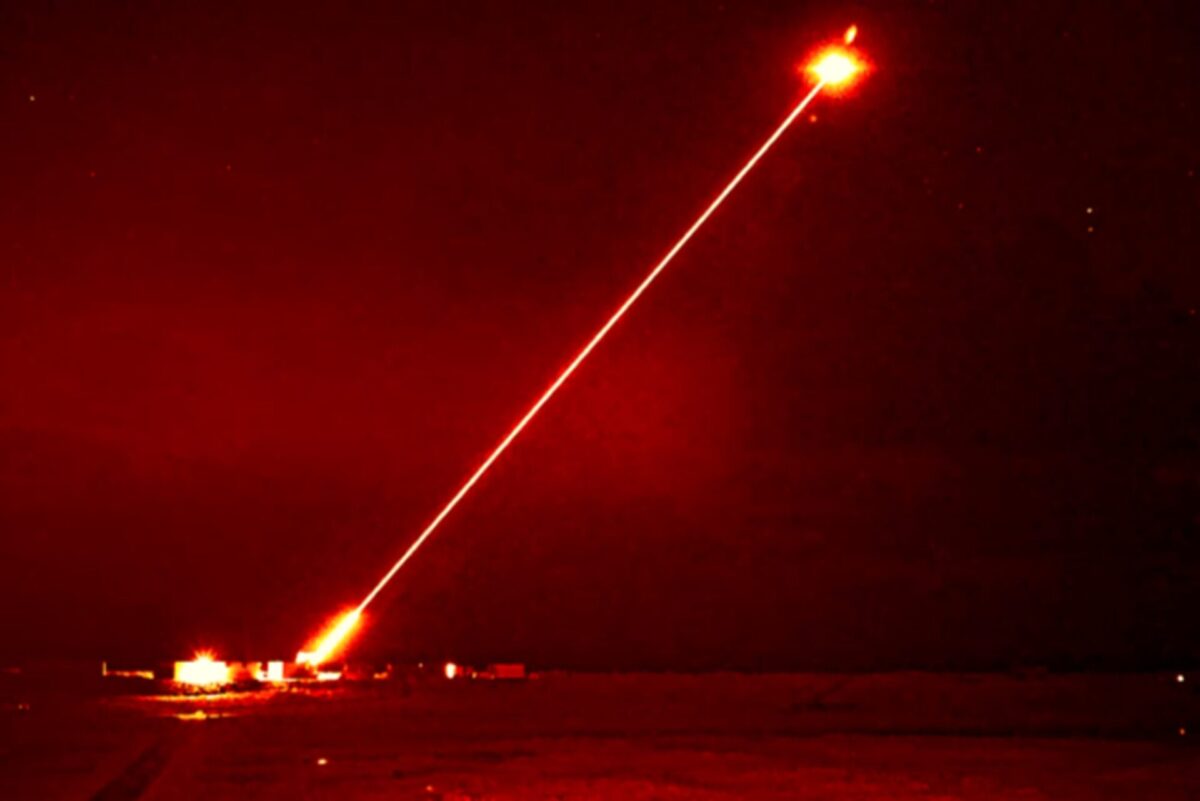
That places radio frequency directed energy weapons in the same broader category as laser systems such as the MBDA DragonFire, which the UK is also moving toward operational use. Both are being developed as low-cost effectors against drones and other aerial threats, at a time when missile interceptors can cost far more than the targets they are used to destroy.
For armed forces facing large numbers of low-cost commercial drones, one-way attack drones or coordinated swarms, the appeal is a counter-drone system that can engage multiple threats without rapidly exhausting expensive missile stocks.