
G600
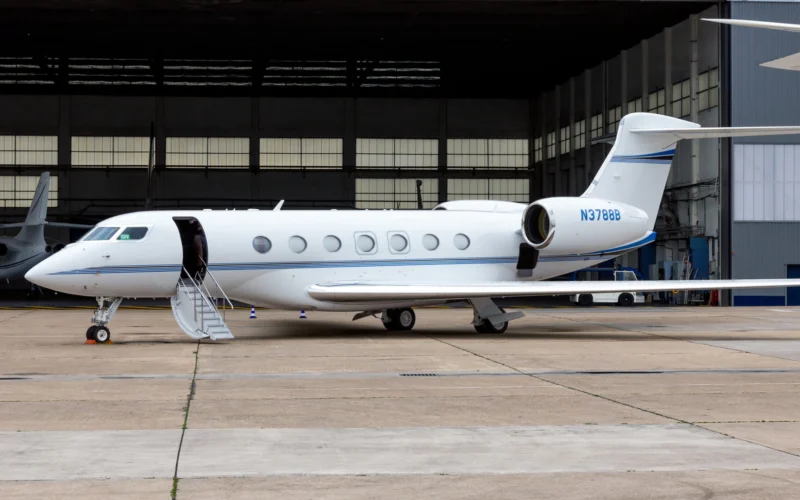
G600 at a glance
The Gulfstream G600 flies 6,600 nautical miles nonstop, linking Dubai and New York or Paris and Los Angeles, and entered service in 2019 as the larger of the two jets that launched Gulfstream's current-generation family. Its Pratt & Whitney PW815GA engines and fly-by-wire controls, meaning computer-managed flight controls in place of mechanical linkages, come from the same design base as the flagship G700 and G800.
The G600 occupies the heart of the large-cabin segment, offering most of the G650's cabin for a lower purchase price, typically in the high-$50 million range, and Gulfstream has delivered well over 200 of the G500 and G600 together, making the pair the commercial backbone of the Savannah line.
Full specifications
Market position
The G600 competes with the Bombardier Global 6500 and the Dassault Falcon 8X, a three-way contest in the 6,000-to-6,600-nautical-mile class where each manufacturer sells a different virtue: Gulfstream cabin technology, Bombardier field performance, Dassault efficiency. As buyers increasingly step up from super-midsize jets, the G600 is positioned as the first Gulfstream with true intercontinental legs, a deliberate on-ramp to the G700 and G800 above it.
Gulfstream Aerospace, the Savannah, Georgia-based business jet unit of General Dynamics, has been building large-cabin jets since the Gulfstream II of 1966 and delivers from final assembly lines in Savannah and Appleton, Wisconsin.
Latest G600 coverage from AeroTime
Frequently asked questions
6,600 nautical miles at Mach 0.85, with a maximum operating speed of Mach 0.925.
The G600 succeeded the G550, one of the most successful large-cabin jets ever built, and entered service in August 2019.
The G600 has a longer cabin, a wider wingspan with more fuel, and 1,300 nautical miles more range than the G500; the two share the Symmetry flight deck and a common type rating.