
G500
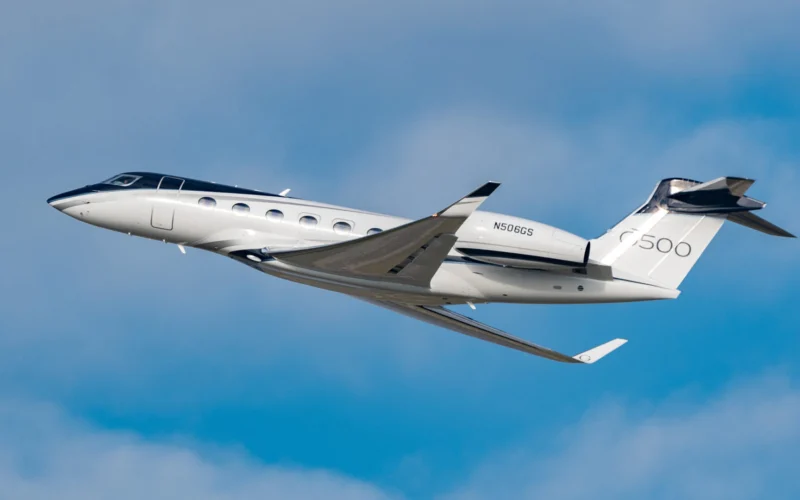
G500 at a glance
The Gulfstream G500 flies 5,300 nautical miles nonstop, comfortably linking Los Angeles and London, and entered service in 2018 as the aircraft that introduced Gulfstream's Symmetry flight deck, the first business jet cockpit with active-control sidesticks, meaning the two pilots' controls move together so each can see what the other commands.
The G500 shares its fuselage cross-section, engines family and systems with the G600, differing mainly in fuel and cabin length, and the commonality means pilots hold a single type rating for both, a training and cost advantage Gulfstream markets heavily to corporate flight departments replacing older GIV- and GV-series aircraft.
Full specifications
Market position
The G500 sits between the super-midsize class and the true ultra-long-range jets, competing with the Falcon 6X and the upper end of the Challenger line while feeding buyers toward the G600. Gulfstream pitches it as the modern replacement for the hundreds of aging G450s and GIVs still flying, a fleet-turnover opportunity the company is chasing as it looks to keep the large-cabin market to itself.
Gulfstream Aerospace, the Savannah, Georgia-based business jet unit of General Dynamics, has been building large-cabin jets since the Gulfstream II of 1966 and delivers from final assembly lines in Savannah and Appleton, Wisconsin.
Latest G500 coverage from AeroTime
Frequently asked questions
5,300 nautical miles at Mach 0.85, or 4,400 nautical miles cruising at Mach 0.90.
It introduced Gulfstream's Symmetry flight deck with active control sidesticks, an industry first, and beat its promised performance numbers before entering service in 2018.
The G450, the last derivative of the classic Gulfstream IV line.