
Beijing Capital (PEK)
Beijing Capital (PEK) at a glance
Beijing Capital International (PEK) is the airport that carried China's rise: opened in 1958 as the country's first civil airport, it climbed to become the world's second-busiest, peaking above 100 million passengers in 2019, with Terminal 3, one of the largest buildings ever constructed, opened for the 2008 Olympics as the symbol of that ascent. It remains Air China's fortress hub and the Star Alliance anchor of northern China, 25 kilometers northeast of the capital's center.
Its modern story is a planned diminishment: the 2019 opening of Daxing International split Beijing's traffic between two mega-airports, moving SkyTeam's carriers south and resetting Capital around Air China and its Star Alliance partners at 67.4 million passengers in 2024. The airport that once chased the world's number-one ranking now competes instead on what it kept, the flag carrier, the premium routes and the shortest drive to power in Beijing.
Hub & base airlines
| Airline | Role | Terminal |
|---|---|---|
| Air China | Fortress hub and Star Alliance anchor | Terminal 3 |
Terminals & infrastructure
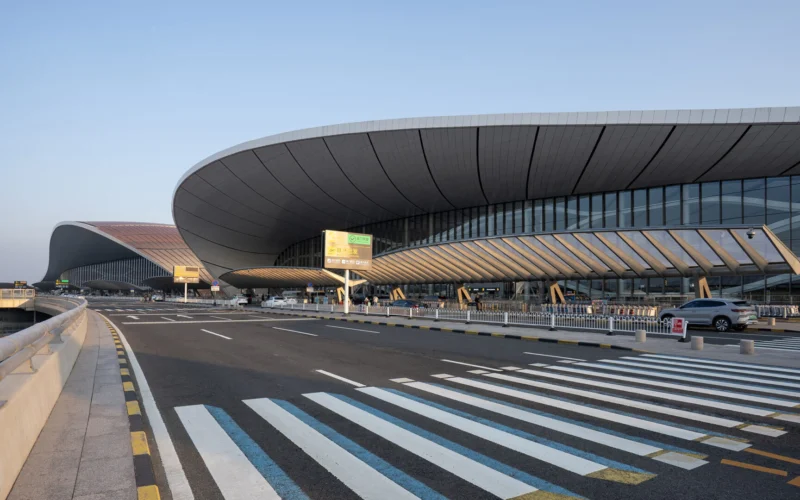
Terminal 3, opened for the 2008 Olympics and among the largest buildings on Earth, is Air China's home and the Star Alliance house, while Terminals 1 and 2 handle the remaining carriers after SkyTeam's move to Daxing. Three runways and an express rail link to the city center support a hub deliberately rebalanced around the flag carrier since Beijing became a two-airport system in 2019.Full specifications
Frequently asked questions
67.4 million passengers in 2024, recovering after the pandemic and the planned transfer of SkyTeam carriers to Daxing; before the split it peaked above 100 million as the world's second-busiest airport.
Beijing runs a two-airport system since 2019: Capital in the northeast hosts Air China and Star Alliance, while Daxing in the south hosts China Eastern, China Southern and SkyTeam.
Opened for the 2008 Olympics, it is one of the largest buildings ever constructed and remains the centerpiece of the airport, housing Air China's hub operation.