

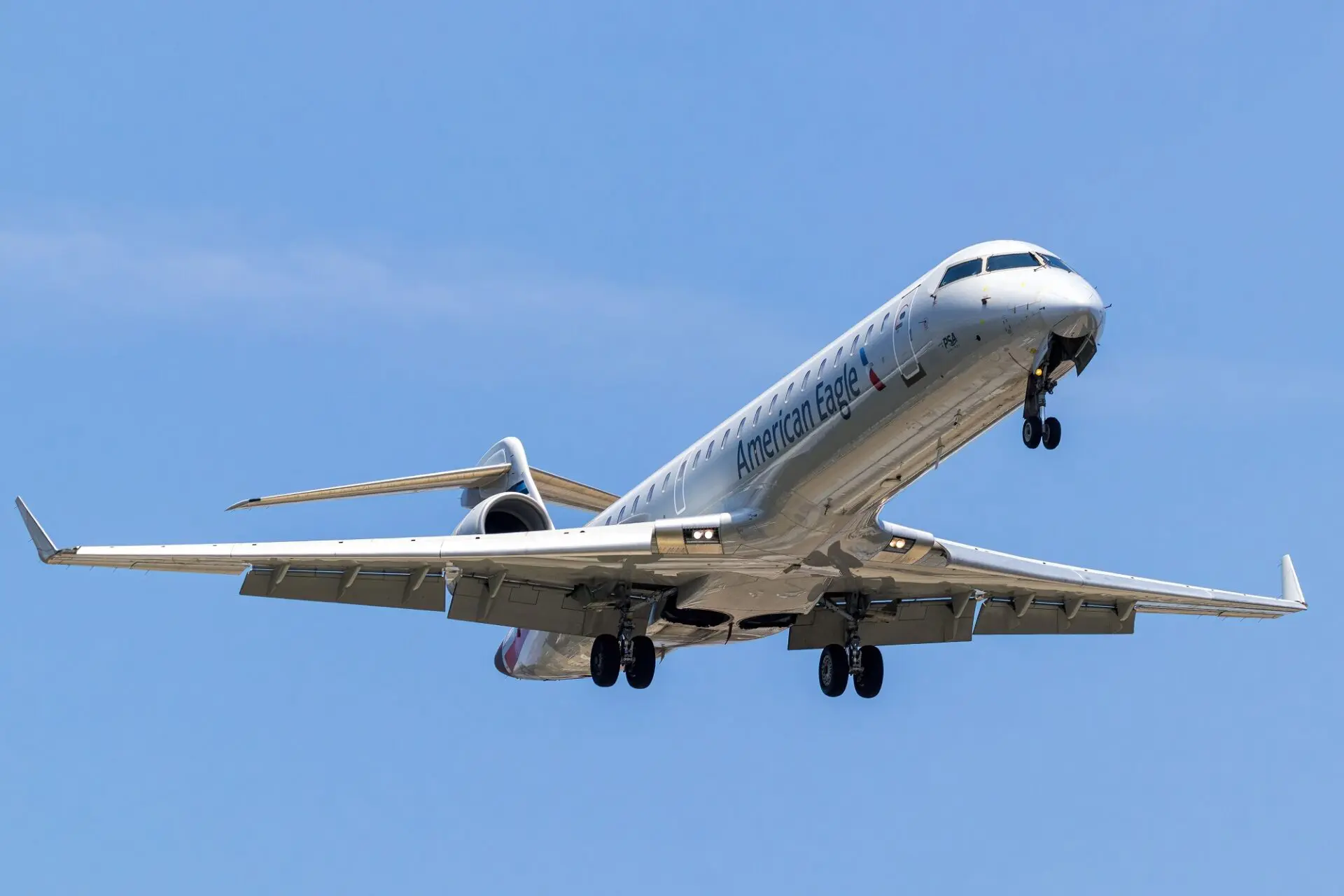
US lawmakers reached an agreement in principle on November 17, 2026, to require civilian aircraft already subject to ADS-B Out rules to carry equipment that helps pilots identify nearby traffic, advancing aviation safety legislation prompted by the fatal collision between an American Airlines regional jet and a US Army helicopter near Washington, DC.
Requirements for military aircraft remain unresolved.
Senators announced the agreement at a Capitol event organized by families of the victims. Republican Sen. Ted Cruz of Texas said he hoped Congress would pass the legislation before the end of the year.
The proposal centers on Automatic Dependent Surveillance-Broadcast In, or ADS-B In, which allows aircraft to receive information about surrounding traffic. The Federal Aviation Administration (FAA) already requires ADS-B Out, which broadcasts an aircraft’s position, in much of US controlled airspace. It does not require the complementary receiving equipment.
The proposed requirement would cover airliners, business aircraft and general aviation aircraft operating in airspace where the transmitting equipment is mandatory.
It would not impose a blanket equipment requirement on every aircraft. A vintage light airplane or hot-air balloon operating legally without ADS-B Out would not automatically have to install ADS-B In under the announced approach.
The Senate-passed ROTOR Act sets a December 31, 2031, equipage deadline and provides for lower-cost alternatives, including portable receivers, for aircraft with a maximum certificated takeoff weight below 12,500 pounds operating under Part 91, the US rules governing most private flying. The FAA would determine which equipment qualifies.
The agreement still requires congressional approval. The House and Senate have passed competing safety bills, leaving lawmakers to negotiate a common version.
Earlier warnings could have helped crews
The January 29, 2025, collision killed all 64 people aboard American Airlines Flight 5342, a PSA Airlines-operated CRJ700, and three crew members aboard the Army Black Hawk. The aircraft collided over the Potomac River near Ronald Reagan Washington National Airport (DCA).
The National Transportation Safety Board (NTSB) found that failures in airspace design, oversight and risk management by the FAA and Army contributed to the accident.
Helicopter routes allowed aircraft to pass beneath an active airline approach corridor without adequate separation, while repeated close encounters had failed to produce sufficient corrective action.
Investigators also examined whether better cockpit traffic information could have helped the crews avoid each other.
An NTSB simulation found that an ADS-B-based alerting system could have warned the airliner’s crew about the helicopter 59 seconds before impact, followed by another warning 35 seconds before the collision. The board has urged the FAA to require ADS-B In to help pilots detect conflicts that might otherwise go unnoticed.
The jet’s existing traffic alert and collision avoidance system operated as designed. However, altitude restrictions built into the system prevented it from issuing resolution advisories, the instructions that tell pilots how to maneuver away from a collision threat.
The NTSB issued 50 recommendations following its investigation, covering helicopter routes, air traffic control procedures, safety oversight and collision avoidance equipment.