

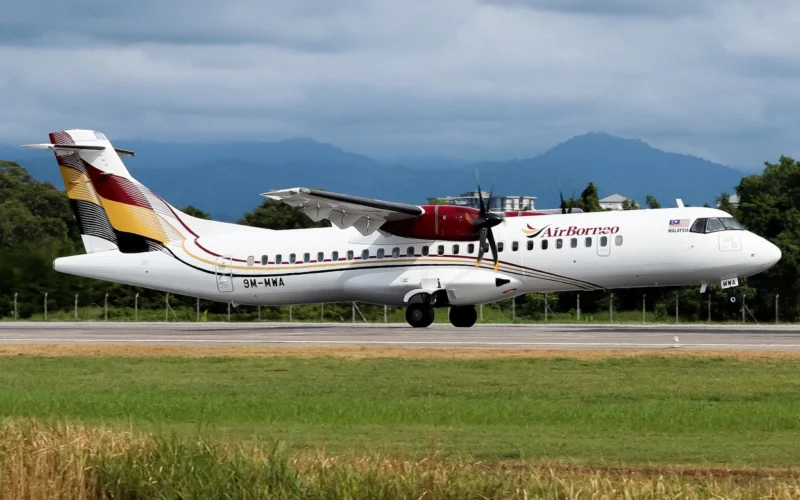
Malaysian carrier AirBorneo has ordered eight ATR aircraft, comprising five ATR 72-600s and three ATR 42-600s, along with options to acquire four more aircraft.The ATR aircraft are scheduled to be delivered to AirBorneo between 2027 and 2029.
The order was disclosed on the first day of the Singapore Airshow 2026, and confirmed by Malaysia’s Sarawak Ministry of Transport (MOTS) in a statement released on February 3, 2026.
“The ATR platform has consistently proven to be the most suitable aircraft for our operating environment, and upgrading to the latest –600 series ensures we can continue providing essential connectivity while preparing AirBorneo for long-term growth,” said Megat Ardian, CEO of AirBorneo.
According to ATR, this marks a significant milestone in AirBorneo’s transformation into Sarawak’s state-owned airline, taking over the Rural Air Services (RAS) network that connects remote communities in East Malaysia, especially in Sarawak, Sabah, and Labuan.
The manufacturer added that this order aligns with AirBorneo’s long-term fleet renewal plan following the Sarawak government’s acquisition of MASwings and its rebranding to AirBorneo. Currently, AirBorneo operates eight ATR 72-500 aircraft that were inherited from MASwings.
“AirBorneo’s decision to invest in both the ATR 72-600 and ATR 42-600 reflects the strength and versatility of the ATR family and its suitability for demanding regional operations,” said ATR CEO Nathalie Tarnaud Laude.
ATR mentioned that the aircraft has advanced avionics, modern navigation systems, and enhanced cabin comfort.
The aircraft are also designed to support medical stretcher operations and are optimized for dependable performance across various regional and rural routes in Borneo.
“The ATR 42-600, with its exceptional efficiency and low operating costs, is ideally suited for serving lower-density regional routes, while the ATR 72-600 provides additional capacity where it is needed,” Laude added.
The agreement also includes four purchase options, allowing for future growth opportunities beyond the RAS network, including possible regional expansion within the Brunei Darussalam–Indonesia–Malaysia–Philippines East ASEAN Growth Area.