
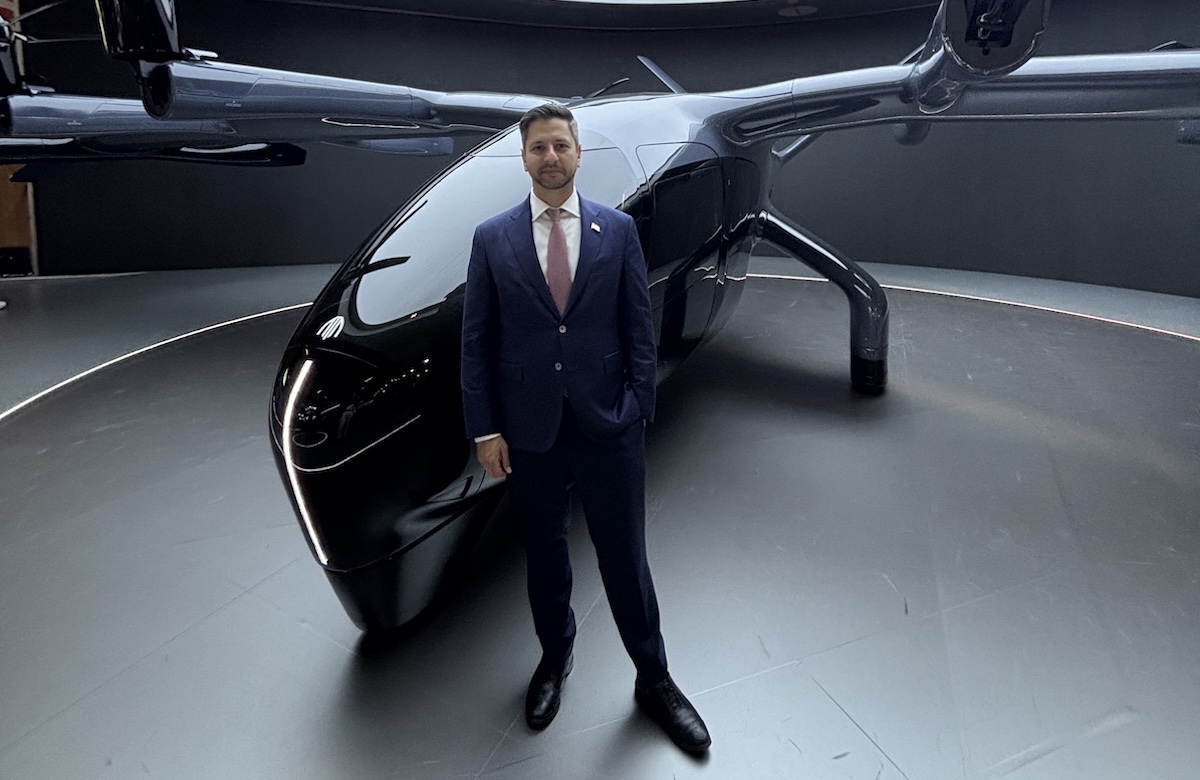
CEO of Archer Aviation, Adam Goldstein, is arguably the most widely recognized and discussed electric vehicle takeoff and landing (eVTOL) developer in the world right now.
Within the advance aviation mobility sphere, Goldstein has probably done more than anyone to sell the benefits of an eVTOL aircraft ecosystem and introduce the public to their future taxi ride.
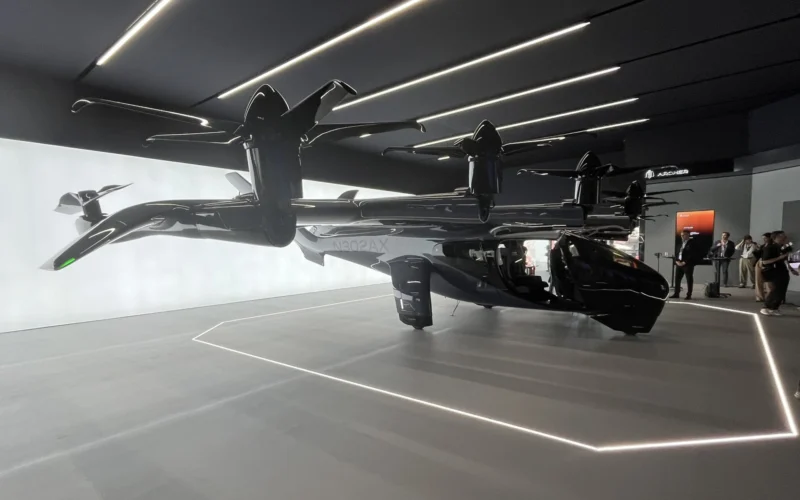
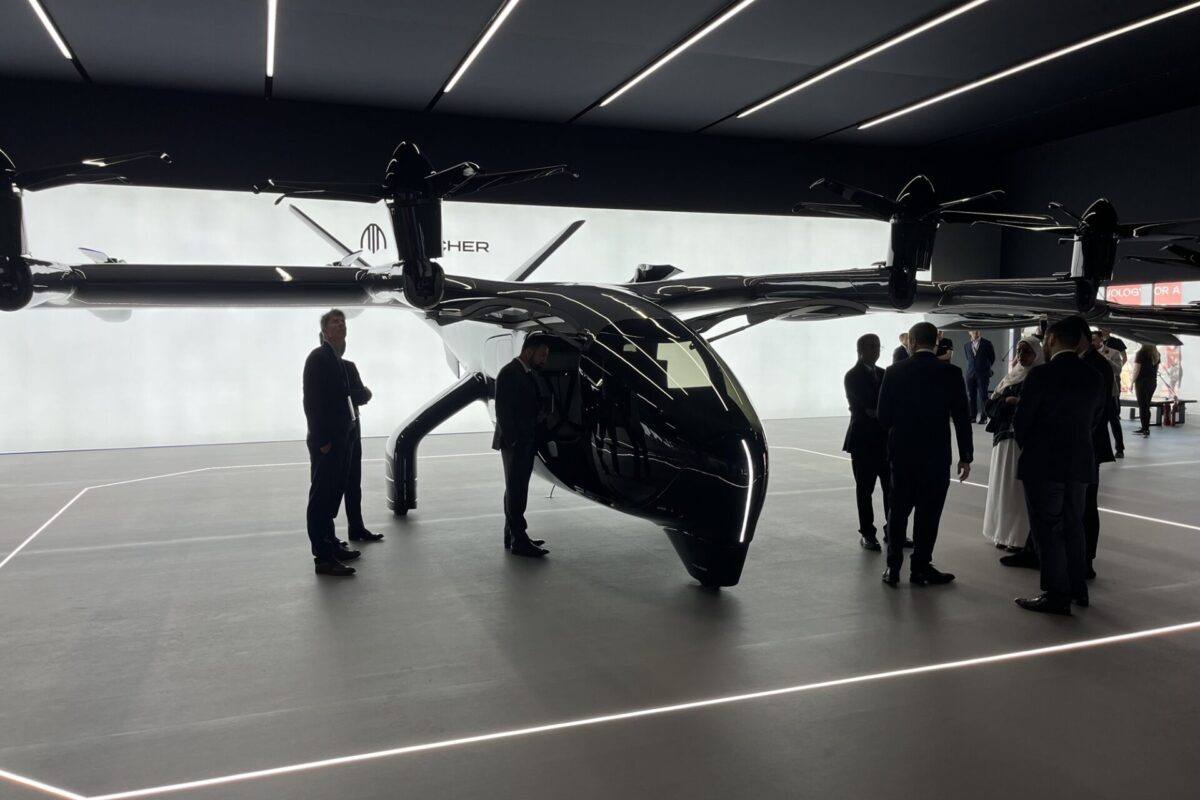
At this year’s Farnborough Airshow, Goldstein was on hand networking within a stunning exhibition area where Archer Aviation’s eVTOL ‘Midnight’ took center stage.
Alongside US compatriot Anduril Industries, Archer Aviation made not one but two big announcements, introducing a new defense and a new commercial autonomous platform to the world.
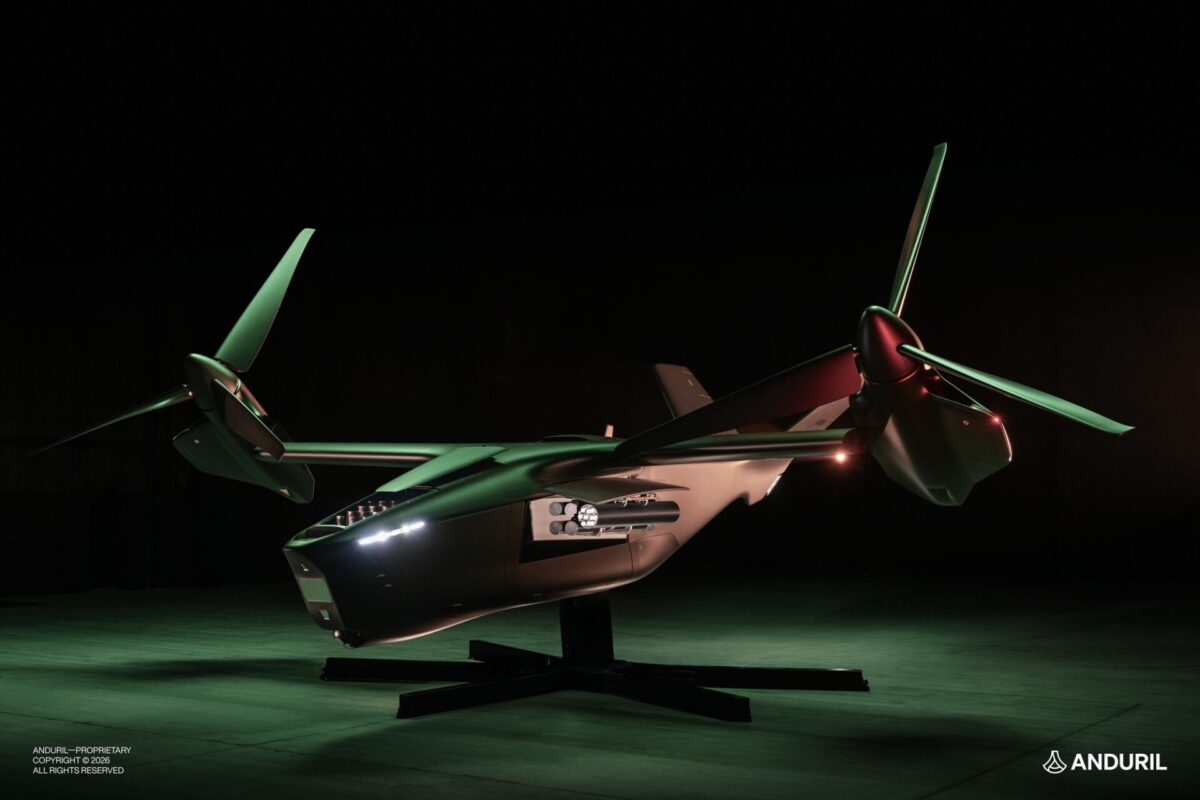
First up on day one was Archer and Anduril’s jointly developed hybrid-electric VTOL defense platform ‘Thunder’ and then the following day the commercial equivalent ‘Halo’.
AeroTime spoke with Goldstein following the unveiling of Thunder to understand more about the Group 5 autonomous attack rotorcraft and speak about Archer Aviation’s progress more broadly.
‘Thunder’ – Autonomous VTOL defense platform
Designed to support attack helicopters like the AH-64E Apache and Bell’s Bell MV-75 Cheyenne II, Thunder is a serious loyal wingman that can be configured with ten air-to-ground missiles, 16 launched effects (e.g. Altius-600) or 76 70mm rockets.
Goldstein explained that their partnership began around two years ago when Anduril was working on a concept for a loyal wingman to shadow armed reconnaissance attack helicopters.
“The concept was instead of flying a manned aircraft, could somebody make a scalable, low-cost, unmanned aircraft that can kind of do the things an Apache could do,” he said.
Under the plan, Archer would build the core aircraft, and Anduril would missionize it with autonomous capabilities, mission systems and all the different weapon systems.
Describing Thunder against Midnight, Goldstein said the platform is a “similar footprint”, but the tiltrotor, along with its powertrain, will enable it to “fly fast and far”.
The idea is that at least three Thunder platforms would accompany each Apache helicopter, achieving three times increase in available munitions without placing additional pilots in harm’s way and at a fraction of the cost.
The unexpected turn
Asked whether he always knew Archer Aviation would eventually move in the direction of Thunder, Goldstein replied: “No.”
“Larry Page started the industry back in 2009, and a lot of it was a big R&D project. Could you use multiple electric engines to fly an airplane? And if you could, then you would get these extreme benefits,” Goldstein said.
He explained: “One is redundancy because you could scale down electric engines, add multiple sets of fuel tanks, batteries, redundancy across actuators, and all the different systems that you would need. So, you could build this thing that was super redundant.”
Goldstein said that with all the benefits the technology offered, the only question was whether it could be commercialized.
“And that’s what Archer really set out to do. It was go to commercialize that technology,” he said.
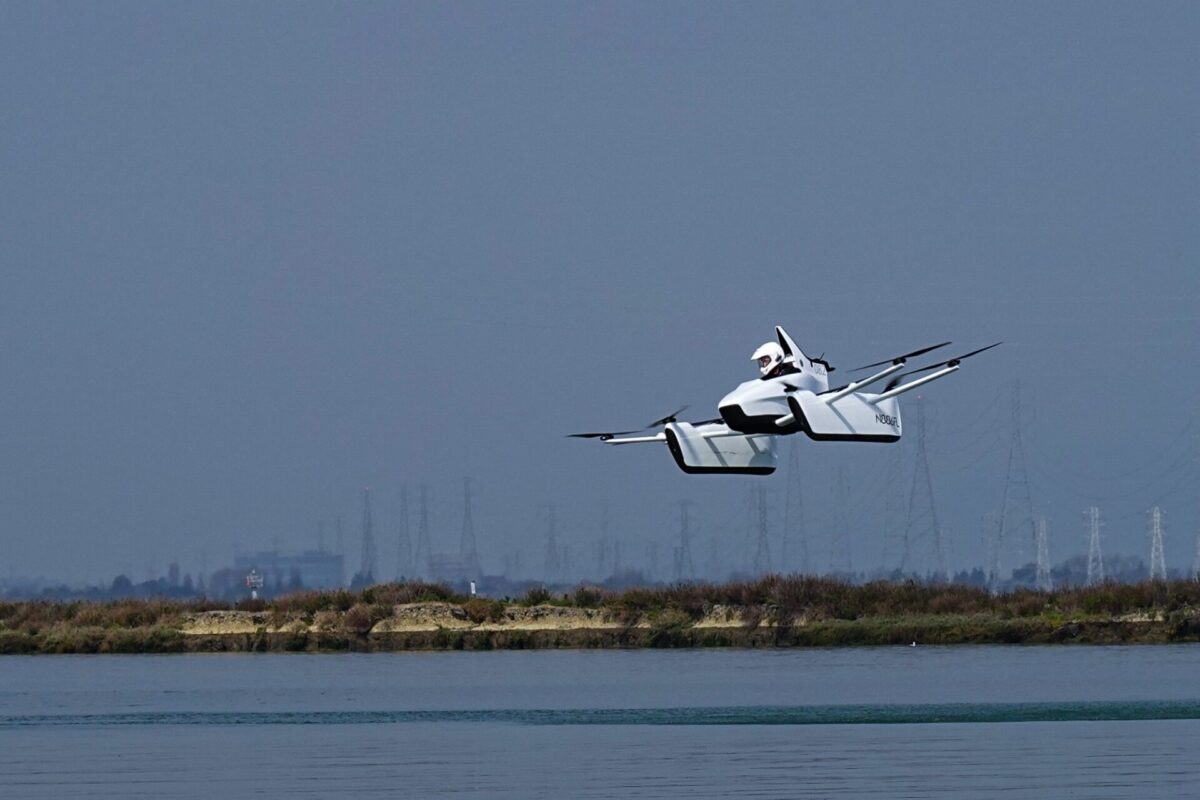
The War in Ukraine, Goldstein said, highlighted the growing need for scalable autonomy.
“Instead of the very expensive, exquisite systems that the West had built; low-cost, unmanned systems were going to be the key to some of the future conflicts, and so we started looking at solutions that could help solve that,” he explained.
Archer realized that many of the technologies developed through its core platform could also be used for defense applications.
“It was only natural that we would leverage all the stuff we’ve done to go build something – effectively, monetize our technology in multiple ways,” he said.
Midnight vs Thunder – managing multiple platforms
With all the leading eVTOL developers seemingly moving into the defense sphere, Archer and its competitors are transitioning onto similar ground of the major aircraft manufacturers that balance platforms for both the public and military conflicts.
Asked whether Archer can be both a family-friendly air taxi builder as well as one that manufactures lethal aircraft like Thunder, Goldstein drew comparisons with Boeing.
“It’s very typical in aviation. If you look at Boeing as an example, they have Boeing Commercial Airplanes (BCA) and Boeing Defense, Space & Security (BDS). Boeing Defense has Apache. Same with Airbus,” he said.
The question prompted Goldstein to discuss how talent cycles are used to effectively manage the development of multiple platforms.
Inside the partnership powering Midnight's flight test program. Here's how Engineering and Flight Test work together to push our program forward on the path to type certification. pic.twitter.com/2ssAjpxUf8
— Archer (@flyarcher) July 10, 2026
“The other question is the life cycles of building an airplane are so long,” he explained. “If you look at Bell 525, they’ve been trying to certify that for close to 20 years. The team that originally was building, let’s say, the aero model, is probably not that involved. That team likely moved on to a new thing. Just because you have multiple programs going on, doesn’t mean they’re all fully duplicated. Delay that two years, then do that same cycle. As one is coming down, the other one is going up.”
Goldstein highlighted Bombardier’s work, which also includes Bombardier Recreational Products (BRP) while still manufacturing aircraft.
“You look at the different inventions that come from aviation companies,” he said. “It’s largely because of a great talent base that goes from very long cycles and working on different projects.”
Archer certification progress
Archer’s first commercial flights are expected to begin in Abu Dhabi, where its transition to a Restricted Type Certificate (RTC) program, created a pathway to begin limited commercial operation sooner than in the US.
Federal Aviation Administration (FAA) type certification of Midnight remains the Holy Grail for Archer, even if the eVTOL Integration Pilot Program (eIPP) will allow for certain operations much sooner.
“The US actually has gone very well. I think the UAE is going very well too,” Goldstein said. “Obviously, the conflict over there adds a lot of questions around the timing, but the US has really dug in. We’ve seen a lot of conviction from the administration. The US has probably shown more than anywhere else in the world, great conviction to get this done.”
US President Donald Trump and particularly the Secretary of Transportation Sean Duffy have been vocal supporters of eVTOL technology and the benefits that it can bring, something Goldstein does not take for granted.
“This administration, I think, has been very focused on specific things: bringing manufacturing back to America, jobs, America leading in technology and innovation in aviation,” he explained. “We fit a lot of core platform goals. They look at industries with lots of burdensome regulations. They said we’re going to help cut the red tape to let America innovate, and that’s literally what they’ve been doing. For any entrepreneur it’s a dream scenario to be able to operate where the administration will support you in a historically heavily regulated type of industry to help you know make sure that the company’s getting through.”
Potential vertiport infrastructure hurdles
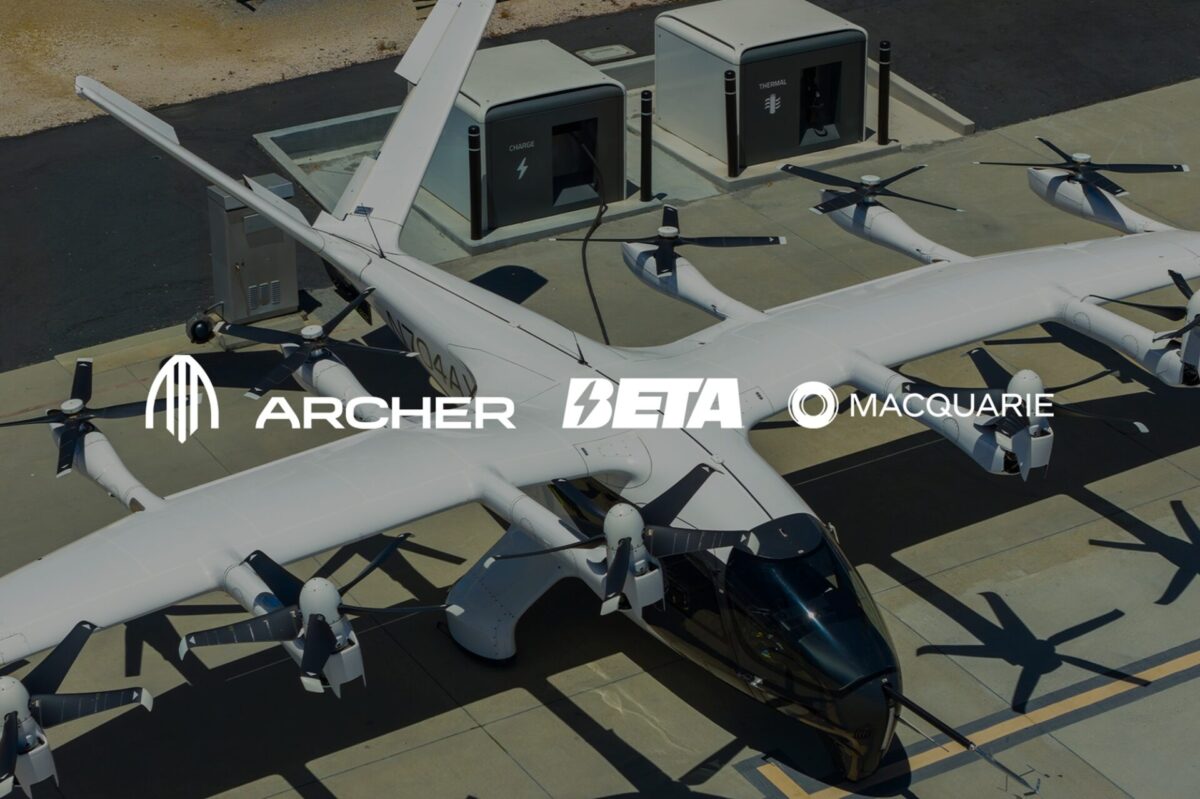
In July 2026, Archer announced it was working with BETA Technologies and Macquarie Capital to launch Consortium for Electric Skyways (ACES), with a plan to electrify up to 250 air taxi sites across the US over the next decade.
Vertiport infrastructure is often regarded as one of the significant hurdles to scaling in the US, but Goldstein appeared to downplay the challenge.
“It just doesn’t need that much [infrastructure],” he argued. “There are millions of Tesla vehicles on the road, they sell millions per year, so they need lots of charging. We don’t. Take a route like Manhattan to JFK. The number of people that do that route every year is tremendous. I need a handful, two chargers on one side, two chargers on the other side to satisfy a lot of demand.”
Goldstein stated that if Archer introduced around 20 aircraft into the New York City market, he doesn’t “think anybody would have a problem”.
According to Goldstein, there are 50 helicopters in the New York City market, and Archer would cut noise pollution down more than half, so people would be “very happy with this”.
“If we looked at the 1,000th biggest market in the world, could we put 20 aircraft? If you took a Denver, Colorado type market. Easily can put 20 aircraft there, but 20 aircraft times 1000 markets is 20,000 aircraft. It’s a lot,” he said. “So just to help support 20 aircraft, you need two to four chargers. It’s just not that many chargers we’re talking about per market, to go support that. We can build an absolutely enormous business.”
Overcoming challenges
When asked what challenges or issues Goldstein sees lying ahead, he confidently said, “it’s just an execution” game.
“The rules are in place, the money is in place, and then we just have to execute against it, which is very hard. Not to be taken lightly and not to say that this is easy at all. It’s exceptionally hard, but at least it’s in our control. Where we’re not waiting on some new regulatory thing to happen,” he said. “There’s very little regulatory risk from that standpoint.”
Goldstein said he has dreamed of flying eVTOLs and is “super motivated to try to make it happen”.
“We’re constantly looking for problems to stop that dream,” he said. “Like most things that you know get in your way. If you really wanted a steak dinner, and your favorite restaurant was all booked out, you’d find a way to get that. We have an extremely captivating product. That’s my dream to bring to market, and we’ll find ways to make it happen. It’s not going to be easy, but that’s the entire purpose of the company.”
Archer living the UK life
In February 2026, Archer announced that it has selected Bristol as the home of its UK Engineering Hub.
This followed the announcement at the end of 2025 that, alongside Anduril and GKN Aerospace, Archer would initially focus on the British Army’s Project NYX and the Ministry of Defense’s Land Autonomous Collaborative Platform program.
“The defense market [in the UK] is really interesting,” Goldstein said. “I think the UK has the second highest number of Apache outside of the US. The UK has a very forward-leading stance on army operations and army helicopters. There is a lot here that’s already being offered for us to try to come and deliver against.”
Goldstein also praised the UK’s Civil Aviation Authority (CAA) which he described as “very forward leaning”.
“I think the setup is perfect,” he added. “London to Heathrow couldn’t be more obvious of an example of why this is necessary.”
When asked if he was put off coming the UK due to Britain’s Vertical Aerospace already being based there, Goldstein did not see it as an issue.
“There’s always going to be competition wherever we go,” he said. “It just kind of comes with it, and the market’s plenty big to support multiple companies.”