

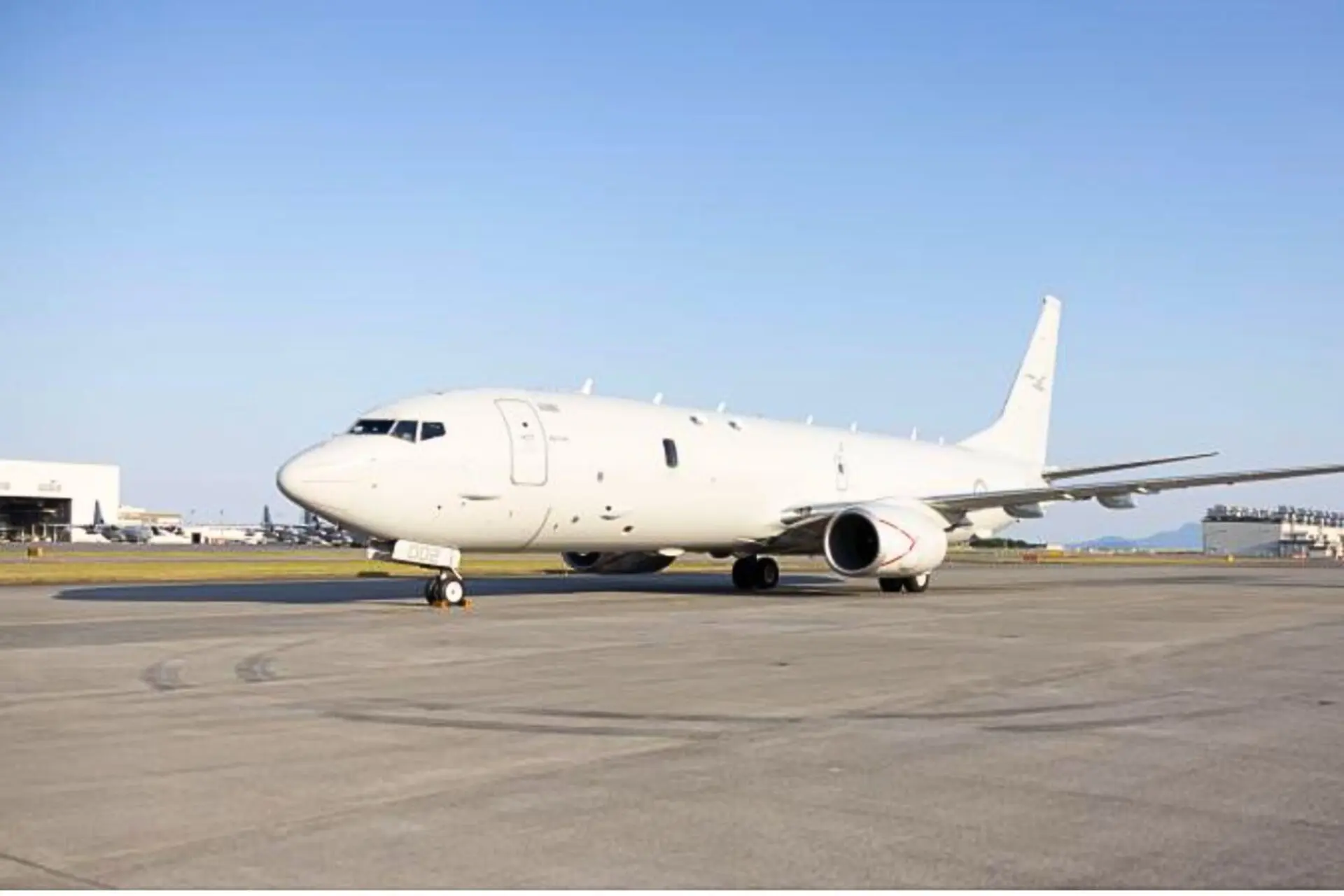
Australian and Japanese military aircraft linked up over the Pacific Ocean in May 2026 during a joint exercise that tested each air force’s ability to share intelligence data through a tactical battlefield network while airborne.
The exercise, reported on June 4, 2026, involved a Royal Australian Air Force (RAAF) P-8A Poseidon and a Japan Air Self-Defense Force (JASDF) Kawasaki RC-2, both flying from air bases in Japan.

Each aircraft plays a key role in its respective country’s intelligence, surveillance, and reconnaissance (ISR) missions, carrying specially trained crews and powerful sensors that collect information and build a detailed picture of the surrounding battlespace.

The tactical network used during the exercise allows that picture to be shared with other aircraft, ships, and units operating in the same area, giving crews and commanders better information to make decisions during a mission.
Building on trilateral commitments
The exercise reflects a broader push among Australia, Japan, and the United States to improve how their ISR crews work together. In May 2025, defense ministers from all three countries committed to increasing trilateral ISR cooperation.
Wing Commander Andrew Fisher, Australia’s Air Force Attache in Japan, said the airborne exercise built on previous ground-based exchanges between the three countries, including one held at Kadena Air Base in Okinawa in October 2025. Australia and Japan typically conduct one or two of these ground-based exchanges each year to build working relationships and test connectivity.
“We want ISR crews from Australia, Japan and the United States to be linked and exchanging data together,” Wing Commander Fisher said.
Why solving network problems on the ground matters at 30,000 feet
Fisher said most of the preparation for an exercise like this happens on the ground well before anyone gets airborne. Getting both aircraft onto the right network and confirming they can successfully connect takes careful coordination, and troubleshooting problems at 30,000 feet — especially in a bilateral or multilateral setting — is far more difficult than doing it on the ground.
“If the preparation isn’t done beforehand through exchanges like this, then solving any problems in the air can be difficult, particularly in a bilateral or multilateral context,” he said.
Fisher added that proving the connection works once is an important foundation. What the RAAF learns by linking its P-8A to Japanese and American aircraft can eventually be applied to other Australian platforms, expanding the network’s reach across future exercises and operations.