

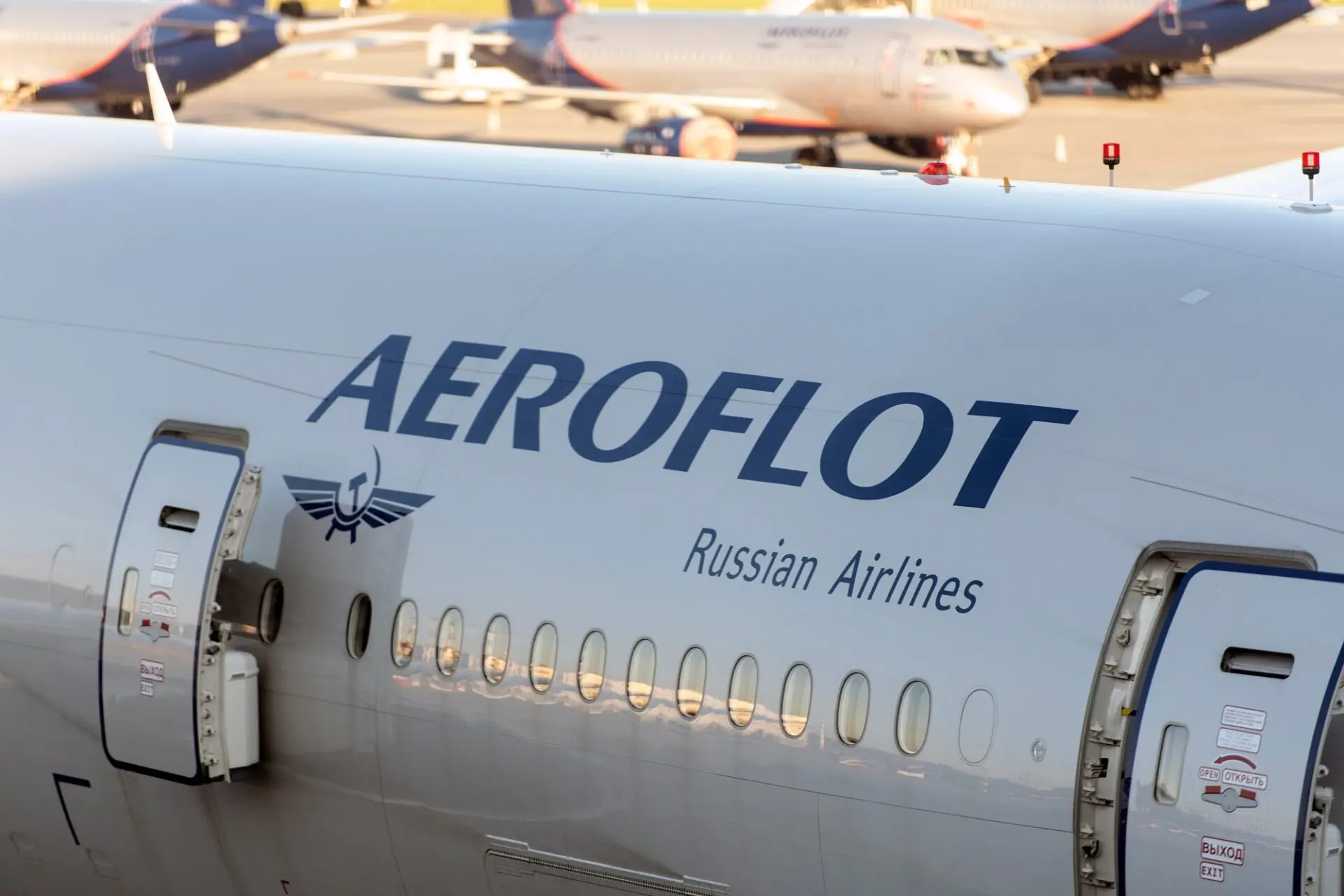
A federal jury in Florida convicted Alexander Mamonov, a former Aeroflot employee, for his role in a scheme to illegally export more than $900,000 worth of US aircraft parts to Russia and the state-owned airline.
Mamonov, a 62-year-old Russian national living in Florida, was found guilty on all 12 counts on August 27, 2026, following a trial in the US District Court for the Southern District of Florida.
The counts included conspiracy to violate the Export Control Reform Act, illegally exporting controlled items, conspiracy to commit smuggling, smuggling goods, submitting false or misleading export information, and conspiracy to commit money laundering.
Aircraft parts routed through the UAE and China
According to court documents and testimony cited by the US Department of Justice, Mamonov previously worked for Aeroflot before relocating from Russia to South Florida.
Prosecutors said Mamonov obtained aircraft components from US suppliers after Washington tightened export restrictions on Russia following its full-scale invasion of Ukraine in 2022.
The suppliers were told that the parts were destined for third countries, including the United Arab Emirates and China. Prosecutors said the components were instead shipped to Russia and Aeroflot.
The jury also convicted Mamonov of conspiracy to commit money laundering in connection with financial transactions used to conceal the scheme.
Aeroflot barred from receiving US-origin goods
The US Department of Commerce expanded restrictions on exports to Russia after the invasion of Ukraine and issued a Temporary Denial Order barring Aeroflot from receiving US-origin goods.
Prosecutors said Mamonov circumvented those restrictions by concealing the aircraft parts’ intended recipient and providing false destinations to US suppliers and export authorities.
“You cannot put a fake destination on a shipping label and make American export laws disappear,” US Attorney Jason A. Reding Quiñones said following the verdict.
Quiñones said the conviction demonstrated that routing purchases through South Florida and third countries did not place them beyond the reach of US export-control laws.
Aeroflot depends on foreign-designed aircraft and international maintenance supply chains. Restrictions on US-origin equipment have made it more difficult for the airline to obtain components through established suppliers.
Co-defendant remains a fugitive
Mamonov was indicted in April 2025 alongside Ignat Vakorin, a Russian national accused by US prosecutors of participating in the scheme.
Vakorin remains a fugitive wanted by US authorities. He has not been tried, and the allegations against him have not been proven in court.
The case was investigated by the FBI’s Miami Field Office with assistance from the US Department of Commerce’s Bureau of Industry and Security.
US District Judge Kathleen M. Williams scheduled Mamonov’s sentencing for November 20, 2026.
1 comment
Nuts! Need I say more?