

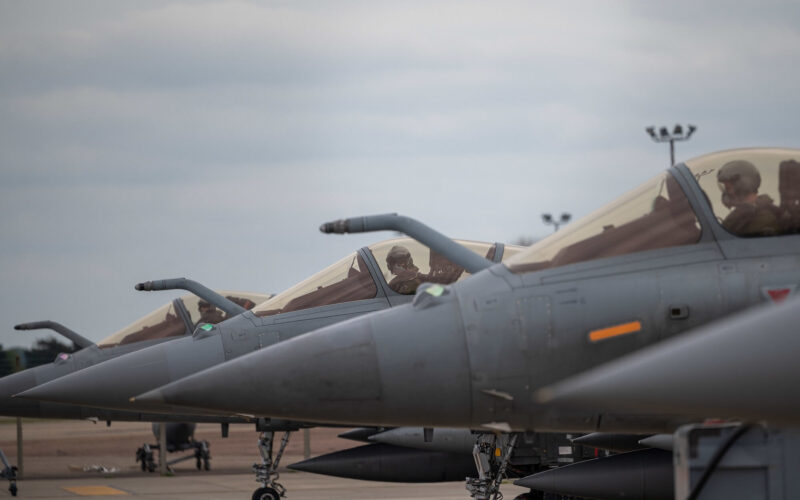
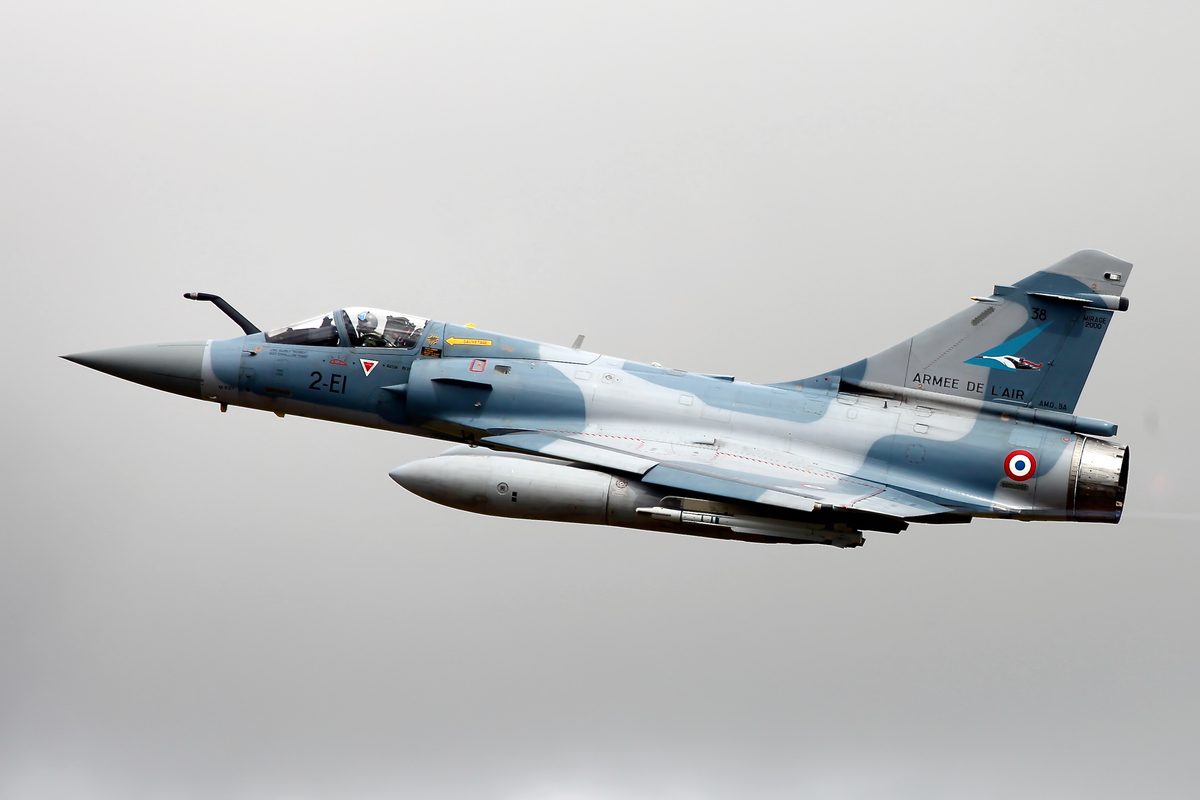
France’s Air and Space Force expects to receive just two new Rafale fighters in 2027 while retiring additional Mirage 2000-5 jets, despite its existing combat aircraft already being used more than 15% above their planned utilization rate.
The warning came from General Jérôme Bellanger, Chief of Staff of the French Air and Space Force, during a hearing before the National Assembly’s Defense Committee on October 14, 2026, as lawmakers examined the proposed 2027 defense budget.
Bellanger illustrated the pressure on the fleet with an example from before summer 2026, when approximately 80% of France’s fighter aircraft were committed simultaneously to a nuclear deterrence exercise, operations in the Middle East, NATO’s eastern flank, and an exercise in Côte d’Ivoire, alongside permanent air policing duties.
“Overusing the fleet will no longer be enough tomorrow,” he warned.
The proposed 2027 budget allocates €4.4 billion in commitment authorizations and €1.8 billion in payment appropriations to Rafale procurement and modernization, including development of the F5 standard. However, Bellanger argued that the next military programming law must reconsider the overall size of France’s fighter fleet.
The warning follows similar concerns he raised before the Senate in May 2026, when he argued that France needed additional Rafales before the F5 entered service in 2033, even if that meant procuring more F4-standard aircraft in the meantime.
The planned expansion of France’s nuclear deterrence posture will add another requirement to that assessment, with implications not only for aircraft numbers but also for personnel, training, infrastructure, and support.
Combat drones will not replace fighters one-for-one
While France intends to introduce collaborative combat drones to increase its operational capacity, Bellanger cautioned against viewing them as substitutes for crewed fighters.
“A collaborative combat drone is not a fighter aircraft. It is not a one-for-one replacement,” he told lawmakers.
He described the future drones as complementary, largely single-mission platforms, compared with the versatility of crewed multirole fighters.
The French Air and Space Force expects to receive its first MBDA DELUGE long-range one-way attack drones in summer 2027. They will form the core capability of a new bombing and reconnaissance drone squadron.
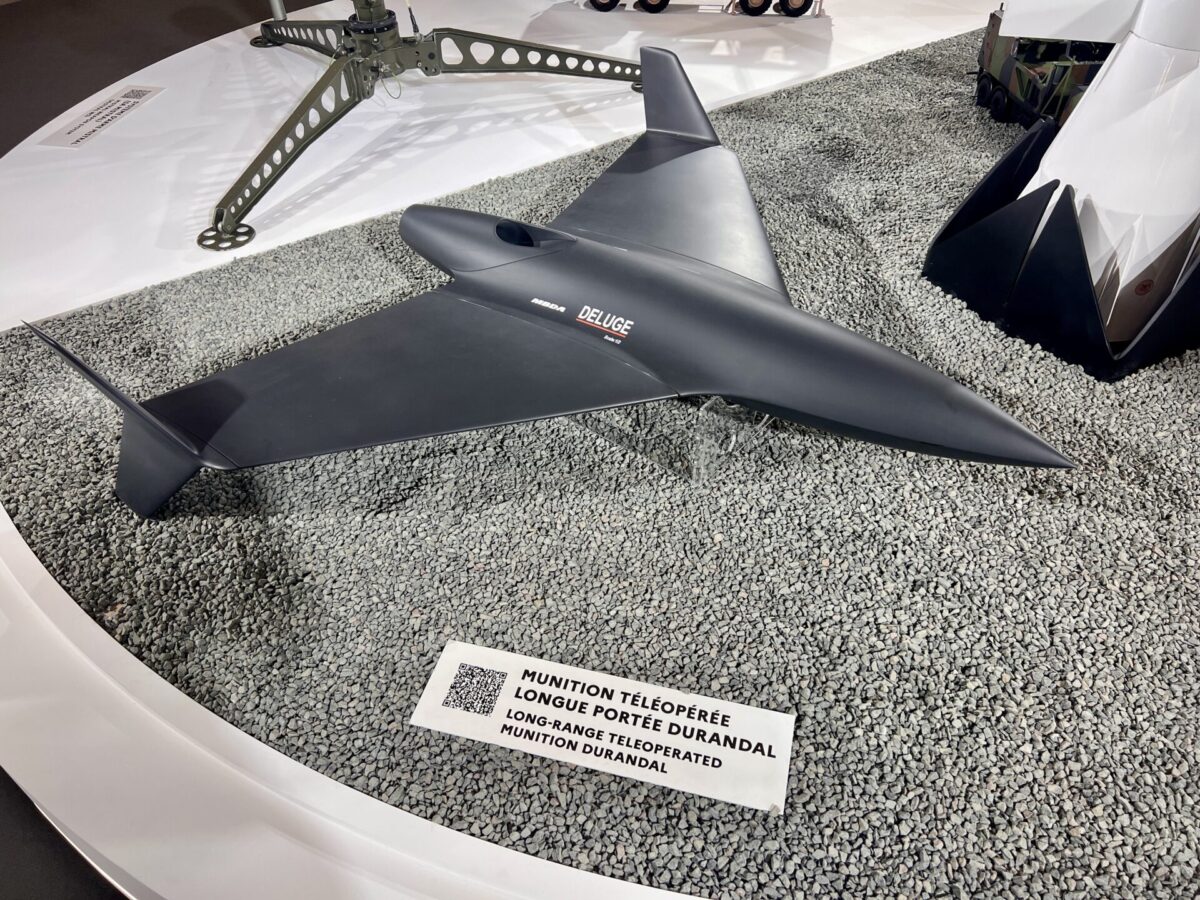
The DELUGE system, known as Durandal in French service, was ordered in January 2026. Powered by a turbojet, it is designed to carry a 50-kilogram (110-pound) payload over distances of up to 500 kilometers (310 miles).
Bellanger outlined a future approach to penetrating enemy air defenses in which inexpensive expendable drones would be used first to expose and saturate defensive systems. Larger collaborative combat drones would then help open corridors for crewed aircraft to strike deeper into enemy territory.
A separate initiative, HYPERION, is expected to reach an initial milestone in 2028 with the experimental operation of an autonomous collaborative platform based on the Dassault nEUROn demonstrator alongside a Rafale or Mirage 2000.
France outlines timetable for Rafale successor
Looking further ahead, Bellanger provided additional details about the aircraft intended to replace the Rafale following the collapse of the Franco-German next-generation fighter (NGF) project in June 2026.
Now known as the Avion de Combat du Futur (ACF), the future fighter is being envisaged as a nationally developed aircraft, although cooperation with foreign partners remains possible.
According to Bellanger, the ACF should be flying conventional missions by 2040 before taking over the Rafale’s nuclear deterrence role around 2050.
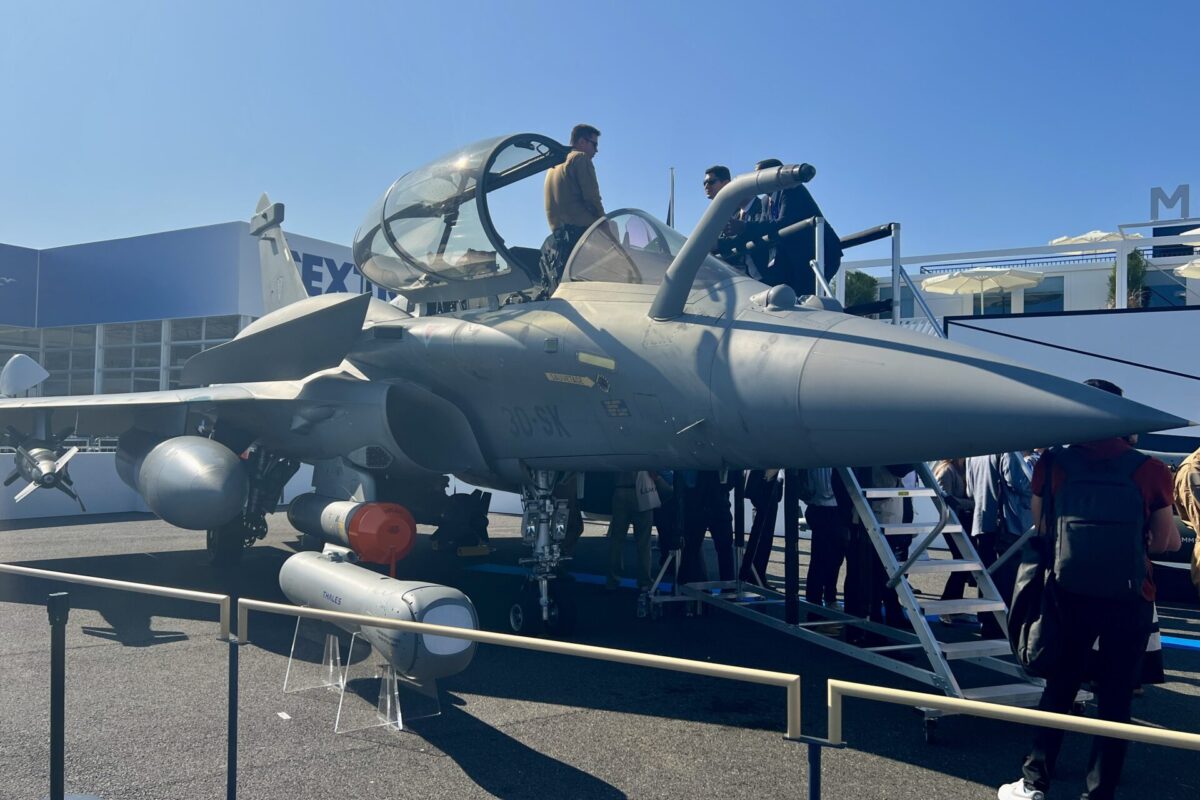
The Rafale F5, currently under development, is expected to reach a major operational milestone around 2035. It will introduce technologies intended for the next-generation aircraft, including advanced sensors, connectivity, and the STRATUS RS missile for suppressing enemy air defenses.
Bellanger insisted that previous work under the Future Combat Air System (FCAS) program had not been wasted, particularly in areas such as stealth, propulsion, and combat-cloud connectivity.
French Armed Forces Minister Catherine Vautrin told lawmakers on October 8 that France intended to build on investments already made under the multinational program. These include the €115 million Turenne 2 propulsion research contract awarded to Safran in 2019, covering technologies to increase the thrust of the Rafale’s M88 engine and prepare the powerplant for the next-generation fighter.
France also intends to maintain cooperation with Germany on combat-cloud technologies to ensure interoperability between European aircraft.
Air defenses and interceptor drones among 2027 priorities
The hearing also highlighted efforts to strengthen the protection of French air bases against drones and missiles.
Bellanger confirmed plans to create a dedicated interceptor drone squadron, alongside the deployment of four additional PARADE counter-drone systems and the integration of HELMA-P laser technology.
These measures complement efforts to improve the resilience of French air bases against attack. During the recent BASEX exercise, the French Air and Space Force tested the dispersal of Rafale fighters to civilian airports, alongside broader scenarios involving drone incursions, sabotage, and cyberattacks.
France is also scheduled to receive its first SAMP/T NG surface-to-air missile system in 2027, with 10 systems and nine VL MICA systems expected by 2030. The service is also preparing to introduce a multilayer air-defense architecture combining ASTER and VL MICA missiles.
These investments form part of a broader effort to adapt French airpower to high-intensity warfare, in which the ability to field and sustain large numbers of weapons is becoming as important as their individual performance.
Bellanger concluded that the French Air and Space Force must accelerate procurement, production, maintenance, and training if it is to keep pace with the changing threat environment.
After two years in command, he summed up his priority in a single word: speed.