

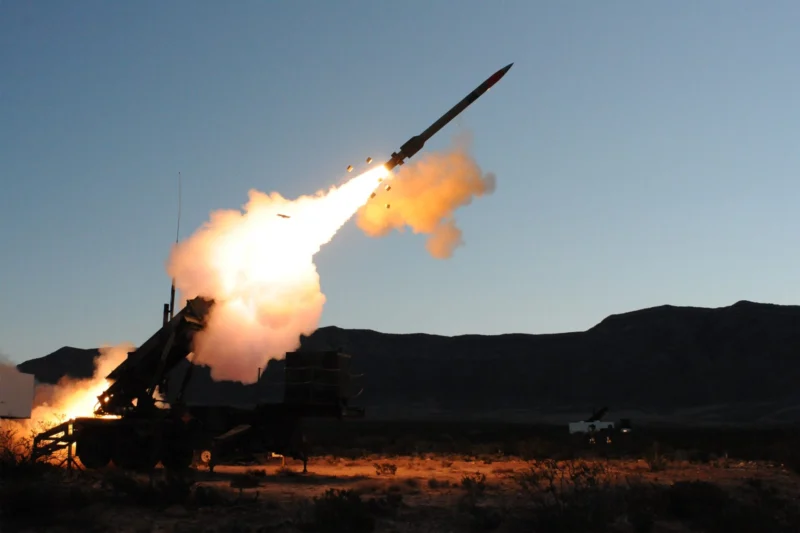
A little-known French-made fabric has become a potential stumbling block in the Pentagon’s plans to ramp up Patriot missile production, according to an investigation by the Wall Street Journal.
The material, known as Raycarb C2B, is a carbonized rayon fabric used in the rocket motor of the PAC-3 Missile Segment Enhancement (MSE) interceptor. ArianeGroup manufactures it and supplies it to Kansas-based Park Aerospace, which processes it into a heat-resistant composite used to protect rocket motor components.
Park chairman and CEO Brian Shore told investors on October 8, 2026, that the company was “sole-source qualified on the solid rocket motor for the PAC-3 MSE missile program” for the specialty materials it produces using ArianeGroup’s fabric.
L3Harris builds the PAC-3 MSE’s solid rocket motor, while Lockheed Martin assembles the interceptor at its facility in Camden, Arkansas.
How French rocket technology became critical to US missiles
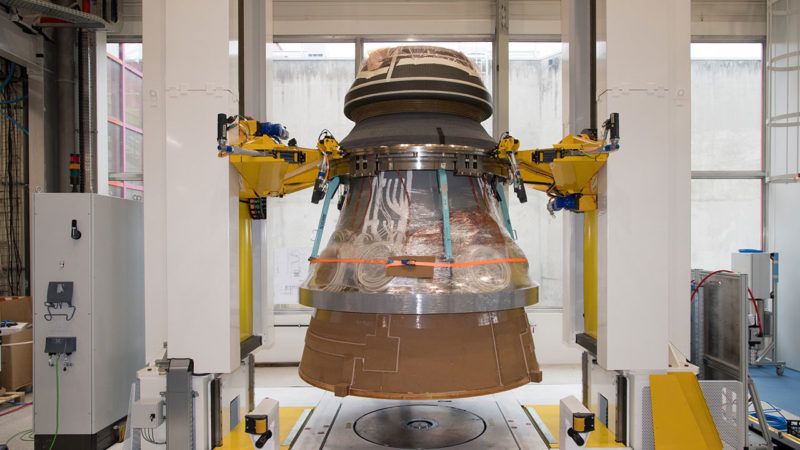
Raycarb C2B starts as rayon, a cellulose-based fiber historically used to reinforce tires. The fabric is heated in a controlled process that converts it into carbon cloth capable of withstanding extremely high temperatures. Impregnated with phenolic resin, it forms a composite that gradually erodes when exposed to intense heat, protecting the rocket motor structure underneath.
Its origins go back to 1996, when Snecma Propulsion Solide, a predecessor of ArianeGroup, began developing a replacement for carbonized rayon supplied by the North American Rayon Company (NARC), whose production had been discontinued. The work was supported by French space agency CNES and defense procurement agency DGA.
The resulting material, designated C2, was tested on Ariane 5 booster nozzles and French military propulsion systems before finding applications in US missile programs. According to Park Aerospace’s product documentation, Raycarb C2B has also been used in the US Navy’s Standard Missile-3 (SM-3), an interceptor designed to destroy ballistic missiles outside the atmosphere.
Today, the French side of the supply chain is based near Bordeaux, where ArianeGroup operates facilities inherited from the country’s solid rocket propulsion industry. Its Le Haillan site produces rocket motors, nozzles and high-temperature carbon- and ceramic-based composites for both civil and military applications.
In addition to its US commitments, ArianeGroup also manufactures France’s M51 submarine-launched ballistic missile, making the company an important supplier to the French nuclear deterrent.
Park Aerospace finances new production in France and the US
Park has been working with ArianeGroup to increase Raycarb output, but the additional capacity will take several years to come online.
Under an agreement signed on March 27, 2025, Park committed to advancing ArianeGroup €4.59 million (approximately $5 million) against future purchases to help finance new production equipment in France.
The arrangement also ties Park Aerospace to the French supplier well beyond the planned production ramp-up. In its latest quarterly filing with the US Securities and Exchange Commission, Park disclosed a commitment to purchase an estimated €36 million worth of Raycarb C2B from ArianeGroup through December 2033.
The expansion is expected to be ready in 2028, with the additional output divided equally between Park and ArianeGroup’s own programs.
That will not be enough, according to Shore, who warned during Park’s October earnings call that the French expansion alone could not support the planned increase in PAC-3 MSE production to 2,000 missiles a year.
The two companies are therefore planning a second facility, this time in the United States.
On July 18, 2026, Park signed a preliminary agreement with ArianeGroup for a US plant dedicated to Raycarb C2B. Unlike the French expansion, all of the new facility’s output would be reserved for Park.
The US company has committed $25 million in advance payments, to be deducted from fabric purchases starting in 2030.
ArianeGroup subsequently agreed to bring the schedule forward by six months in return for faster payments. Park now expects to pay $20 million in 2026 and the remaining $5 million in 2027.
Shore said there was little room to accelerate the project further, explaining that the remaining constraints were not simply financial. Nevertheless, he expects the combination of European supplies and the planned US plant to provide enough material for 2,000 PAC-3 MSE interceptors annually, with additional capacity for other missile programs.
As of October 8, 2026, the companies still expected to finalize the agreement before the end of the year. The location of the proposed US plant had not been disclosed.
Pentagon aims to triple Patriot missile production

The Pentagon wants to increase PAC-3 MSE output as quickly as possible after months of heavy interceptor consumption and growing demand from US allies.
The PAC-3 MSE is the most advanced interceptor in the Patriot family, using hit-to-kill technology to defeat ballistic missiles. Its dual-pulse rocket motor provides greater range and engagement altitude than earlier PAC-3 variants.
On July 29, 2026, the US Army awarded Lockheed Martin a seven-year undefinitized contract modification worth $53.86 billion, bringing the program’s total contract ceiling to $58.62 billion.
The agreement is intended to support a tripling of PAC-3 MSE production capacity by the end of 2030. An earlier framework agreement, signed on January 6, 2026, set a target of approximately 2,000 interceptors a year, up from the 620 delivered in 2025.
The production push follows extensive use of American air defense missiles during the war with Iran, which began in February 2026.
In an assessment published on November 10, 2026, the Center for Strategic and International Studies (CSIS) estimated that the US had fired approximately two-thirds of its prewar Patriot interceptor inventory against Iranian ballistic missiles. Deliveries to Ukraine have further drawn down stocks.
Demand remains high. In October 2026, the US State Department approved a possible sale of 500 PAC-3 MSE interceptors to Ukraine.
Another major customer could soon join the production queue. The US Navy is working to integrate the PAC-3 MSE into the Aegis combat system and Mk 41 vertical launching system aboard its warships. Lockheed Martin received a contract for the naval integration effort in April 2026, followed by a second-phase contract in November.
US seeks domestic alternatives, but qualification takes time
The Pentagon is also trying to reduce its reliance on imported materials by rebuilding domestic production of rayon and carbon-based composites used in solid rocket motors.
The dependence on foreign rayon precursors extends beyond Patriot. In July 2026, the US Navy launched a research solicitation seeking a domestic source of plant-based carbon fiber precursors for hypersonic weapons.
The Navy said at the time that US rayon fiber production had ceased in 1997, partly because of the environmental costs associated with traditional manufacturing processes. Since then, defense manufacturers have relied on European textile companies for the precursor fibers.
In September 2025, the Pentagon awarded ICF Mercantile $9.3 million under the Defense Production Act to establish what it described as the first domestic source of rayon filament for carbon phenolic ablative materials.
That same month, Americarb received $12.6 million to develop a process for converting woven rayon fabric into carbonized rayon phenolic material used to insulate rocket motor nozzles.
However, any new material would still need to be tested and qualified for use in the PAC-3 MSE’s rocket motor, a process that could take years. For the foreseeable future, the US Patriot production ramp-up will therefore remain dependent on ArianeGroup’s ability to increase supplies of the French-made fabric.
Patriot production faces other supply-chain bottlenecks
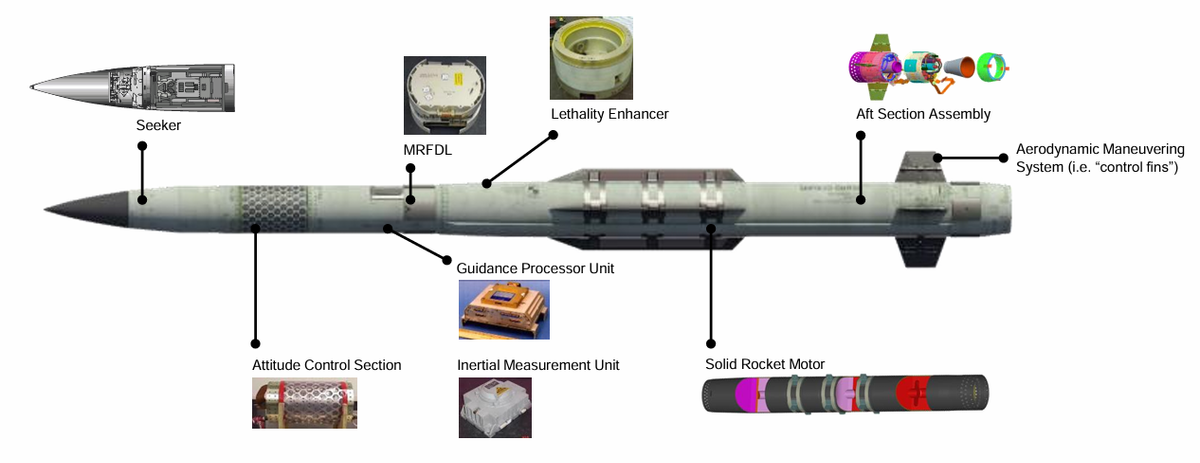
Raycarb is not the only component complicating the production ramp-up. At the Paris Air Show in June 2025, Lockheed Martin executive Jason Reynolds explained that the US Army was looking into adding a second supplier for the PAC-3 seeker, then among the program’s supply-chain constraints.
At the time, Lockheed Martin was aiming to increase annual PAC-3 production from 550 to 650 interceptors by 2027.
In April 2026, the Pentagon signed a seven-year framework agreement with Boeing to triple production of the seekers, which provide guidance for the interceptors. Boeing had already invested more than $200 million in expanding its Huntsville, Alabama, production facilities since 2024.