

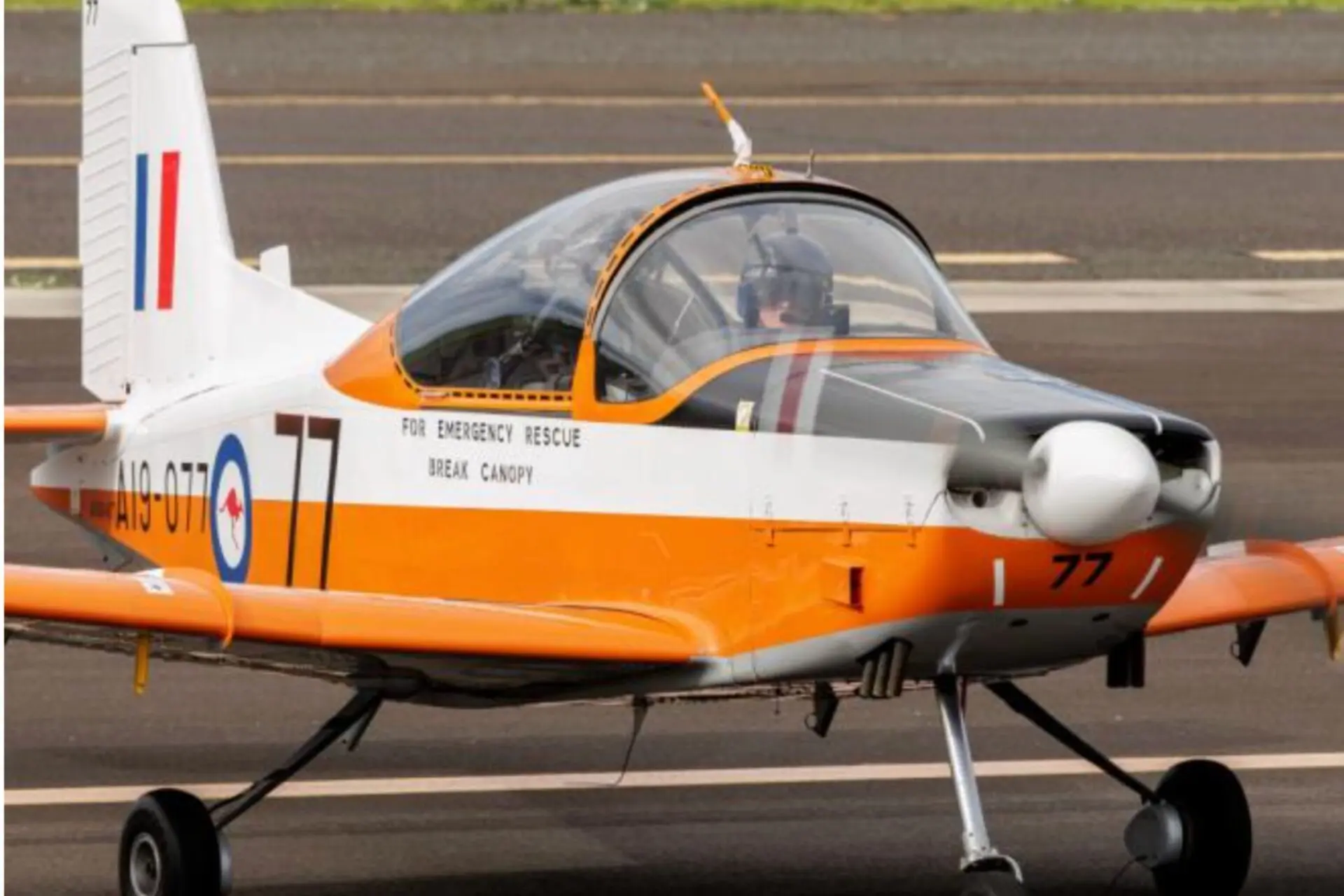
The Royal Australian Air Force’s (RAAF) CT4A trainer aircraft has completed its final flight after nearly five decades of service, retiring the aircraft type that introduced generations of military pilots to the skies.
The final display flight took place on June 18, 2026, over RAAF Base Point Cook in Victoria, the same location where both the Air Force and the CT4A’s service began.
An Australian-made legacy
Introduced into Air Force service in 1975, the Australian-built CT4A was the first powered military aircraft that thousands of aviators would fly. For decades, it served as the foundation for operational careers across the Australian Defence Force.
Wing Commander David Chaplin, who piloted the final display flight, said the aircraft’s influence on Australian air power is hard to overstate.
“There’s a whole lot of air power that has come from this aircraft,” Chaplin said. “It was the first powered aircraft I flew. I joined the Air Force here at Point Cook in January 1980, and when we arrived on base, all we could see were CT4s flying around.”
The @AusAirForce will withdraw eight aircraft from its heritage fleet as part of a program to ensure the long-term sustainability of preserving Australia’s aviation history. ✈️
— Defence Australia (@DefenceAust) January 17, 2026
The aircraft being withdrawn include the:
🛩️ RE8
🛩️ CT4A
🛩️ Ryan STM-S2
🛩️ English Electric Canberra… pic.twitter.com/oX8ajxC3F4
One aircraft, three branches
The CT4A trained pilots across all three branches of the Australian military, serving as the starting point for aviators who would go on to fly air combat, air mobility, maritime patrol, and rotary-wing aircraft.
“Pretty much everybody who came through the services completed training on that aeroplane – Army, Navy and Air Force,” Chaplin said.
Squadron Leader Peter Grieves, a reservist who completed his first military flight in the same aircraft now entering retirement, said the occasion brought back memories.
“There’ll be a lot of people catching up and sharing memories,” Grieves said. “Some of them were stressful memories but still fond memories, especially here at Point Cook which teaches you to fly in just about every type of weather you can get.”
Closing a chapter
For Chaplin, conducting the final display flight carried personal significance.
“When the commanding officer asked me to conduct the flying display for the CT4’s final day, it was a little emotional,” he said. “After the display, I started thinking about all the people who had trained on the aircraft and all those who had supported it over the years – engineers, administrators, air traffic controllers and instructors.”
The final flight served as a tribute not just to the aircraft itself, but to the instructors who taught from its cockpit, the engineers who maintained it, and the generations of aviators who took their first steps toward operational service behind its controls.