

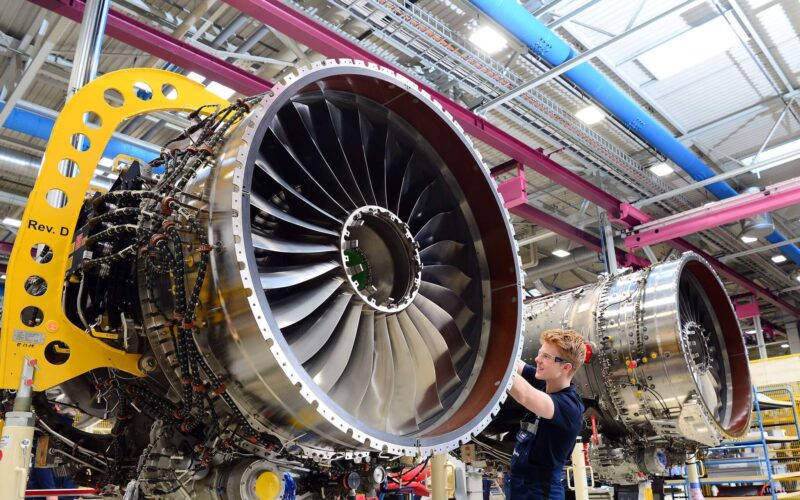
Rolls-Royce claims to have effectively eliminated aircraft-on-ground (AOG) delays in its civil aerospace business after increasing engine maintenance and refurbishment work during the first half of 2026.
The engine manufacturer linked the improvement to changes across its maintenance network and greater stability in its supply chain.
According to Rolls-Royce, it increased large-engine maintenance output by 13% during the six months ending June 30, 2026. The number of large-engine refurbishments rose 35% from a year earlier.
“We have also effectively eliminated aircraft on ground, providing a significant operational benefit to our customers,” Rolls-Royce CEO Tufan Erginbilgic said.
An AOG case occurs when an airline cannot operate an aircraft because it is waiting for an engine, replacement part or maintenance work.
Engine availability has caused significant disruption for airlines operating Rolls-Royce-powered widebody aircraft in recent years. Some carriers have grounded aircraft or adjusted schedules while waiting for engines to complete shop visits.
Rolls-Royce highlighted that it had restructured its aftermarket operations to make its maintenance network more resilient and reduce delays. The company also credited improved planning and supply-chain performance.
It noted that its Civil Aerospace unit completed 712 long-term service agreement shop visits during the first half, up 2% from 696 a year earlier. Major large-engine shop visits increased from 217 to 294.
The company delivered 279 new civil engines, up 18%. That total included 157 large engines and 122 engines for business and regional aircraft.
Rolls-Royce also reported progress on upgrades intended to keep engines installed on aircraft longer between maintenance visits.
The company claims that almost half of the Trent 1000 TEN fleet has received upgraded high-pressure turbine blades, bringing those engines to the new Trent 1000 XE standard.
Rolls-Royce said that the first phase of improvements doubles time on wing, while a second modification adds another 30%. Together, the changes could deliver as much as three times the previous time on wing, depending on how an airline operates the engine.
Nearly the entire Trent 7000 fleet has received the same turbine-blade upgrade, according to the company.
Rolls-Royce said its broader durability program remains on track to increase time on wing by more than 100% across its current production engines by the end of 2027.
Civil Aerospace revenue rose 29% to £6.19 billion during the first half. Operating profit increased 31% to £1.57 billion, while the division’s operating margin reached 25.3%.
The company’s large-engine flying hours increased 4% and reached 113% of the level recorded during the first half of 2019. Flying hours for business aviation and regional aircraft engines rose 9%.
Rolls-Royce raised its full-year forecast following the first-half results. The company now expects underlying operating profit of between £4.7 billion and £4.9 billion for the period, up from its previous forecast of £4 billion to £4.2 billion.