

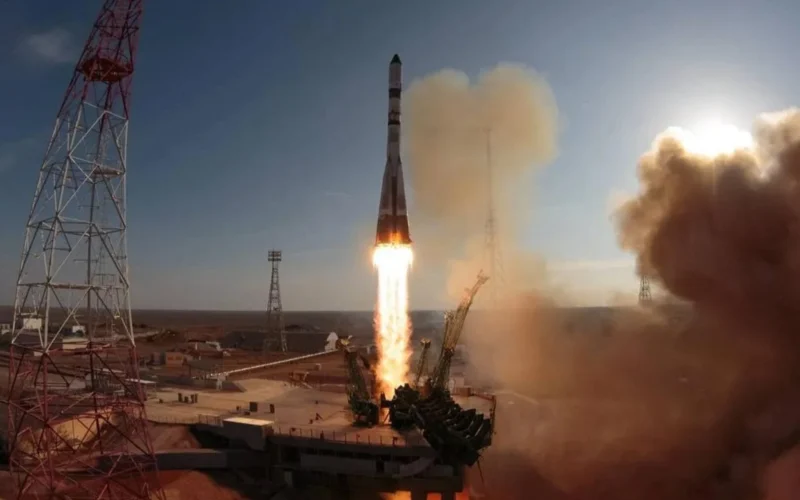
A Russian Progress cargo spacecraft heading to the International Space Station (ISS) will have to be docked manually after one of its automated rendezvous antennas failed to deploy following launch, according to Roscosmos.
The uncrewed Progress MS-33 spacecraft lifted off aboard a Soyuz-2.1a rocket from the Baikonur Cosmodrome in Kazakhstan on March 22, 2026, and is still due to reach the station on March 24, 2026.
In a statement on Telegram, Roscosmos said the issue affects one of the spacecraft’s KURS automated rendezvous antennas, a key element of the Russian docking system. While engineers continue to troubleshoot the malfunction, NASA said all other systems are operating normally, and the cargo vehicle remains on course for the Poisk module of the ISS.
Backup docking system to be used if needed
If the antenna cannot be deployed in time, ISS commander Sergei Kud-Sverchkov will guide the spacecraft through rendezvous and docking using the TORU backup system from inside the station’s Russian segment. Roscosmos officials noted that manual approaches to the ISS are routinely practiced during cosmonaut training, underscoring that the procedure, while less common than automated docking, is built into normal contingency planning. NASA said docking is scheduled for around 13:34 UTC on March 24, 2026.
The spacecraft is carrying roughly 2.5 metric tons, or about three tons, of cargo for the orbital outpost, including food, fuel, water, oxygen, and other supplies. Reuters reported that seven crew members are currently aboard the ISS, including three Russian cosmonauts, three NASA astronauts, and French astronaut Sophie Adenot.
Launch also marked return of repaired Baikonur pad
The mission is notable for another reason. Progress MS-33 was launched from a Baikonur pad that had only recently returned to service after being badly damaged during a Soyuz MS-28 launch in November 2025. The repaired site was Russia’s only launch pad capable of supporting Soyuz flights carrying crewed capsules and Progress cargo vehicles to the ISS, making its return to service an important step in restoring regular station logistics.
If docking goes ahead as planned, the spacecraft will remain attached to the ISS for about six months before being filled with waste and sent back into Earth’s atmosphere for destructive re-entry. The previous cargo spacecraft, Progress 92, undocked from the Poisk module and deorbited on March 16, 2026.