

Commercial space launches are no longer a niche activity confined to remote coastlines. As rockets lift off more frequently from US spaceports, their effects are being felt far beyond the launch pad, including in busy civilian airspace. That reality prompted the Federal Aviation Administration to issue a new Safety Alert for Operators warning pilots and flight departments to expect more disruptions and to plan accordingly.
The alert, SAFO 26001, highlights the airspace and debris risks that can arise from space launch and reentry operations. The FAA said the safe coexistence of spaceflight and traditional aviation now depends on close coordination, careful planning before departure, situational awareness in flight, and the ability of pilots and air traffic controllers to react quickly when conditions change. With launches becoming more frequent, the agency said interruptions to planned routes and day-of-operation traffic flows are increasingly likely, particularly near established launch corridors.
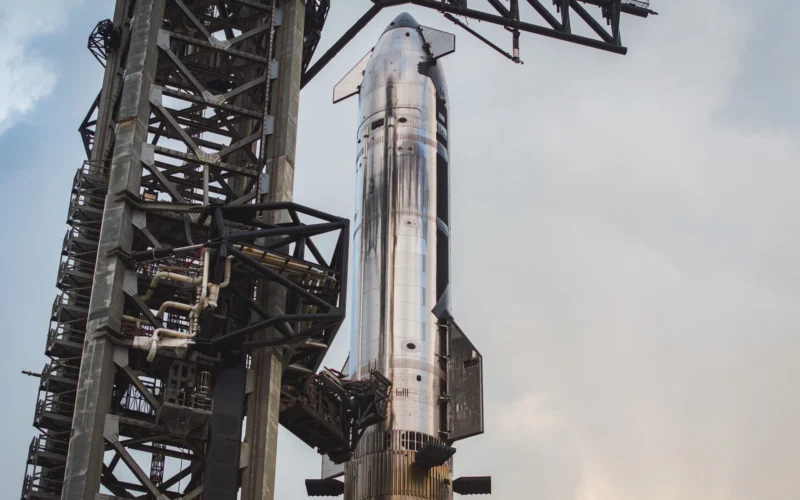
Those concerns are not theoretical. In March 2025, a SpaceX Starship test flight broke apart during ascent, scattering debris over a wide area. The FAA activated emergency procedures, and air traffic controllers rerouted aircraft and imposed ground stops at multiple Florida airports while the risk from falling debris was assessed. Nearly 240 flights were disrupted, with aircraft delayed, held offshore or diverted until the hazard had passed. The incident underscored how a single launch anomaly can ripple across the national airspace system within minutes.
Under current procedures, the FAA develops an airspace management plan for every launch. These plans can include Temporary Flight Restrictions, Aircraft Hazard Areas and, in rare cases, Debris Response Areas. Hazard areas are usually published in advance through NOTAMs and define where aircraft should not operate during launch windows.
The FAA cautioned that these protected areas can be large, especially for newer or experimental launch vehicles whose flight paths are less predictable. Larger rockets can also require more complex airspace protections.
Dean Snell, senior manager of Air Traffic Services at the National Business Aviation Association, said some launches already affect significant portions of US airspace.
“Some of these pre-published AHAs affect significant amounts of airspace,” Snell said. “The size of the AHA is usually determined by the predictability of the launch vehicles and boosters. For this reason, launches of prototype and early development vehicles cover more airspace due to the lower predictability of the flight path. We also see more complex AHAs for the larger launch vehicles such as SpaceX’s Starship and Blue Origin’s New Glenn.”
Snell added that Debris Response Areas are different. While noted in advance, they are only activated if something goes wrong. “The DRAs will be noted in advance via NOTAM but will not be officially implemented unless there is a non-nominal event,” he said, adding that weather-driven launch delays can also cause hazard areas to be canceled and reactivated with little notice.
The FAA said pilots and flight planners should factor space launches into routine planning, closely review NOTAMs, anticipate reroutes and carry enough fuel to absorb unexpected delays. With commercial space activity accelerating, the agency warned that launch-related airspace restrictions are becoming a regular feature of flying in the US, not a rare exception.