

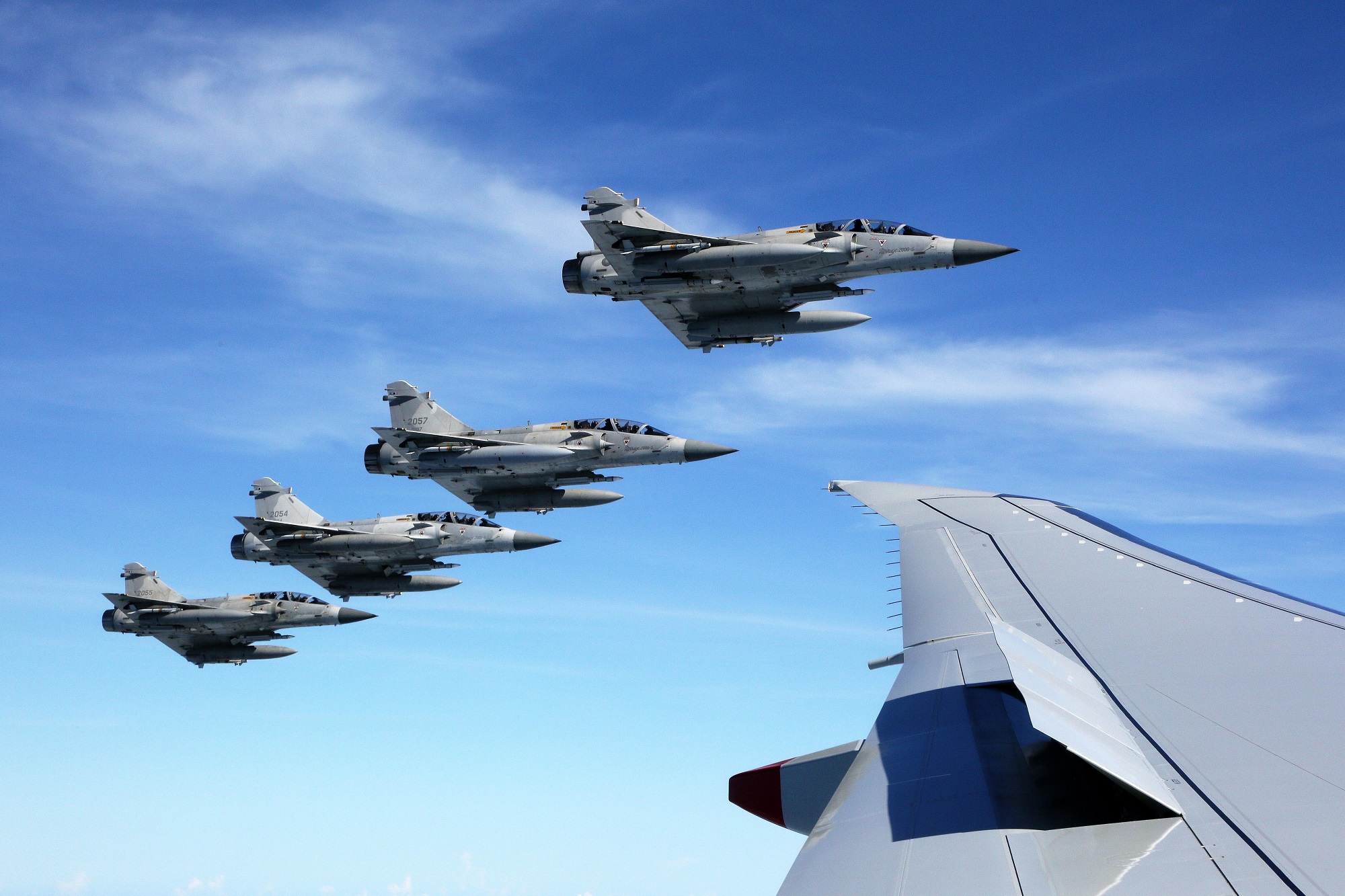
Taiwan’s Air Force has awarded Dassault Aviation a new five-year technical support contract worth NT$926.47 million ($29.5 million) to sustain the availability and operational safety of its Mirage 2000-5 fighter fleet.
According to a June 2, 2026, award notice published through Taiwan’s Government e-Procurement System, the Ministry of National Defense’s Air Force Command awarded Dassault the contract for “aircraft follow-on technical support service.” The contract, listed under case number EC15002E012, runs from September 13, 2026, to September 13, 2031.
Under the agreement, Dassault is expected to station technical specialists from the original manufacturer at Hsinchu Air Base in northern Taiwan, Liberty Times reported. The French personnel will provide the Republic of China Air Force (ROCAF) with hands-on guidance in logistics, maintenance, training, and service-life extension.
The deal is the latest in a long sequence of rolling sustainment contracts that have kept the French-built interceptors operational for nearly three decades. Taiwan originally procured 60 Mirage 2000-5 aircraft from France in the 1990s, with deliveries beginning in 1997. After attrition from accidents over the years, 53 aircraft now remain in service, according to the latest ministry figures.
A patchwork of rolling contracts
Taiwan’s Mirage support is handled through separate, phased contracts covering individual systems, airframe, engines, avionics, and missiles, each typically running on a five-year cycle and renewed upon expiration.
The newly signed agreement effectively continues the airframe technical support line first contracted with Dassault in 2021. That earlier deal, worth around NT$796.9 million ($25.3 million), was due to expire in September 2026.
Recent sustainment activity around the fleet has included:
- Airframe (Dassault, 2021): roughly NT$796.9 million ($25.3 million), valid through September 2026, now extended by the new contract.
- Avionics and electronic warfare (Thales, 2022): approximately NT$739.68 million ($23.5 million), running to the end of 2026.
- Personnel training and logistics (DCI-AIRCO, 2022): around NT$232.42 million ($7.4 million), also running to the end of 2026.
- Engines (Safran Aircraft Engines, 2022): a roughly NT$521.31 million ($16.6 million) follow-on deal for the M53-P2 powerplant, signed after a mechanical incident, securing engine support through 2027.
Earlier, between 2016 and 2018, Taiwan launched a five-year overall logistics overhaul in cooperation with France’s defense procurement agency and Dassault, alongside a roughly NT$1.42 billion ($45.1 million) M53-P2 engine parts contract and a NT$3.89 billion ($123.5 million) missile life-extension package with Matra covering the MICA and Magic II air-to-air missiles.
Life extension and missile resupply
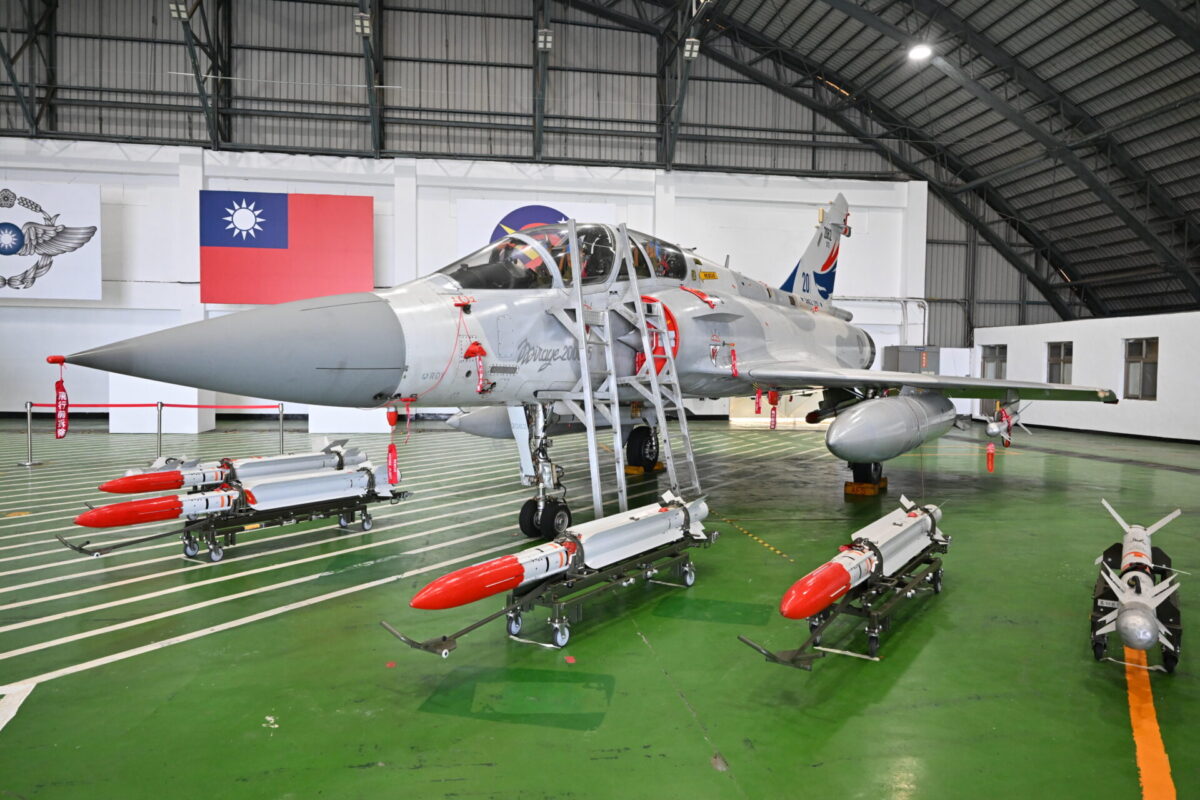
In parallel, the ROCAF commissioned Dassault in 2023 to run a three-year service-life-extension verification program for its two-seat Mirages, budgeted at around NT$150 million ($4.8 million) and scheduled to conclude in July 2026. The assessment, focused on nine twin-seat airframes, is intended to determine whether the aircraft can serve an additional 20 years in both combat and training roles.
Taiwan has also moved to replenish munition stocks for the fleet. In 2025, the Taiwan Air Force Command, through its European procurement office, awarded an open-ended framework contract to European missile group MBDA valued at NT$6.18 billion ($196.6 million). With the ROCAF’s only MBDA-supplied weapons being the Magic II and MICA missiles, the deal was understood to be a logistics-and-resupply effort tied to the Mirage 2000-5.
A fleet under cost scrutiny
The sustained investment comes against a backdrop of recurring debate in Taiwanese defense circles over whether the Mirage 2000-5 is worth retaining. The type is more expensive to operate than the ROCAF’s other fighters (the Lockheed Martin F-16 and the indigenous AIDC F-CK-1 Ching-kuo), and speculation about early retirement, including a possible eventual switch to the Dassault Rafale, has surfaced periodically.
The MND has repeatedly maintained that the fleet continues to meet its availability and mission-capable standards. With the Mirage 2000 jets tasked with defending Taiwan’s northern airspace from their base at Hsinchu, retiring the type before replacement capacity is firmly in place would risk a capability gap at a moment of heightened pressure from the Chinese People’s Liberation Army.
The diplomatic cost of a Rafale transition
So far, Paris has brushed aside Beijing’s objections by casting each spare part, engine, missile, and support tranche not as a fresh arms sale but as the contractual upkeep of a legacy fleet.
That caution is rooted in history. The original deal (six Lafayette-class frigates in 1991 and roughly $3.8 billion worth of Mirage 2000-5s in 1992) caused one of the sharpest ruptures in modern Franco-Chinese relations: Beijing shut the French Consulate-General in Guangzhou until 1997 and barred French firms from the city’s metro tender, a crisis settled only when Paris pledged not to sell Taiwan new arms.
Asked by French lawmakers in 2025 about the difficulties in sustainment faced by the ROCAF Mirage fleet, Dassault chairman and CEO Eric Trappier hinted at a Rafale demand from Taipei:
“You know very well what the Taiwanese want. What they want is Rafale,” Trappier said. “That does not depend on me […] it is [the responsibility] of the state.”
The pressure on Taiwan is still on. In April 2026, China’s commerce ministry placed seven European firms on an export-control list over alleged arms sales to Taiwan. Thus, France handing Taipei new-build fighters could reopen the very rift the Mirage deal caused
And China has shown it will fight the Rafale beyond diplomatic channels: a 2025 US congressional report documented a coordinated campaign to discredit the jet in export markets after the May 2025 India-Pakistan clash. That effort primarily aimed to promote Beijing’s own fighters while likely trying to dissuade any potential buyers of the Rafale, including Taiwan.
2 comments
The question from the lawmaker (MP) was not on the rafale but on spare parts availability for m2000.
You’re correct. I’ve amended the article to clarify that.