

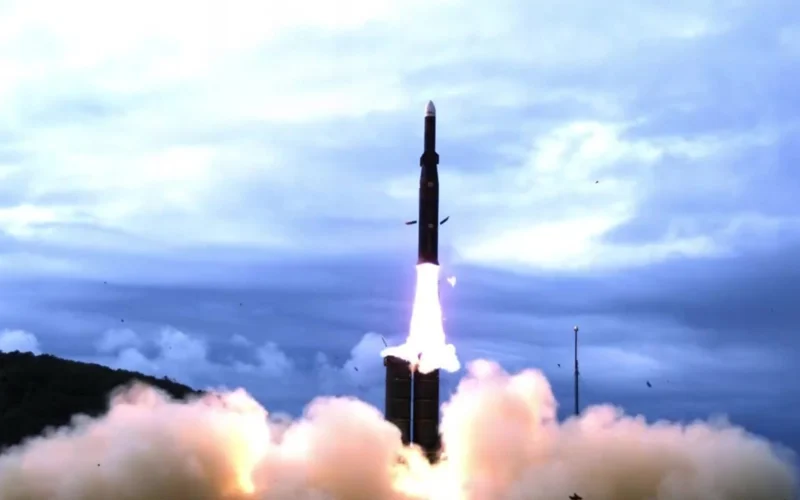
Taiwan is set to finish a domestically developed, AI-assisted network that would link its missile and radar systems into a single command picture by the end of 2026, the Ministry of National Defense has said, with deployment targeted for 2027 if funding is secured.
A defense source told The Liberty Times that the effort combines the Huanzhan Project, an automated command-and-control network that would tie the Taiwanese Army, Navy, and Air Force into a single air picture, with the National Chung-Shan Institute of Science and Technology’s (NCSIST) Strong Bow interceptor program.
An open-architecture backbone
The Huanzhan Project is meant to serve as the digital backbone of the layered shield that Taipei calls the “T-Dome.” Built on an open-architecture platform, it would connect weapons and sensors from different services and manufacturers, share radar tracks across command centers almost instantly, and use AI-assisted software to prioritize threats and recommend interceptor assignments.
Ministry officials said the network would link Patriot PAC-3 MSE batteries, indigenous Sky Bow systems, land-based Sky Sword II, Stinger and Avenger short-range systems, naval Standard Missiles, and close-in weapon systems, drawing on the Leshan long-range early-warning radar, E-2K airborne early-warning aircraft, and land-based and sea-based sensors.
NCSIST’s domestic system would form the core, with technology from Northrop Grumman’s Integrated Battle Command System folded in under a September 2025 memorandum of understanding. The indigenous platform would handle nationwide networking and defenses against low-altitude drone swarms, while IBCS would address ballistic and hypersonic missiles.
Ministry officials added that the network’s distributed design is intended to let regional nodes keep operating if parts of it are knocked out in a conflict.
The accompanying missile layer is built around three indigenous interceptors. NCSIST’s Strong Bow, a ground-based system the ministry compares to the US Terminal High Altitude Area Defense (THAAD) system, would form the outer layer against tactical ballistic missiles at altitudes of up to 70 kilometers. NCSIST has said Strong Bow has completed operational evaluations and is ready for deployment.
The Sky Bow III would cover medium to long-range regional defense, and the land-based Sky Sword II would handle low- and medium-altitude threats.
The funding fight
The ministry and NCSIST first set out the integrated regional air defense plan in a report to the Legislative Yuan in March 2026.
During the subsequent review, opposition lawmakers cut the project’s proposed NT$36.1 billion (about $1.13 billion) special budget, and the ministry’s Department of Strategic Planning said it is seeking to restore the money through a supplementary budget to hold the 2027 timeline.
The dispute is part of a wider standoff over the Lai administration’s NT$1.25 trillion (roughly $40 billion) special defense budget, which Taiwan’s opposition-controlled legislature reduced to a narrower package focused mainly on US arms purchases, leaving T-Dome, domestic drones, anti-ballistic missile programs and other indigenous capabilities short of funding.
1 comment
Too bad the need for such defensive measures. I can’t help but think Taiwan must also thing of the phrase, the best defense is a good offense to provide security as well. Should it have nuclear capability? Maybe so, due to the size of the aggressor it has to defend against. Or is that what we provide to stop attacks as well?
It Taiwan is attacked should we start a nuclear war with China?
Isn’t that THE question no one wants to answer? So ASK IT OUT LOUD instead of avoiding to say it. And have everyone face what WILL happen if Taiwan is attacked.
It just seems to me that Taiwan should relate to China the SAME WAY we should relate to CANADA.
IN being each other’s BEST FRIENDS,instead of being at odds with each other.
Why isn’t anyone, or everyone, else seeing that as the goal of a practical paradigm that can work to help EVERYONE?
Or is dominance more important than security and freedom?
Think everyone…….