

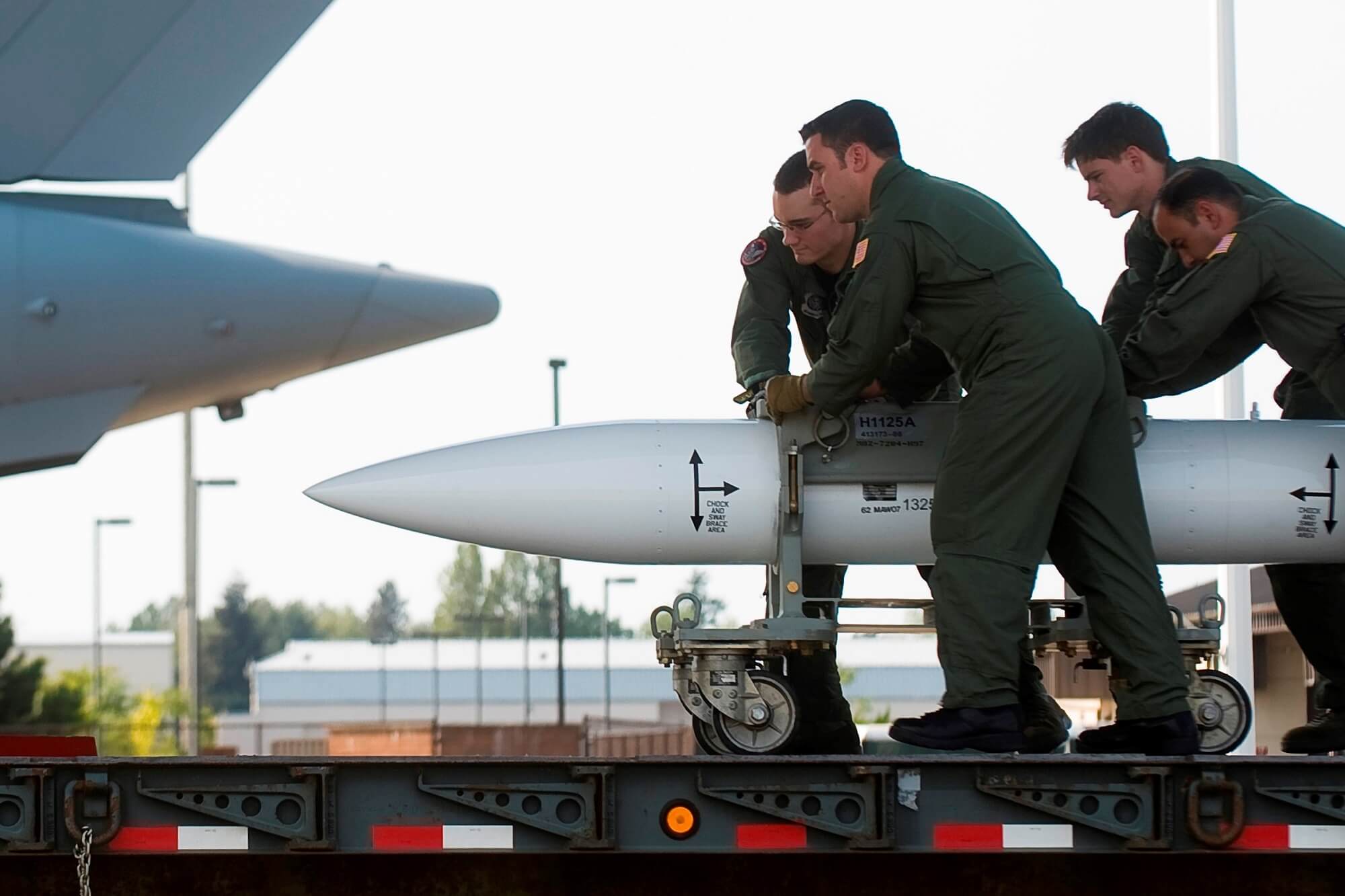
Washington is in confidential discussions about adding countries to NATO’s nuclear-sharing arrangement, the Financial Times reported on June 2, 2026, in a move that comes as France’s own European deterrence initiative gathers momentum.
According to the FT, the talks concern the possible extension of NATO’s dual-capable aircraft, or DCA, mission to countries beyond the current participants. Poland and some Baltic states are among the countries showing interest, although no agreement is imminent.
The timing is hardly coincidental. On March 2, 2026, French President Emmanuel Macron used a speech at the Île Longue submarine base to outline the most substantial shift in France’s nuclear doctrine in decades.
Macron proposed that allied countries participate in deterrence discussions and exercises and potentially host French Rafale B fighters capable of carrying nuclear weapons during a crisis. The French president would retain sole authority over any nuclear strike.
Eight countries entered the French framework immediately, including Germany, Poland, the Netherlands, and Belgium, all of which are current or aspiring participants in the US-led nuclear-sharing system.
The French initiative is built around a deliberate constraint. Extending forward deterrence to its full nuclear dimension imposes strict requirements on host nations for security, protected communications and force protection.
But it does not require them to procure or certify specific aircraft. France would deploy its own Rafale B fighters, which carry the ASMP-A nuclear cruise missile. The nuclear trigger and the delivery platform both remain French.
Candidates to extended nuclear deterrence

Notably absent from Macron’s initial list of partners were Finland, the Baltic states and Norway, with those front-line nations described at the time as following the debate closely.
On May 27, 2026, Norway officially joined the fray during Norwegian Prime Minister Jonas Gahr Støre’s visit to Paris, becoming the first country to do so since the Île Longue speech.
Finland still sits in that grey zone. Helsinki has not been a traditional participant in NATO nuclear sharing, but it has signaled interest in closer discussions around European nuclear deterrence.
On March 5, 2026, the Finnish government announced plans to amend the country’s 1987 Nuclear Energy Act, which currently prohibits the import, manufacture, possession and detonation of nuclear explosives on Finnish territory. Defense Minister Antti Häkkänen said the change was needed for Finland to fully exercise its role inside NATO’s deterrence and collective defense system.
With its future F-35A fleet, Finland is one of the countries that could be drawn either toward France’s forward-deterrence dialogue or the more traditional US-led nuclear-sharing track.
Poland occupies a similarly ambiguous position. Before Macron’s speech, Warsaw had shown the strongest interest in joining the US nuclear-sharing arrangement as a host nation. In March 2025, then-President Andrzej Duda publicly called for US nuclear weapons to be stationed on Polish soil. Duda said he saw no contradiction between US nuclear sharing and closer deterrence cooperation with France, describing the two tracks as “neither contradictory nor mutually exclusive.”
Poland’s first three F-35A Husarz fighters arrived on May 22, 2026, giving Warsaw a future aircraft fleet that could be aligned with the DCA mission if that political path is pursued.
The F-35 question

Since the end of the Cold War, NATO’s nuclear-sharing mission has centered on the US B61 gravity bomb and required participating allies to field aircraft certified to carry the weapon. Over time, that role has involved several platforms, including the F-16 and, most notably, the non-US-designed Panavia Tornado.
Germany considered having the Eurofighter Typhoon certified as a successor, but the combined timeline for certification and the retirement of its aging Tornado fleet risked creating a capability gap. Berlin therefore selected the F-35A for the nuclear-sharing mission.
Today, the F-35A is the only DCA aircraft currently in production for NATO’s nuclear-sharing role.
France’s framework competes with that dynamic. By offering European deterrence participation without an aircraft procurement requirement, it gives allies a route into nuclear reassurance that does not automatically run through the F-35 program.
The FT report suggests Washington may now be looking for an answer in kind. If the discussions move forward, the result could be a more flexible version of nuclear sharing, closer in shape to France’s forward deterrence concept: US nuclear-capable aircraft operating from allied soil, but without the same immediate host-nation procurement requirement.