

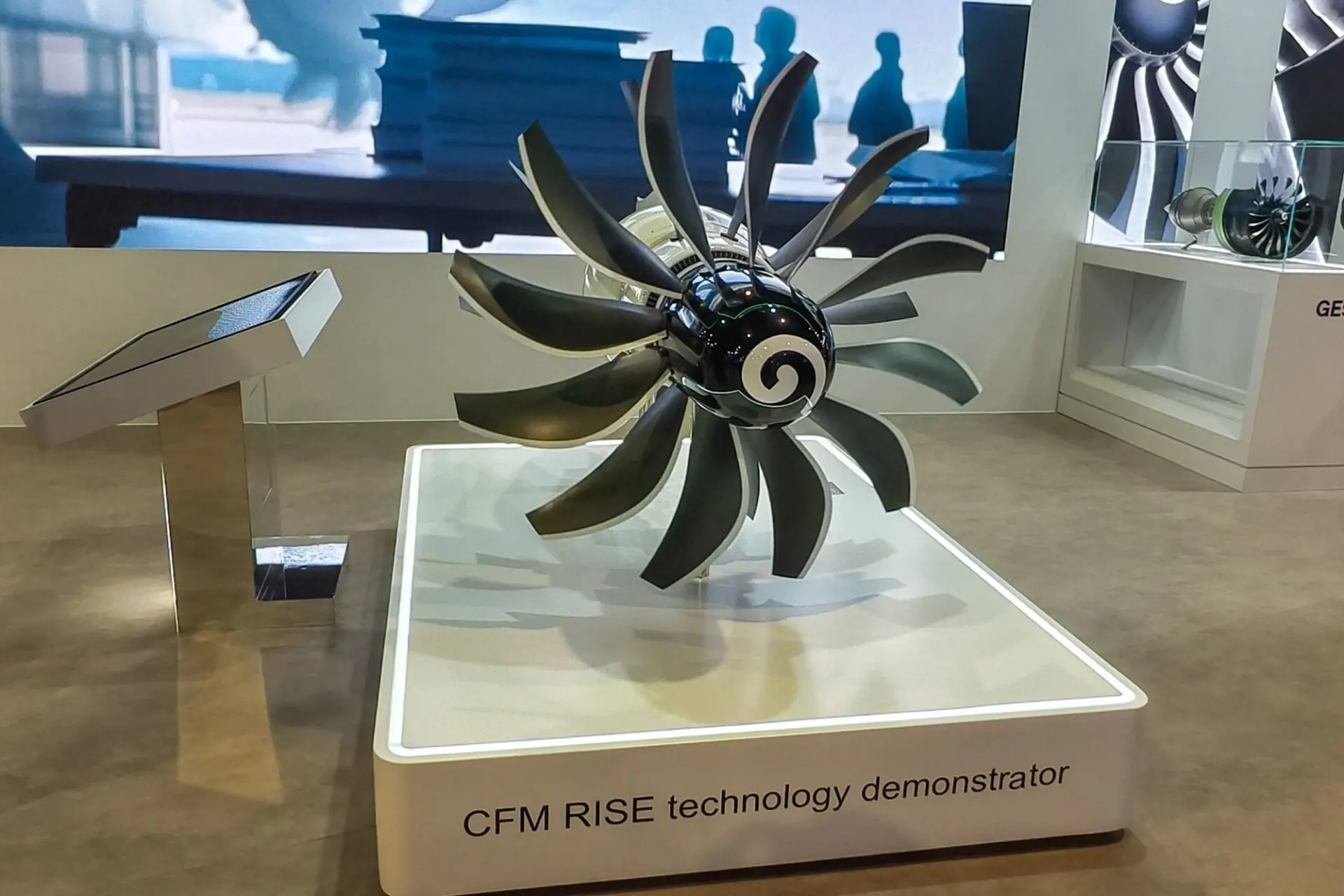
CFM International remains confident in its open-fan engine technology after a series of successes were announced at a press event before the opening of Farnborough Airshow 2026.
On July 18, 2026, in London, Gaël Méheust, the President and CEO of CFM International, opened proceedings stating that the company was “preparing the future of aviation” through its RISE (Revolutionary Innovation for Sustainable Engines) program.
The RISE program is a series of technologies in development that include open fan, compact core and hybrid electric systems.
Pierre Cottenceau, GFM International Vice President of Engineering, Research and Technology, said that during the five years since the inception of the RISE program more than 500 test campaigns have been conducted and over 500 hours of wind testing.
“This gives us the confidence that we can now go to the ground testing of the open fan [later this decade],” Cottenceau said.
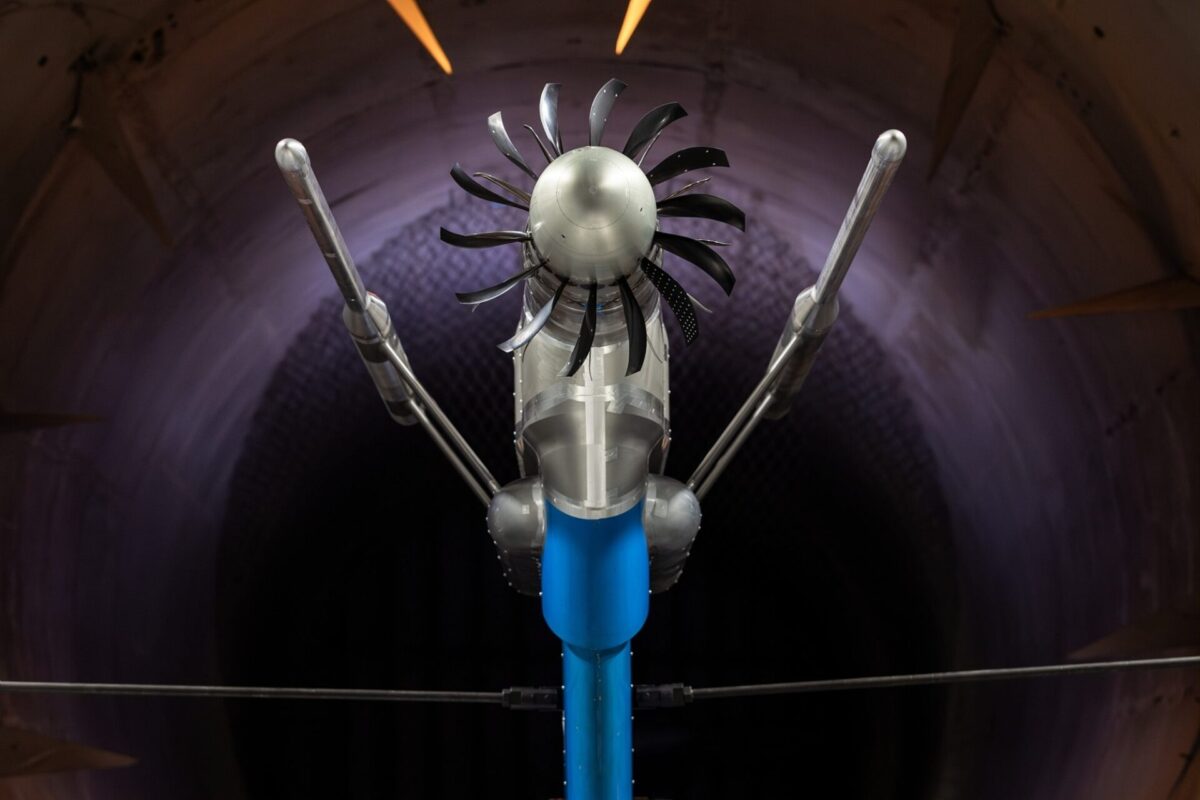
With completed Preliminary Design Reviews (PDRs) of the open fan and outlet guide vanes (OGVs) airfoils complete, Cottenceau said that CFM can now build the parts for the ground test demonstrator.
CFM explains that OGVs are the second stage or row of airfoils behind the fan to help direct air flow and are “key to how the Open Fan design can achieve the same speeds and altitudes as turbofan engines flying today”.
“We’re testing real, full-size Open Fan hardware, showing real progress and a renewed ambition from CFM to advance the RISE program and deliver the vital technology step-changes for durability and efficiency to power the future of air travel,” Arjan Hegeman, GE Aerospace Vice President of Future of Flight Engineering, said.
RISE durability advantages
Hegeman also spoke about dust ingestion tests which he claims are proving durability advantages against current next-generation engines.
“An open fan ingests more than 50% less dust than ducted architecture,” according to Hegeman, and with lower temperatures and less dust results in “significantly more time on wing”.
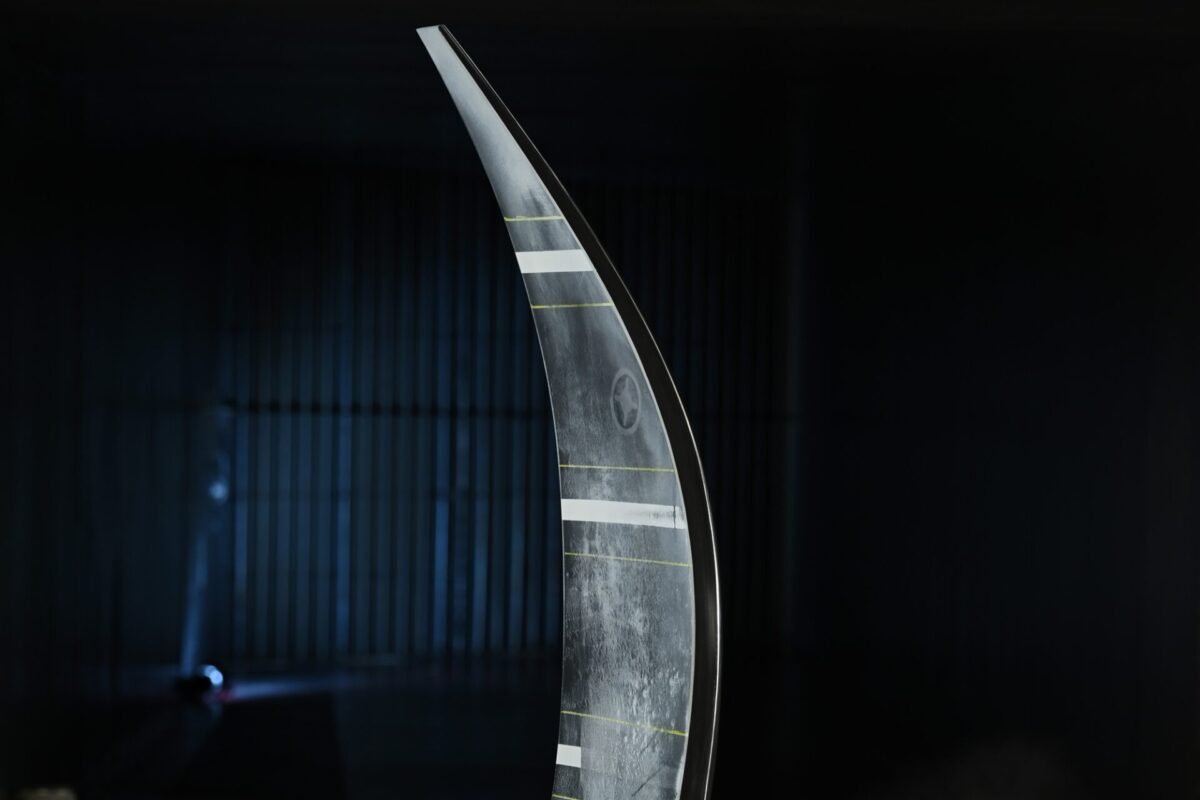
CFM has completed the compact core systems Preliminary Design Review and conducted more than 2,000 cycles of dust ingestion tests to evaluate next-generation high-pressure turbine (HPT) airfoil technologies in an engine core.
Additionally, Hegeman said super computers in Germany and the US are being used to run optimize designs for acoustics and aerodynamics.
Hybrid electric ground tests
CFM International executives also spoke said owners Safran and GE Aerospace are actively ground testing hybrid electric systems through the RISE program.
GE Aerospace completed two hybrid electric engine ground tests within the last year, demonstrating the feasibility of more electric aviation with and without energy storage.
Safran launched PHILEAS, a ground testing campaign at its Istres site in France. PHILEAS is a full-scale engine demonstrator equipped with two electric machines designed for the next generation of short- and medium-range aircraft engines.
Certification of LEAP-1B HPT durability kit
In another announcement, CFM said that the company secured certification of the CFM LEAP-1B high-pressure turbine (HPT) durability kit from the Federal Aviation Administration (FAA) and the European Aviation Safety Agency (EASA).
According to CFM, this will double the engine time on wing in hot and harsh environments, an issue that has become more prevalent in recent years. The update is expected to arrive for customers in early 2027.
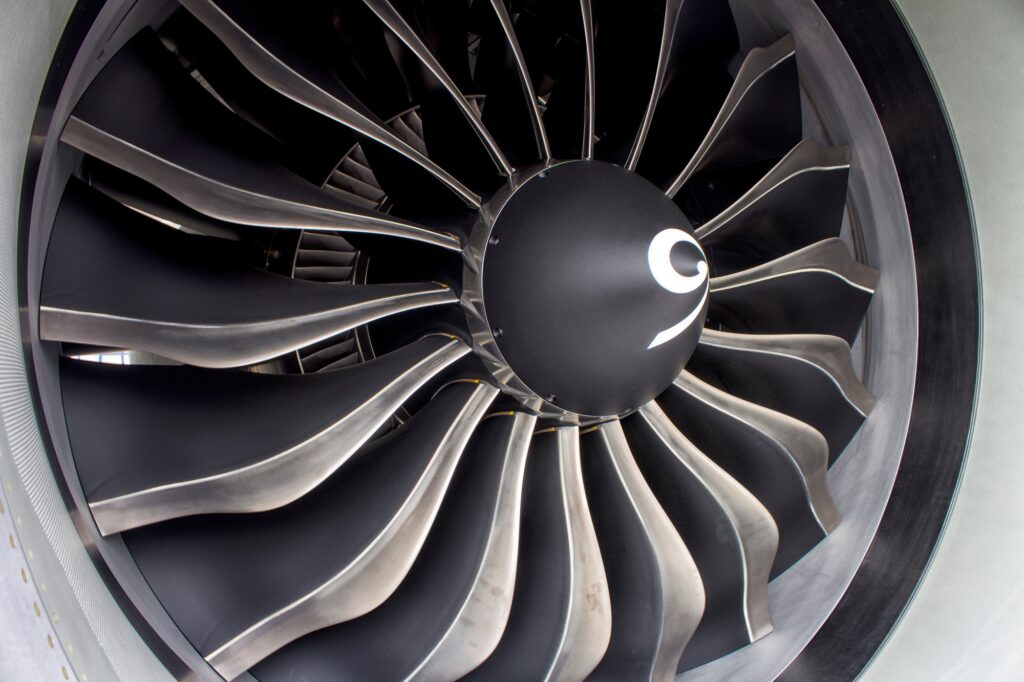
CFM also gained engine-level certification of the LEAP-1B reverse bleed system (RBS), a cooling system designed to reduce the need for on-wing fuel nozzle replacements.
“These systems will increase time between shop visits while also reducing maintenance burden, especially for customers in severe environments,” Méheust said. “This means customers will benefit from longer time on wing in addition to the exceptional efficiency, reliability, and utilization that LEAP engines already deliver.”