

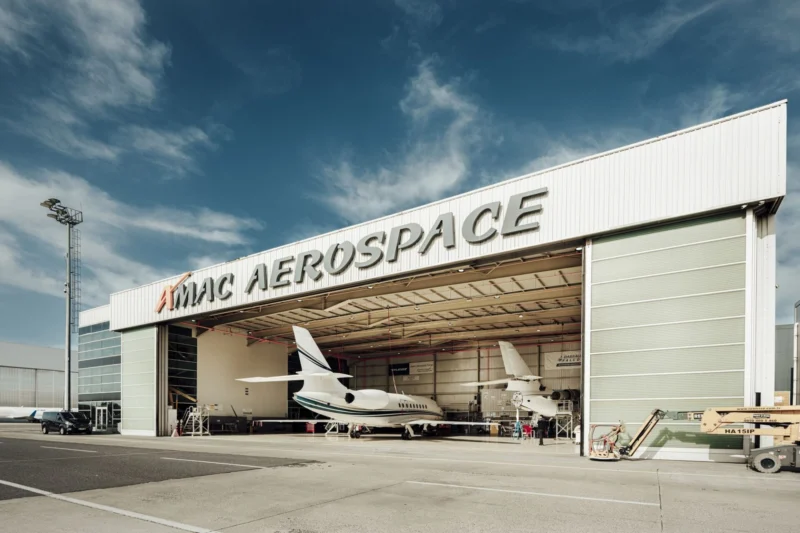
AMAC Aerospace’s spiritual home, EuroAirport Basel-Mulhouse (BSL/MLH) in Switzerland, is synonymous with the industry’s biggest jets, housing maintenance facilities that are ready to take on everything and anything, from Boeing 747s to Airbus A380s.
However, AMAC Aerospace’s network of companies spans much further than the confines of the Franco-Swiss airport, with established additional maintenance, repair and overall facilities (MRO) also in Turkey, the UK, Lebanon and Saudi Arabia.
At Istanbul Ataturk Airport (ISL), AMAC Aerospace Istanbul is uniquely positioned at the crossroads of Europe and Asia, serving a global customer base of executive aircraft operators that visit for maintenance support.
As an Original Equipment Manufacturer (OEM) Authorized Service Center for Pilatus PC-12, PC-24 and Dassault Falcon 6X, 7X and 8X series, 900 and 2000, the staff at AMAC Aerospace Istanbul have gained a reputation for technical excellence.
The 1,500 m² hangar space can accommodate up to three Dassault Falcons or four Pilatus aircraft simultaneously, providing maintenance, engineering services, refurbishment and aircraft sales.
And Istanbul’s goTeam are also always primed and ready to provide out-of-base Aircraft on Ground (AOG) support when the demand arises.
In 2025, AMAC Aerospace Istanbul completed over 400 projects, including 20 on the newly introduced Falcon 6X. Additionally, the company has also seen significant increases in line and base maintenance activities for both the Falcon 7X and 8X series.
AMAC Aerospace Istanbul obtained national Falcon 6X approval more than a year ago and has since been supporting Turkish customers and their aircraft.
In 2026, the company expanded its 6X capabilities to include Federal Aviation Administration (FAA) approval, with the European Aviation Safety Agency (EASA) expected to follow soon.
What’s more, the facility has also reached the highest number of C checks in a single year since it was established, and it continues to see rapid growth in this area.
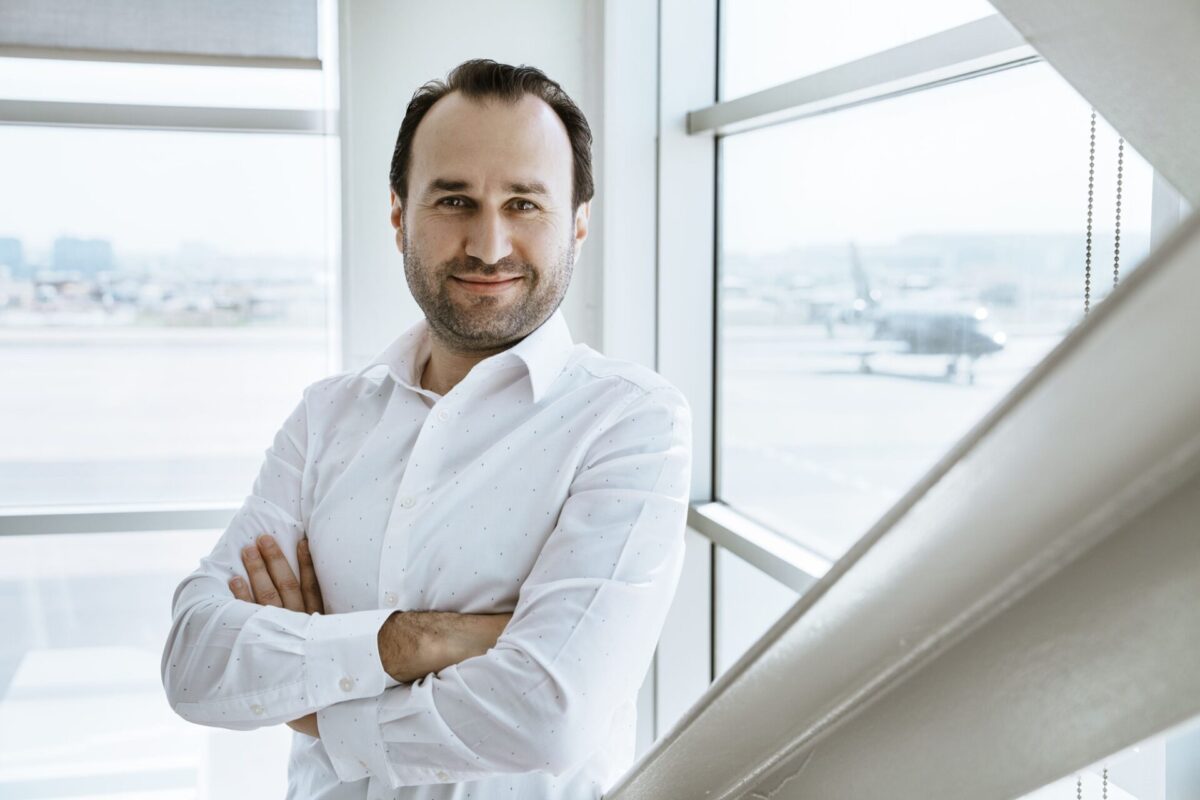
Remzi Öztürk is Sales Director at AMAC Aerospace Istanbul and its Bodrum facility. Öztürk told AeroTime that AMAC Aerospace Istanbul’s story began in 2010, when the company sought to become a Pilatus Sales Center for Southeastern Europe and the Middle East.
“The company was at the same time considering ways to increase its presence in the region, so establishing a facility in Istanbul was a logical and strategic move,” Öztürk said.
Reflecting on the decision to establish an Istanbul facility, Öztürk said: “Looking back today, the decision has proven to be very important. Istanbul sits at a unique crossroads between Europe, the Middle East, Central Asia and North Africa, giving us the ability to support a very broad customer base from a single location.”
Built around Dassault Falcon and Pilatus
According to Öztürk, the initial plan was to focus primarily on Pilatus sales and maintenance activities. However, as AMAC Aerospace Istanbul “studied the market and examined the opportunities more closely, we identified considerable potential to expand our capabilities”.
“Our feasibility study revealed a clear demand for Dassault Falcon maintenance services in the region,” Öztürk explained. “At that time, several regional operators were positioning their aircraft in Europe for maintenance, so we identified an opportunity to provide those services closer to our customers.”
He added: “This was an important step in the development of AMAC Aerospace Istanbul, ultimately leading us to expand our capabilities to include both Pilatus and Dassault aircraft.”
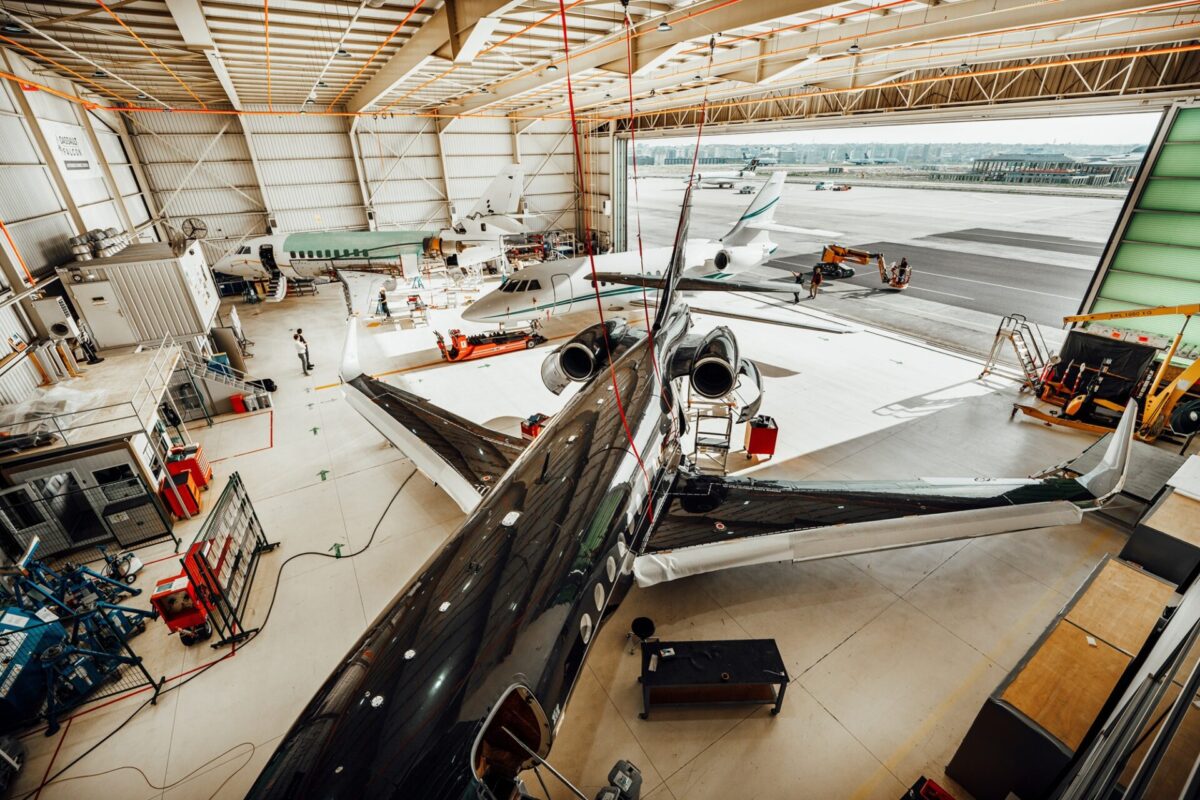
Öztürk describes Turkey’s largest city as a “major hub for business aviation,” a position further strengthened by the opening of Istanbul Airport in the northern part of the city in 2018/19.
“Istanbul had also been a Dassault operating location for many years, so there was already a strong customer base and a clear need for local support,” Öztürk said.
Since the opening of the Istanbul facility, customers no longer need to fly their aircraft to another country for routine or unscheduled maintenance. Instead, they can receive this support closer to home.
“Equally important, customers value having an experienced technical team available locally to troubleshoot and resolve technical issues at their own base,” he said. “This combination of proximity, expertise, and manufacturer authorization is a significant advantage.”
Industry insights
How do the maintenance requirements of newer-generation Falcons differ from those of legacy aircraft?
One area that has become increasingly important is cybersecurity, particularly with the introduction of Part-IS requirements for aircraft such as the Falcon 6X. We expect this area to become even more relevant with the next generation, including the Falcon 10X.
At the same time, we see a clear evolution in the way aircraft are maintained. Compared with earlier platforms such as the Falcon 7X and Falcon 900EX, newer aircraft have much more digitalized documentation and a greater reliance on electronic tools and systems.
We are also seeing longer maintenance intervals on newer-generation aircraft. This reflects the enormous amount of operational and maintenance experience that the aviation industry has accumulated from previous generations.
Life at AMAC Aerospace Istanbul
According to Öztürk, the first requirement at AMAC Aerospace Istanbul is to “understand what the customer really needs”.
“In business aviation, ground time is extremely important,” Öztürk said. “Operators want their aircraft ready for their next mission as soon as possible, so maintenance organizations must work efficiently without compromising safety or quality. However, not every technical problem can be solved immediately. When a complex defect occurs, it must be correctly diagnosed and permanently resolved rather than simply receiving a temporary fix.”
Discussing an increase in C checks at the Istanbul facility, Öztürk explains that the rise is “not due to a single factor”.
“We have been performing maintenance activities for over 14 years, and our reputation and visibility among customers have continued to grow,” he said.
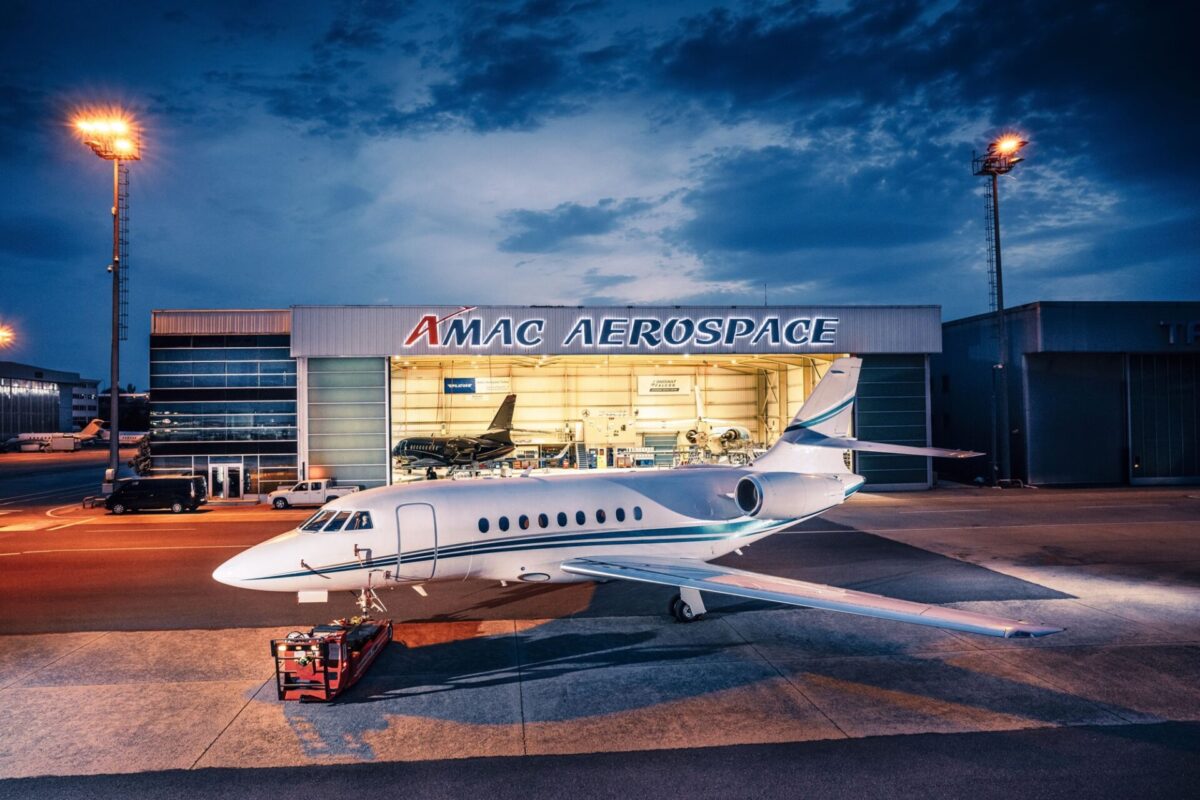
At the recent Dassault M&O (Maintenance & Operators) Seminar, AMAC Aerospace Istanbul was awarded the 2025 Customer Satisfaction Award for Base Maintenance.
Öztürk explained that these types of engagements enable the company to “introduce ourselves to operators we have not yet worked with”.
The rise in C checks is also more broadly down to a significant increase in the number of business aircraft operating in the region, therefore “naturally creating greater maintenance demand”.
“Another important factor is the Dassault Authorized Service Center network. Sometimes, we initially meet operators through an AOG request,” Öztürk said. “What begins as an urgent technical support requirement can develop into a long-term relationship.”
Aircraft on Ground (AOG) support
In the last year, being part of the Dassault Authorized Service Center network has seen AMAC Aerospace Istanbul’s goTeam offer support to customers in Italy, the Maldives, Kazakhstan and Saudi Arabia.
In 2025 alone, the dedicated goTeams were sent out 30 times, both within Turkey and internationally.
According to Öztürk, when an AOG requirement arises, the Dassault Command Center normally contacts AMAC Aerospace Istanbul by email or, depending on the situation, sometimes initially by telephone.
“Regardless of whether or not we can ultimately provide the support, we are required to respond within two hours,” Öztürk said. “This is especially important for out-of-base support, as specific approvals, resources, and special conditions may need to be considered. Our goal is to quickly determine what resources are needed, where they should be deployed, and how to safely and efficiently return the aircraft to service.”
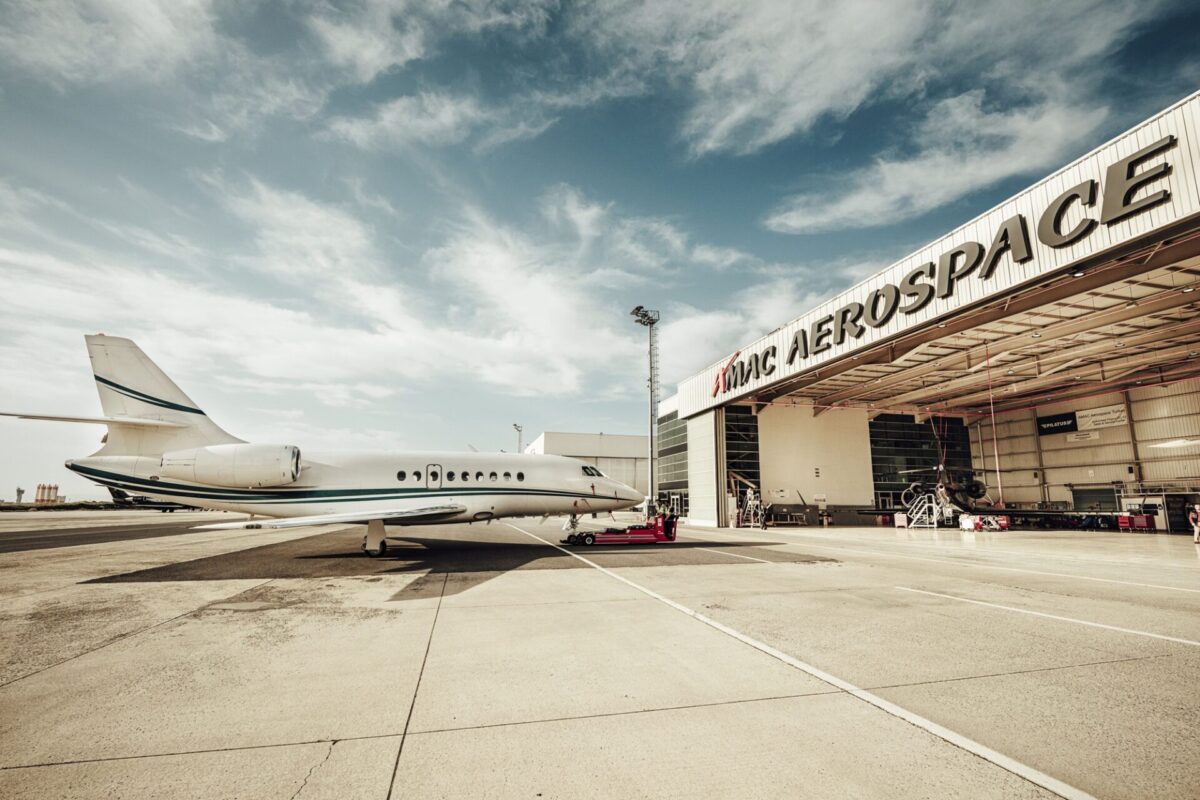
Being part of the Dassault Authorized Service Center network gives AMAC Aerospace Istanbul “excellent visibility” among Dassault Falcon operators, allowing the company to work closely with the wider Dassault support organization.
Key to AMAC Aerospace Istanbul being an industry leader in the AOG field is, once again, its prime location.
“From Istanbul, we can deploy technicians to Central Europe, Northern Africa, Central Asia and the Middle East in approximately four hours of flight time,” Öztürk stated. “This gives us considerable flexibility when customers require urgent assistance.”
He added: “One of the more challenging situations involves providing AOG support in Saudi Arabia, primarily due to the customs restrictions and logistical challenges associated with that location. Such situations require careful coordination and flexibility from everyone involved.”
Maintenance operations
AMAC Aerospace Istanbul closely monitors its customers’ upcoming base maintenance requirements, often several months in advance, providing the team with a “clear picture of our future workload, enabling us to plan our manpower, facilities, and resources accordingly”.
The Istanbul facility also receives a steady flow of unscheduled maintenance requests, as well as AOG requests, through the Dassault Command Center, both during the week and on weekends.
“Each request is evaluated individually,” Öztürk said. “Our goal is to support as many customers as possible, while maintaining the required technical, quality, and operational standards.”
According to Öztürk, one of the “most technically demanding tasks” in Dassault maintenance is the dimensional check of the stabilizer.
“The purpose of this procedure is to check the rear hinge bushings without removing the horizontal stabilizer (HS) and vertical fin,” Öztürk explained. “This task applies to Dassault Falcon aircraft due to their specific stabilizer design.”
He describes the work as “highly critical measurement activity” that requires Dassault-specific training and highly skilled technicians, with the operator requiring a valid qualification specific for this procedure, granted by Dassault Aviation.
Dassault Structures team conducted on-site training in Istanbul in order to verify AMAC Aerospace Istanbul’s technicians.
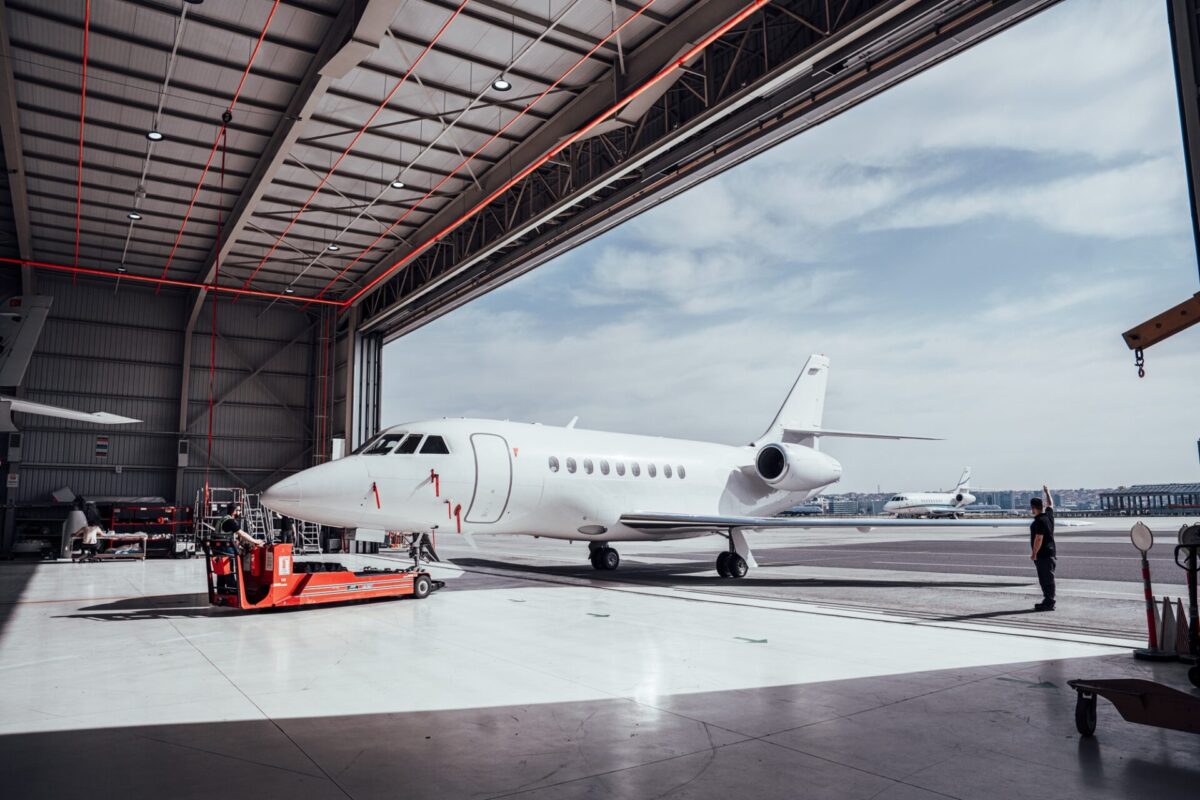
“This task is a good example of how aircraft maintenance is not simply about replacing components. Some tasks require a very high level of technical knowledge, precision and experience,” Öztürk said.
At AMAC Aerospace Istanbul, staff also carry out avionic upgrades, paint renewals and cabin refurbishments.
Over recent years, the company has completed several avionics upgrade programs, including EASY II, ADS-B Out, and Pro Line 21.
“Looking ahead, we are increasingly focusing on connectivity solutions, including Starlink and other emerging technologies,” Öztürk said.
According to Öztürk, C checks provide an excellent opportunity for customers to combine maintenance with other work.
“During the aircraft’s scheduled ground time, we can offer services such as complete cabin refurbishment, carpet replacement, paint renewal and livery changes,” Öztür explained. “Since these projects require significant ground time, combining them with a C check is very attractive to operators.”
AMAC Aerospace Group aims to expand its cabin refurbishment capabilities and has been in contact with the JCB Aero team regarding potential opportunities in this area.
Industry insights
Has the business jet fleet’s ageing profile changed the type or volume of maintenance work coming into AMAC Istanbul?
This is strongly influenced by the customer’s individual profile.
Some operators prefer to replace their aircraft before major maintenance events, such as C checks, and continuously invest in newer aircraft. Others develop a strong attachment to their aircraft and prefer to keep them for many years. There are also customers who deliberately choose proven aircraft, such as the classic Falcon 2000.
Due to the wide variety of aircraft types operated in our region, we see everything from brand new to well-established legacy models.
One thing is clear, however: new-generation aircraft are increasingly entering the region, and we want to ensure that AMAC Aerospace Istanbul is prepared for this evolution.
Staying ahead of the competition
Öztürk cites technical knowledge and expertise among the most important reasons why long-term customers value the Istanbul facility, describing his team as “one of the most critical factors in our business”.
“Our long-term customers know that when they bring an aircraft to AMAC Aerospace Istanbul, they have an experienced team that understands the aircraft and can approach technical problems efficiently,” he said. “That trust is extremely valuable. It creates a positive cycle in which existing customers remain with us, and their experience and recommendations introduce new customers to AMAC Aerospace Istanbul. Over time, some of those new customers also become long-term partners.”
When quizzed on what differentiates AMAC Aerospace Istanbul from competitors in the region, Öztürk said that one comment he frequently hears from customers and service providers is that AMAC Aerospace Istanbul “feels like a European MRO”.
“They appreciate the technical approach, work culture, and clear communication they experience when working with our team,” he explained. “From our customers’ perspective, they receive the familiar service they would expect from a European MRO, while enjoying the benefits of our strategic location in Istanbul. This combination has become one of our key differentiators.”
With customers demanding fast turnarounds, ensuring speed of service while maintaining the highest standards is a key requirement. Nevertheless, Öztürk states that there is “no silver bullet” to its success.
“Reliable and fast maintenance is the result of having the right people and support structure working together,” he said. “Our highly skilled technicians and experienced engineers are at the heart of the operation. They are supported by a dedicated planning team, supply colleagues who monitor requirements around the clock, and highly knowledgeable quality personnel.”
He added: “All of these functions are essential to our Part 145 organization. They are also supported by a dedicated facility team that ensures the operational side of each maintenance activity runs smoothly. Ultimately, speed comes from preparation, experience, communication, and teamwork. All of these elements must work together to reduce ground time without compromising quality or safety.”
AMAC Aerospace Istanbul’s future
As the company’s “most important investment,” Öztürk is certain that AMAC Aerospace Istanbul will continue to develop its colleagues through training, experience, and new capabilities.
“An organization’s strength ultimately comes from its people,” he said. “At the same time, we continuously monitor the market, look for future opportunities, and follow developments in aviation technology.”
Öztürk expects significant growth in connectivity as it becomes increasingly important to business aviation, with several requests already received from regional operators.
“We are working with OEMs and technology providers to understand how we can further develop our capabilities in this area,” he added.
AMAC Aerospace Istanbul also plans to continuously invest in its capabilities, based on market requirements and the evolution of the aircraft fleet.
With the Falcon 10X approaching entry into service over the next few years, Öztürk asserts that the facility will “collaborate closely with Dassault to ensure that AMAC Aerospace Istanbul is prepared and has the necessary capabilities to support the aircraft”.
He said: “In five years, we aim to expand our capabilities while upholding the principles that have guided AMAC Aerospace Istanbul’s growth so far: strong technical expertise, customer focus, reliable support, and consistent investment in our people and technology.”
AMAC Aerospace will be present at MRO Europe in Amsterdam between October 28 and 29, 2026, at Booth 1-1122.
To learn more about AMAC Aerospace Istanbul visit the company’s website.