

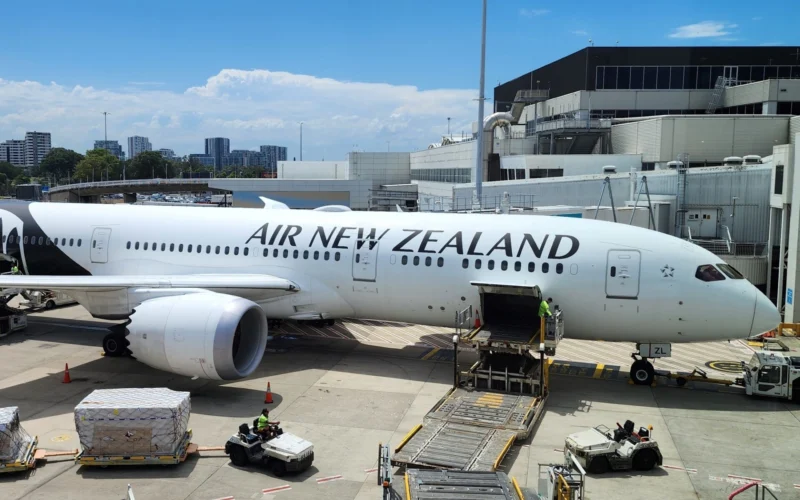
Prime Minister Christopher Luxon has given Air New Zealand a public dressing down, criticizing the airline’s “pretty poor performance” over the last financial year.
On August 28, 2026, Prime Minister Luxon, himself a former Air New Zealand CEO, stressed that the carrier needs to get its act together “very quickly”, according to The New Zealand Herald.
Earlier in the day, Air New Zealand posted a net loss after taxation of around $144 million (NZD $242 million) for the financial year.
Before taxation, the loss was recorded as around $200 million (NZD $336 million), compared with earnings before taxation of around $97 million ($164 million) during 2025.
Despite the losses, Air New Zealand said the result is “slightly better than the guidance range provided to the market in May 2026”.
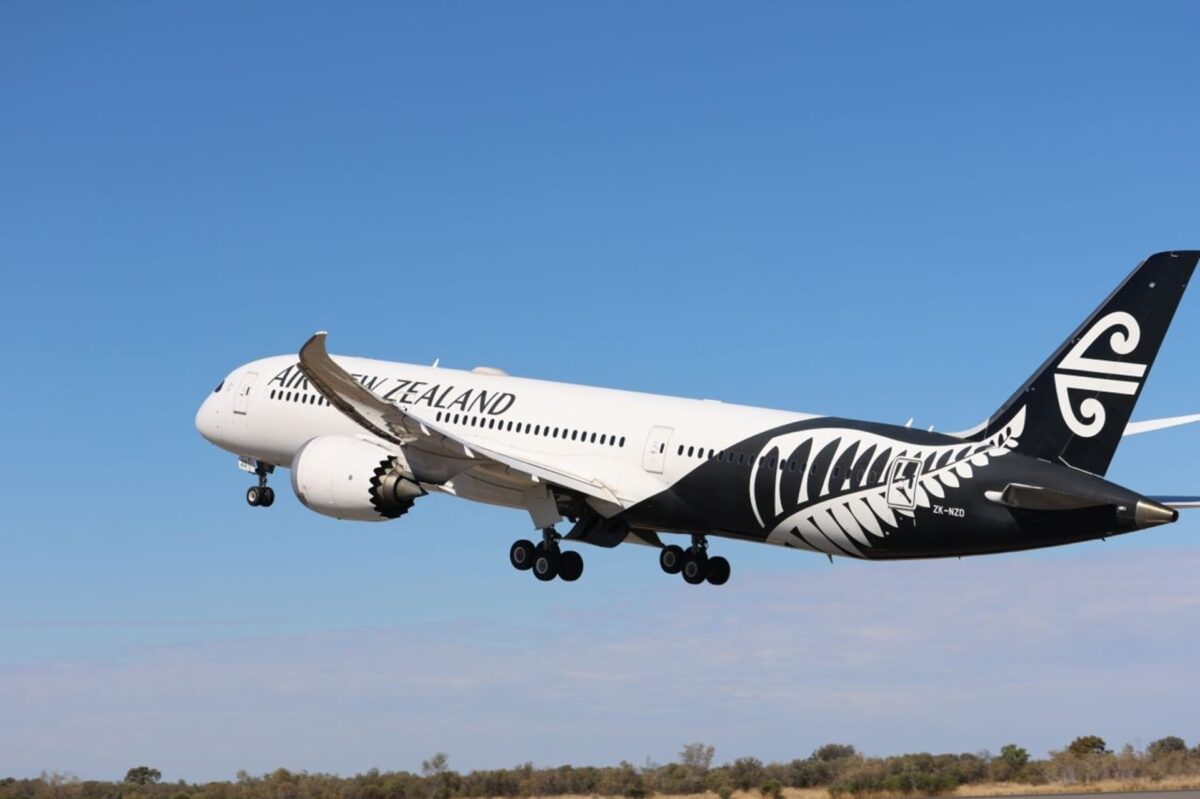
Prime Minister Luxon, who led Air New Zealand for six years, said that it was up to the airline to “explain what’s caused such a significant loss and also, more importantly, what are they going to do to build a better business?”
“It’s clearly a very poor result. It’s clearly a very poor performance, even in the context of global aviation and other airlines as well,” he added.
According to New Zealand, the primary reasons for the poor results were jet fuel prices hikes caused by the Middle East conflict, plus rising aviation system costs and maintenance costs, which were particularly high this year.
The carrier also blamed ongoing engine availability issues that have plagued the airline in recent years.
Air New Zealand said: “Ongoing Rolls-Royce Trent 1000 and Pratt & Whitney PW1100 engine issues impacted the result by an estimated $190 million through lost capacity, additional lease and engine costs, lower fleet utilisation and operating inefficiencies.”
Air New Zealand CEO Nikhil Ravishankar declared that it had been a “very challenging year for aviation” and that the airline’s result “reflects these challenges”.
“Given the price sensitivity of air travel, airlines globally have not been able to recover the full increase in fuel costs,” Ravishankar said. “We took quick and decisive action through fare adjustments and capacity reductions to balance affordability for customers and maximize recovery and will continue to do so.”
Engine issues ‘substantially behind us’
On a more positive note, the CEO claimed that the engine woes that have “constrained our network are now substantially behind us”.
“Our teams have worked relentlessly with Rolls-Royce and Pratt & Whitney to return grounded aircraft to service earlier than expected, with aircraft availability improving by the end of the financial year,” Ravishankar added. “There are still residual risks and costs to work through, but we enter 2027 in a considerably more reliable fleet position.”
Prior to the Middle East conflict, the airline would have expected, in its central case, to return to profitability during the 2027 financial year.
A spokesperson for the airline said: “Given the continued uncertainty surrounding the conflict, the volatility of jet fuel prices, and with jet fuel currently around US$150 per barrel, the airline is not in a position to provide earnings guidance for the 2027 financial year at this time.”
1 comment
Really rich coming from Christopher Luxon; his Government has trashed our economy, and he wonders why ANZ has not made a huge profit?
Who can afford to climb on board?
Then there are the engine problems with the new Airbus jets, plus the carryover of the problems with the engines on the 787 family, all coming off the back of COVID and this government whacking the heck out of the country and its ability to climb out of the ditch.
Chris has been said (many times, in many publications) to not be able to ‘read the room’ and this is one more example of how tone deaf he is.