

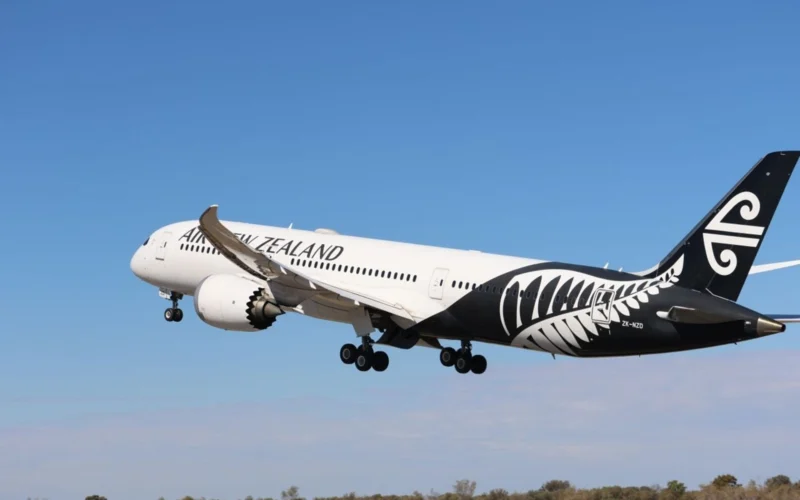
Air New Zealand is celebrating a major milestone as its last remaining Boeing 787-9 Dreamliner has returned from long-term storage.
On June 3, 2026, Air New Zealand declared that it now has “no widebody aircraft in storage for the first time since the global Rolls-Royce Trent 1000 engine shortage began affecting availability”.
According to the carrier, five of its fourteen Boeing 787-9 aircraft were grounded and non-operational at the peak of disruption.
The airline described the Trent 1000 engine shortage as the “most significant global supply chain challenge” that aviation has faced in recent years.
With the airline heavily reliant on its widebody fleet, the Trent 1000 engine shortage has made a profound impact on Air New Zealand’s finances and operations.
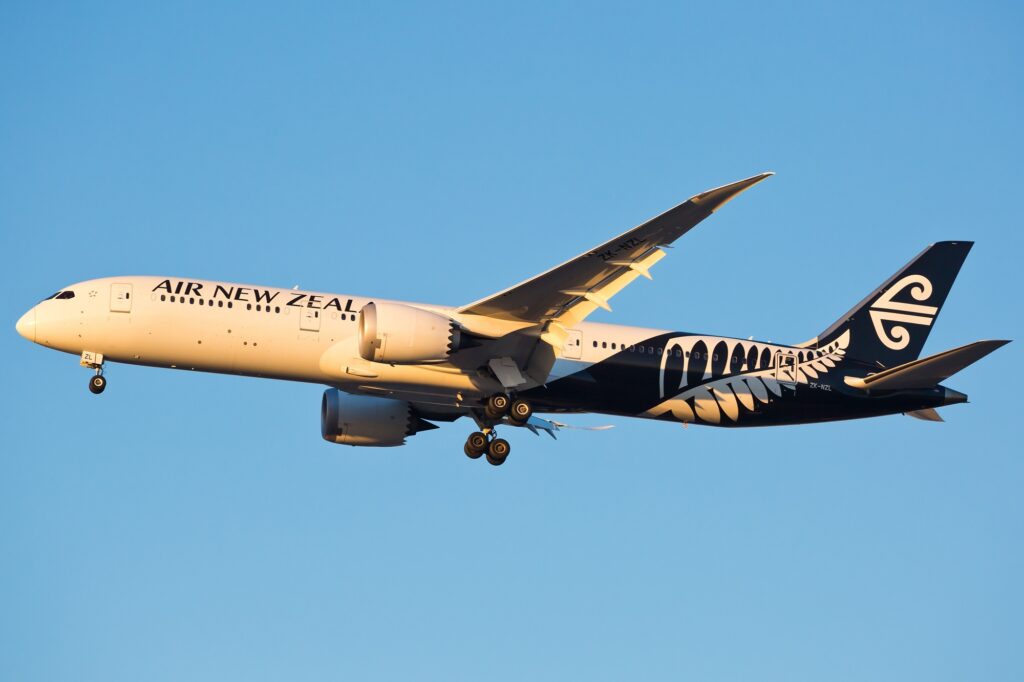
“Returning this final aircraft marks an important step forward as we move closer to having the full Dreamliner fleet operational again,” Air New Zealand said.
The 12-year-old Boeing 787-9 Dreamliner, registered ZK-NZD, left Alice Springs Airport (ASP) on June 28, 2026, and arrived at Auckland Airport (AKL) after a four-hour flight, according to Planespotter.net.
On June 30, 2026, the aircraft took its first commercial flight – to San Francisco Airport (SFO) in the US -since it was stored in September 2025.
Asia Pacific Aircraft Storage at Alice Springs maintained the aircraft during its time on the ground, ensuring all Air New Zealand aircraft were protected.
“This has been a complex, coordinated effort across teams and partners, from long-term storage and maintenance through to engine overhaul work in Alice Springs, helping us get aircraft back into service faster for our customers,” Air New Zealand declared.
Air New Zealand Fleet Project Lead Robert Cox added: “Carrying out engine changes in Alice Springs was a significant logistical challenge, but it helped us get engines into the shop at least six months earlier than if they had remained on the aircraft,”
‘Economics deteriorate quickly’
During an Air New Zealand 2026 Strategy Review Investor Call on June 30, 2026, Richard Thomson, CFO of Air New Zealand, stressed that when an airline “can’t fly the aircraft it owns, the economics deteriorate quickly”.
“That has been one of our biggest challenges since April/May 2023. But encouragingly, the aircraft availability position is improving materially,” Thomson said.
As well as grounded Dreamliners, the airline has also suffered from Airbus A321neo aircraft issues.
During the worst stage, the airline had six out of 20 A321neos on the ground due to Pratt & Whitney engine problems. In its update, Air New Zealand announced that this total now stands at two.
“We expect the A321neo position to continue improving over the coming months. Restoring the fleet gives us more options, improves scale and allows us to plan much more reliably and deploy the right capacity in the right markets more deliberately,” Thomson added.
Air New Zealand has new 787s and A321neo deliveries lined up and new retrofit aircraft coming through.
The 10 Dreamliners include five 787-9s and five 787-10s, all powered by GE Aerospace GEnx-1B engines.
Air New Zealand confirmed that, due to manufacturing delays, its first two new 787-9 deliveries have been pushed back further into the first half of 2027.