
777 Family
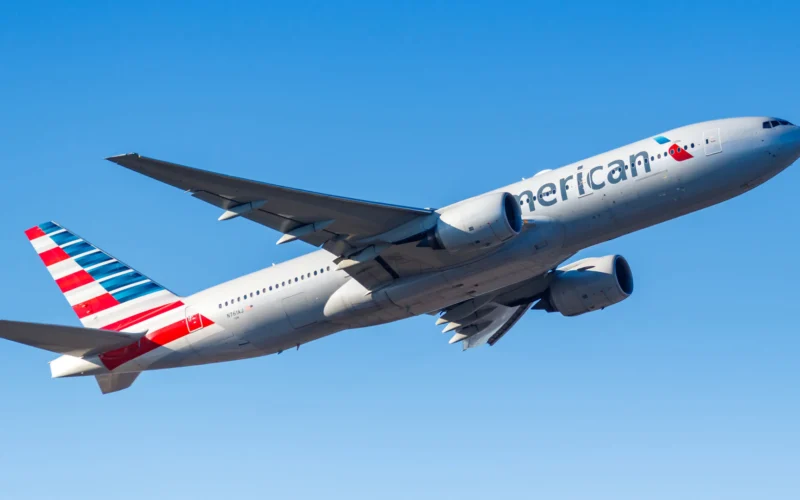
777 Family at a glance
The Boeing 777 is the best-selling widebody family in history: more than 1,700 delivered since 1995, the aircraft that killed the four-engine era by proving a giant twin could fly any route a 747 could, for far less fuel. Designed with airlines at the table and certified for extended over-water flying from day one, it became the backbone of long-haul aviation for two decades.
The definitive version is the 777-300ER, the 396-seat GE90-powered workhorse that carried the golden age of Gulf and Asian long-haul flying, with Emirates alone operating a fleet larger than most airlines' entire operations. The family also spans the ultra-long-range 777-200LR and the 777F, the world's most successful large freighter, while the next generation, the 777X, extends the line into the 2030s.
Variant comparison
| Specification | Boeing 777-300ER |
|---|---|
| Typical seats (2-class) | 365-396 |
| Maximum seats | 396 |
| Range | 7,370 |
| Length | 73.86 m |
Full specifications
Operators
Frequently asked questions
It matched the range and capacity of four-engine jets with two-engine economics, more than 1,700 have been delivered since 1995, effectively ending the era of the 747 and A380 on most routes.
The 777-300ER, with roughly 840 ordered, the definitive long-haul aircraft of the 2005-2020 era and the backbone of Emirates, the type's largest operator.
The 777X family, led by the 777-9, which carries the 777's type rating and fuselage lineage into a new generation with folding wingtips and GE9X engines, expected in service in 2027.