

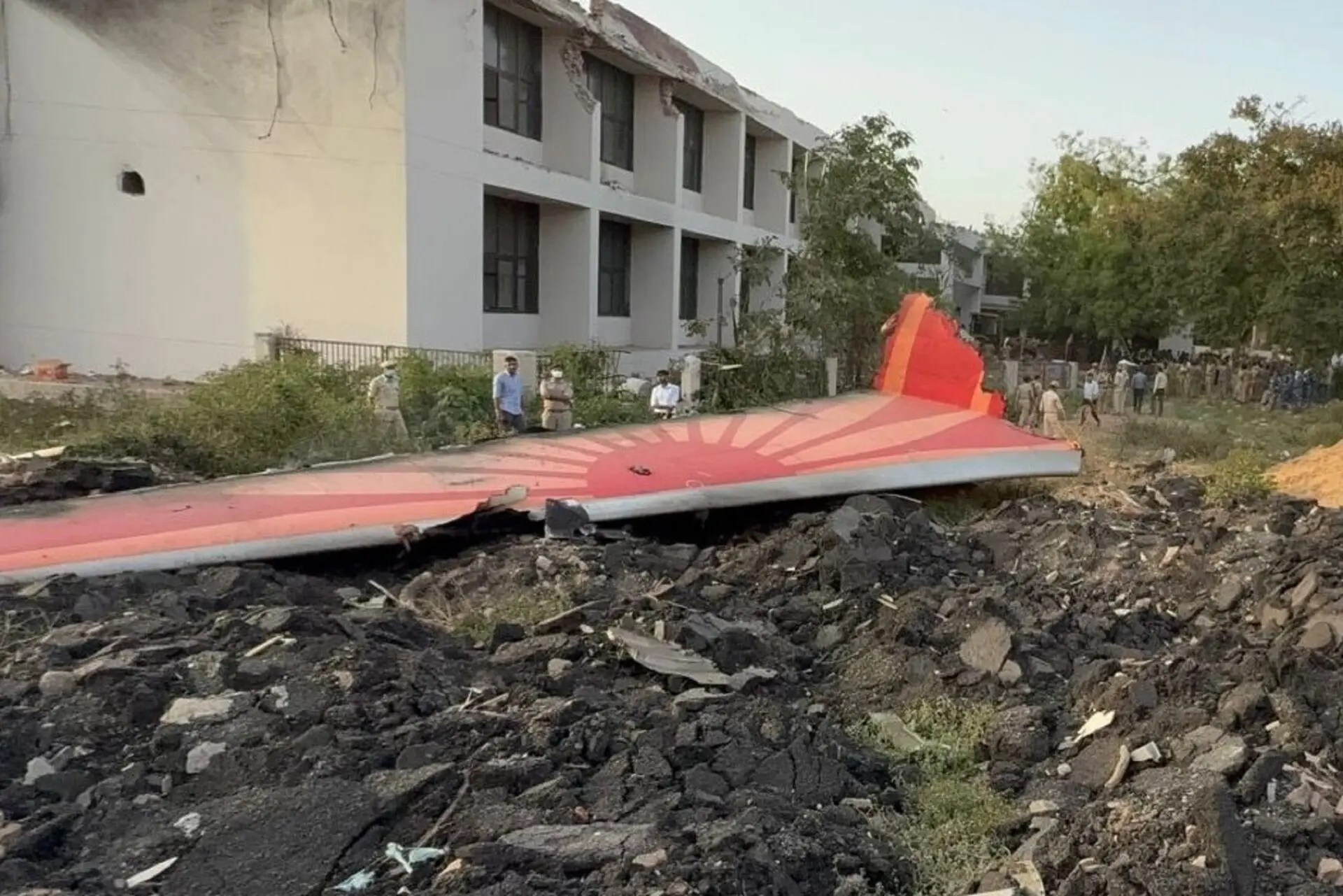
One year after the crash of Air India Flight 171, the cause of the fatal Boeing 787 disaster remains shrouded in uncertainty as investigators continue to examine whether deliberate pilot action, an aircraft technical issue or some other sequence of events led to the tragedy.
Indian investigators are expected to delay the final report into the crash as work continues on engine-related analysis.
The Boeing 787-8 crashed shortly after takeoff from Ahmedabad on June 12, 2025, killing 241 of the 242 people onboard and 19 people on the ground. The aircraft, registered VT-ANB, was operating a scheduled flight to London Gatwick.
On June 11, 2026, Reuters claimed that India’s Aircraft Accident Investigation Bureau is preparing to issue an interim update rather than a final report around the first anniversary of the crash. The final report may be delayed by about three months.
The delay is linked to unfinished analysis of the aircraft’s GE Aerospace engines and related engine-management electronics, Reuters reported, citing a source familiar with the investigation. Investigators have carried out work in France and further studies are continuing in the United States.
The crash remains one of the most closely watched aviation investigations in recent years, due to the unusual sequence of events described in the preliminary report.
In that report, India’s AAIB said both engine fuel control switches moved from RUN to CUTOFF seconds after takeoff. That would have cut fuel flow to both engines, causing a rapid loss of thrust at low altitude.
The report also said the cockpit voice recorder captured one pilot asking the other why he had cut off the fuel. The other pilot responded that he had not done so. The preliminary report did not identify which pilot made either statement.
The fuel-switch mystery has triggered intense debate among pilots, safety specialists, lawyers and families of victims. Some aviation professionals have argued the available evidence points toward deliberate pilot action. Others have pushed back, saying the report does not explain whether an aircraft technical fault, electrical issue or other system failure could have caused or contributed to the fuel cutoff sequence.
The Federation of Indian Pilots has criticized the handling of the investigation and called for an independent judicial probe. The group has also opposed the release of another interim report if it fails to provide sufficient technical context, warning that incomplete findings could fuel further speculation.
According to the BBC, lawyers and safety campaigners have also questioned the timing of the 787’s ram air turbine deployment and the aircraft’s attempted engine relight sequence. Those issues have become central to arguments that the crash may have involved a deeper technical failure rather than a straightforward case of pilot action.
Air India has denied claims that the aircraft had unresolved safety issues prior to the crash.
Under international investigation standards, the state where a crash occurs leads the inquiry. India’s AAIB is responsible for the AI171 report, with participation from other parties including the US National Transportation Safety Board (NTSB), Boeing, GE Aerospace and the Federal Aviation Administration (FAA).
Annex 13 to the Convention on International Civil Aviation says that a final report should be released within 12 months when possible. If that is not possible, investigators are expected to issue an interim statement on the anniversary of the event, which in this case is June 12, 2026.
The final report, when it is released, is expected to address the fuel cutoff sequence, engine performance, aircraft systems data, cockpit voice recorder evidence and any maintenance or technical factors that may have contributed to the crash.
AI171 was the first fatal crash and first hull loss involving a Boeing 787.