

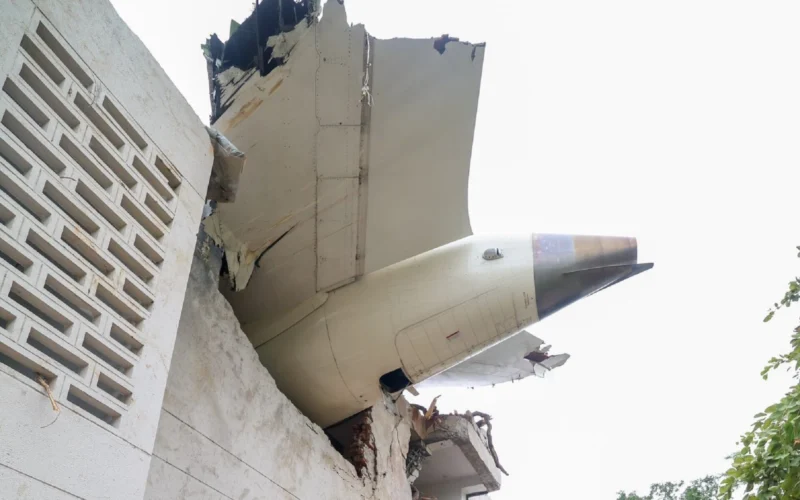
Events in India are moving quickly after an Air India Boeing 787-8 Dreamliner tragically crashed shortly after takeoff on June 12, 2025, killing 229 passengers and 12 crew members on board.
While speculation about the causes of the crash continues to spread, it’s important to focus on the facts and what we do know for certain.
With reports varying as news continues to break by the hour, it can be difficult to keep on top of the details.
As we pass 24 hours since the lives of 241 people onboard Air India flight 171 were lost, AeroTime focuses on what we know so far about the tragic plane crash.
What happened before the crash?
Air India Flight 171 was due to depart Ahmedabad’s Sardar Vallabhbhai Patel International Airport (AMD) at 13:10, local time and arrive at London Gatwick (LGW) just under 10 hours later.
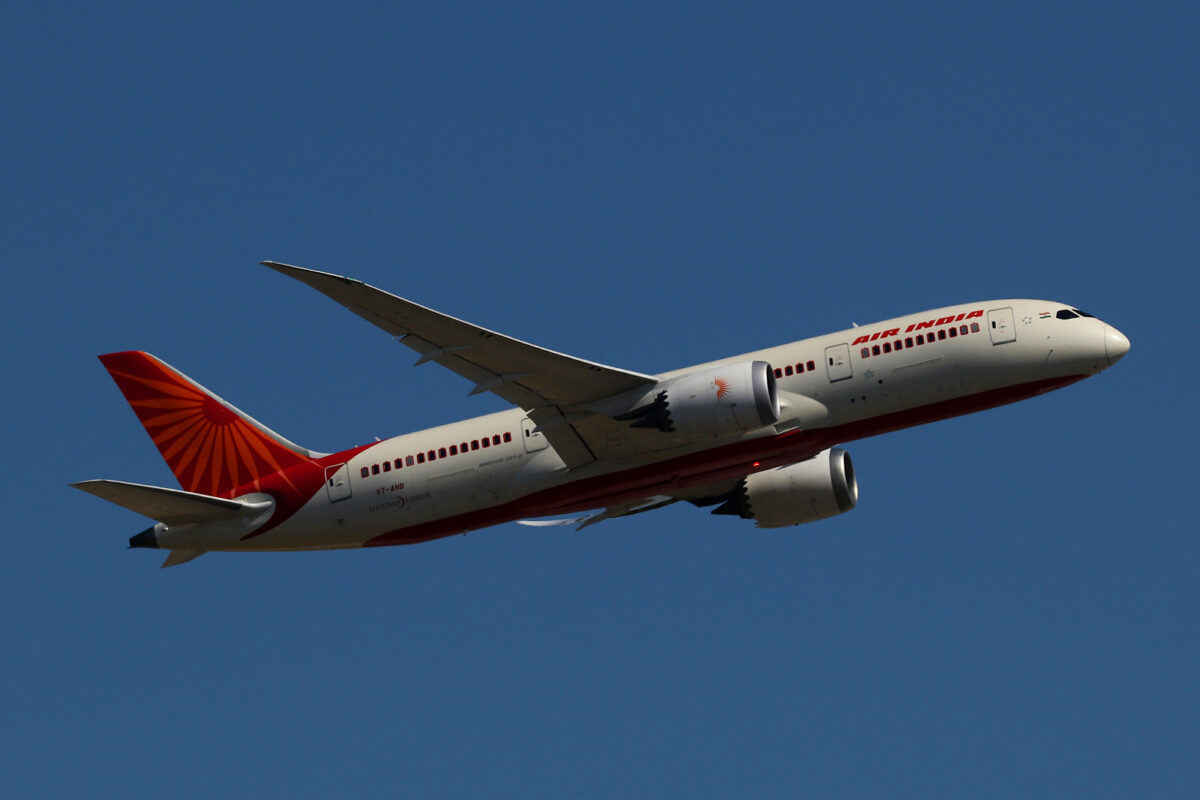
There were 230 passengers and 12 crew members on board the 11-year-old Boeing 787-8 Dreamliner, registered VT-ANB, when it departed, 28 minutes late, at 13:38.
According to Flightradar24 data, the aircraft ascended to a maximum barometric altitude of just 625 feet—around 425 feet above the airport’s 200‑foot elevation—before descending at approximately 475 feet per minute. The signal was lost at 13:38, less than a minute after take-off.
Two videos, since shared widely online, appear to show the fuel-ladened Boeing 787-8 takeoff from runway 23 but gradually lose altitude before a massive explosion is seen in the background.
The Directorate General of Civil Aviation (DGCA) would later advise that, before impact, the flight crew gave a MAYDAY call, but when air traffic control replied, there was no response.
Where did the aircraft crash and what happened immediately after?
The passenger jet impacted the campus of Byramjee Jeejeebhoy Medical College and Civil Hospital, located just a few short miles from the airport.
Understandably, mayhem ensued following a large explosion, with local residents rushing to help and emergency crews descending on the area.
The full sequence from take-off to crash—final moments of Air India 171 captured on CCTV. Clear catastrophic lack of lift just seconds after liftoff. pic.twitter.com/l6UAzZ3wtJ
— Shiv Aroor (@ShivAroor) June 12, 2025
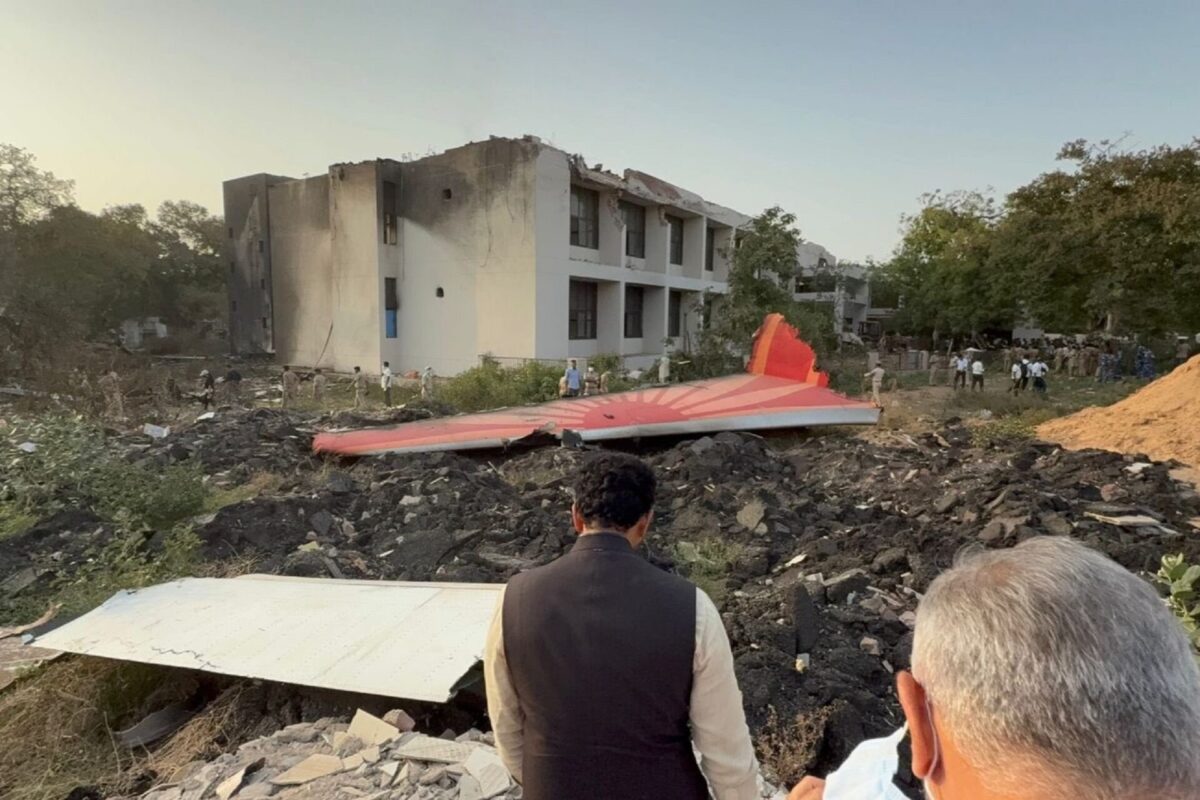
Clearly identifiable parts of the aircraft, including the tail, were found strewn across the area which was scorched from the intense blaze.
As people were rushed to hospital, there was initially confusion whether those being taken were passengers or victims on the ground.
The Minister for Civil Aviation, Ram Mohan Naidu Kinjaparu, visited the area and promised that ‘no stone will be left unturned in uncovering the cause and ensuring accountability”.
Who were the victims?
Among the passengers on aboard the Air India flight were 169 Indian, 53 British, one Canadian, and seven Portuguese nationals. Reuters reported that these included 217 adults, 11 children and two infants.
One passenger victim of the crash has been named by authorities as Vijay Rupani, the former chief minister of Gujarat state.
The Air India pilots have been identified as Captain Sumeet Sabharwal and First Officer Clive Kundar. The captain had clocked up over 8,000 flight hours and the co-pilot 1,100.
On June 13, 2025, the BBC was told by a senior health official in Ahmedabad that eight people on the ground were confirmed dead thus far. Four were medical students and four were relatives of other students.
Relatives of the aircraft crash victims are currently assisting hospitals with DNA samples to help identify bodies found at the scene.
Prime Minister Narendra Modi visited the crash site on June 13, 2025, and was pictured looking over sections of the destroyed aircraft. Prime Minister Modi also visited a hospital where injured people were being treated.
“We are all devastated by the air tragedy in Ahmedabad,” Prime Minister Modi said. “The loss of so many lives in such a sudden and heartbreaking manner is beyond words. Condolences to all the bereaved families. We understand their pain and also know that the void left behind will be felt for years to come.”
Who is the sole survivor?
Miraculously, a British national named Vishwash Kumar Ramesh survived the crash and is currently in hospital receiving treatment.
Ramesh, who lives in the UK, was sitting in seat 11A, positioned next to an emergency door, and was travelling with his brother, now presumed dead.
Footage of Ramesh following the crash saw him looking dazed as he was assisted by good Samaritans into a waiting ambulance.
Amid all the horror of the Air India plane crash, this story of British national Vishwashkumar Ramesh from Leicester, who was in seat 11a, being the sole survivor and walking away with just a few scratches, is truly astonishing. pic.twitter.com/8py9Rssf0d
— Piers Morgan (@piersmorgan) June 12, 2025
In interviews from his hospital bed, Ramesh has said that he does not know how he survived the crash when all those around him perished.
“When the flight took off, within five to 10 seconds it felt like it was stuck in the air. Suddenly, the lights started flickering – green and white – then the plane rammed into some establishment that was there,” Ramesh told the Hindustan Times.
He added: “I saw people dying in front of my eyes – the air hostesses, and two people I saw near me. For a moment, I felt like I was going to die too, but when I opened my eyes and looked around, I realized I was alive. I still can’t believe how I survived. I walked out of the rubble.”
Describing how he got out, Ramesh said that the aircraft door broke, “and I saw there was some space. I tried to get out of there and I did”.
What steps have been taken in the investigation?
Significantly, media reports on June 13, 2025, implied that one of the 787 Dreamliner’s black boxes has been recovered from the crash site.
According to ANI, a Digital Video Recorder, believed to be from the Air India aircraft, was also found in the debris at the crash site
A formal investigation has been initiated by the Indian Aircraft Accident Investigation Bureau (AAIB) to establish what caused the crash.
The UK Air Accidents Investigation Branch (AAIB) has deployed a multidisciplinary investigation team to India to support the investigation.
The National Transportation Safety Board (NTSB) has also confirmed that a team of US investigators is travelling to India to assist.
The aircraft engine makers GE Aerospace said: “We have activated our emergency response team, and we are prepared to support our customer and the investigation.” A Boeing team is also on standby to assist India’s AAIB.
What did Boeing and Air India say?
Boeing has released two official statements since the crash.
On June 12, 2025, Boeing said: “We are in contact with Air India regarding Flight 171 and stand ready to support them. Our thoughts are with the passengers, crew, first responders and all affected.”
Later, Boeing President and CEO Kelly Ortberg said: “Our deepest condolences go out to the loved ones of the passengers and crew on board Air India Flight 171, as well as everyone affected in Ahmedabad. I have spoken with Air India Chairman N. Chandrasekaran to offer our full support, and a Boeing team stands ready to support the investigation led by India’s Aircraft Accident Investigation Bureau.”
Air India has issued several statements in the past 24 hours offering to assist victims’ relatives and offering financial and emotional support.
The CEO of Air India, Campbell Wilson, spoke about the disaster in a video that was published on airline’s social media channels.
“I would like to express our deep sorrow about this event,” Wilson said. “This is a difficult day for all of us at Air India, and our efforts now are focused entirely on the needs of our passengers, crew members, their families, and loved ones. Investigations will take time, but anything we can do now, we are doing. We know that many people are concerned for the welfare of their loved ones.”
He added: “For now, our teams are working around the clock to support passengers, crew, and their families, as well as investigators, however we can.”
8 comments
13A or 11A? Boarding pass shown in the picture is 11A.
The sole survivor of the flight was sitting in Seat 11A, according to reports. However, despite the attached tweet, there is an error in this report on Paragraph 23.
If this information is correct and verified, please change the article to reflect the CORRECT information.
Families and friends of these victims are grieving, it does not help anyone’s case (especially those who are working to determine the cause) if information is being reported incorrectly.
I’m very interested to learn what the CVR and FDR show about that crash; here are things I observed in the initial takeoff video I find very concerning, as a pilot’s (grown) “kid” who has followed crash reports since the late ’50s, much of that time with training and experience as an RN and EMS 1st responder too.
It is truly a very interesting scenario and sequence.
Leading edge slats are visible, however the flaps appear fully retracted.
Possible the Ram Air Turbine (RAT) is deployed.
Left can be observed deteriorating immediately after ground effect as the wing tips (span) begin to level out.
Impact is very compact indicating very little forward energy, and significant vertical energy down as indicated by the debris field and location of significant structure and the engines.
While not determined yet, regardless of any computer settings the flight crew should always be able to command full throttle/full power input instantly at any time. If a weight calculation or other parameter is incorrect, who cares, give them the authority for full power if deemed necessary. So much is now turned over to computers and automation that the flight crew are essentially participants, and not commanders.
This plane crash was extraordinary but how did it happen and why? Why was there only 1 that walked out. Could he have hijacked the plane? Could he have wanted revenge over something? Did he want something?
It takes more time than they had to spool up one of those big engines. Failure to properly configure the flaps and slats seems likely.
So there you are, a suicide-minded
pilot is still in a position to kill all
aboard simply by flicking the fuel-
control switches – certainly on a
Boeing with GE engines. And he
shouldn’t be – certainly not by
flicking those switches, as the
Engine Management System should
be perfectly capable of overriding
the fuel cut-off command in an
airborn airliner, even if sent from
a physical switch. Even a teenage
programmer should be capable of
getting this logic sequence right,
but not Boeing or GE, as it appears.
As it has been reported that the fuel switches were set to ‘off’ and the pilot/ copilot, when asked, denied they had been, is there another indicator in the cockpit that would show that the switches were off?