

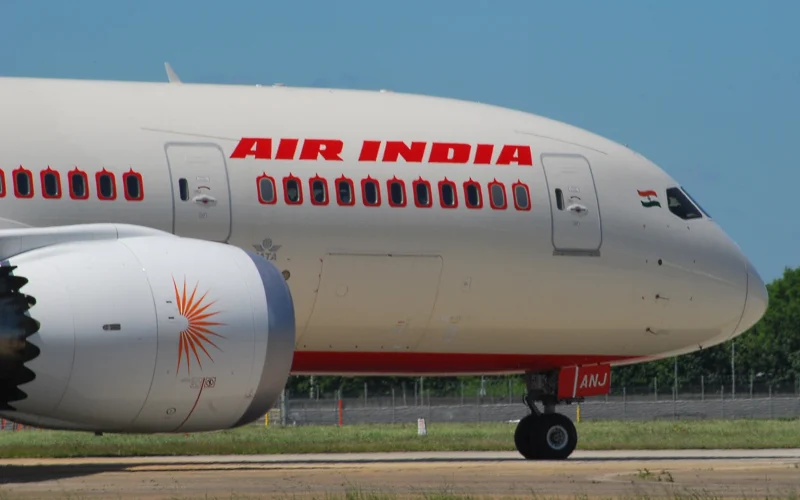
India’s civil aviation regulator has ruled out a systemic defect in the fuel control switches on Boeing 787 Dreamliners after one of Air India’s aircraft was grounded earlier this week amid safety concerns, authorities have said.
The action followed a pilot report indicating that a fuel control switch had failed to latch properly during routine checks before a long-haul flight from London to India, generating fresh scrutiny of a component central to a deadly June 2025 crash.
The Directorate General of Civil Aviation (DGCA) said on Tuesday that its inspection of the grounded Boeing 787-8 had revealed that the fuel control switch lock mechanism met design specifications, working as intended when operated according to procedures. Separate statements from Air India confirmed that a subsequent fleet-wide re-inspection of fuel switches had found no defects.
The incident occurred on February 1, 2026, when a 787-8 operating as Air India Flight AI132 from London Heathrow to Bengaluru experienced an abnormal condition during the engine start-up check. According to the airline, pilots observed that one of the left-engine fuel control switches did not remain securely in the ‘RUN’ position when light downward pressure was applied, moving toward ‘CUTOFF’ twice before setting properly on a third attempt. The aircraft completed its flight, but was then grounded in Bengaluru for inspection.
Fuel control switches on Boeing 787 aircraft are designed with a protective lock that requires an upward lift action before movement between the ‘RUN’ and ‘CUTOFF’ positions, a safeguard intended to prevent inadvertent fuel shutoffs in flight. According to DGCA officials, the observed behavior was consistent with crews not applying the precise movement sequence specified in the manufacturer’s procedures, rather than a mechanical fault in the switch assembly itself. The regulator has advised the airline to reinforce proper operating techniques for flight crews.
The grounding drew particular attention, because fuel switch movement was also a key focus of the investigation into the June 12, 2025 crash of Air India Flight 171, a Boeing 787-8 that crashed into a building near Ahmedabad shortly after takeoff, killing 260 people including passengers, crew members and several on the ground. Preliminary reports from India’s Aircraft Accident Investigation Bureau indicated that both of that aircraft’s fuel control switches transitioned from ‘RUN’ to ‘CUTOFF’ shortly after liftoff, starving the engines of fuel and leading to a catastrophic loss of thrust.
Air India operates more than 30 Dreamliners, all of which have undergone precautionary fuel switch inspections. The airline noted that no anomalies had been found and reaffirmed its commitment to safety. Boeing said it was working closely with Air India and supporting the review.
3 comments
Such an important switch should be fully fail-safe and not depend on pilot actions particularly during critical periods when pilots are under pressure to perform at peak efficiency.
Boeing must redesign this Fuel Switch that should be super safe and reliable in all possible scenarios during a flight.
Very timely “Certification “ by Indian DGCA of Boeing 787 Fuel Cut-Off Switches. These switches has been in Operations on Boeing Aircraft for nearly 70 Years, with unblemished Operational Capability. Today’s Media Thrives on by looking for smoke when there is No Fire. Media Trial condemns everyone in the pipeline from Manufacturers to End Users. Today the Media is very conveniently Quiet, because now they have a “ Pie on the Face”